Restaurant Local SEO in 2026: How to Be Found When Diners Search, Ask, and Order Online
Connexup Team
May 22, 2026
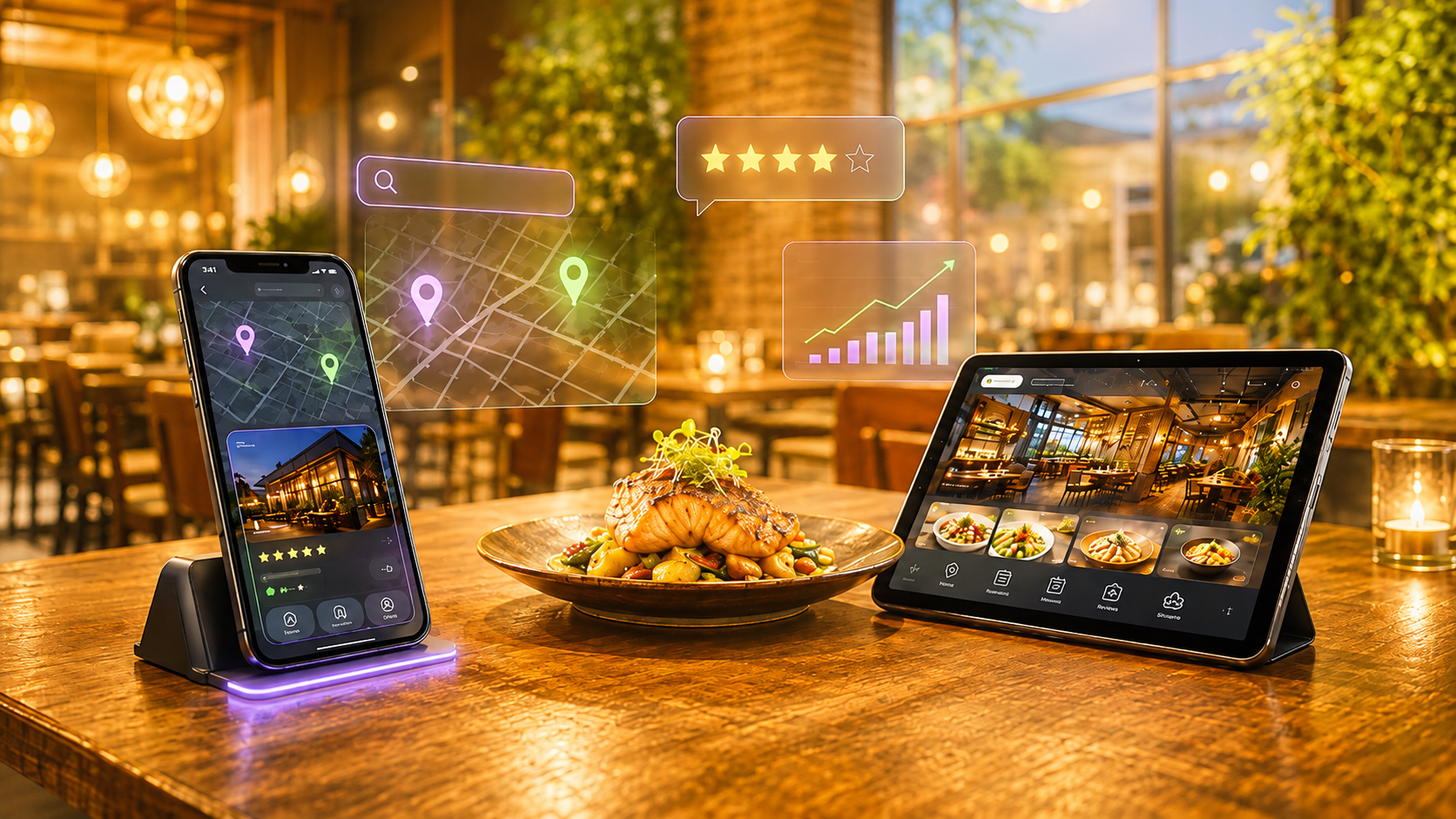
Local SEO is no longer only about being listed online. It is about being clear, consistent, and trusted wherever diners make decisions.
Local SEO Has Become a Wider Discovery System
Local SEO used to be simple enough to understand: show up on Google Maps, keep your hours updated, collect good reviews, and make sure customers can find your address and phone number. Those basics still matter. In fact, they matter more than ever.
What has changed is how diners discover restaurants. A guest may search on Google Maps, check recent food photos on Instagram, compare reviews, or ask an AI assistant for "a casual sushi restaurant near downtown with outdoor seating and online ordering." Discovery is broader, more conversational, and influenced by signals from many places.
For restaurant operators, Local SEO is no longer about ranking for one keyword in one place. It is about building a digital presence that can be understood wherever diners search, ask, compare, and decide: your website, Google Business Profile, menu, reviews, photos, social content, ordering flow, and location information.
AI search adds urgency, but it should not take over the story. A recent Uberall benchmark focused on QSR and multi-location restaurant brands found that 83% of restaurant locations in its dataset were not appearing in AI-generated recommendations. It is not a universal measure of every restaurant, but it shows how online presence and digital readability are no longer the same thing.
Local SEO Still Starts with the Basics
Local SEO has always been built on relevance, distance, and prominence.
Relevance means how well your restaurant matches the guest’s intent. Distance refers to how close you are to the searcher or area mentioned. Prominence reflects how trusted and well-known your restaurant appears through reviews, ratings, directory listings, local mentions, social activity, backlinks, and consistent business information.
These fundamentals have not disappeared. What has changed is the number of places where they are read. Google Maps still matters. So do review platforms, social media, voice assistants, and AI-powered discovery tools. Google has long reported that 76% of people who search on smartphones for something nearby visit a related business within a day, and 28% of those searches result in a purchase. For restaurants, local search is often the beginning of a same-day visit, order, or reservation.
Your Website Is Now a Core Local SEO Asset
For many restaurants, the website has historically been treated as a basic information page: address, phone number, a few photos, maybe a PDF menu. That approach made sense when guests mostly used the website to confirm details. It no longer does.
A restaurant website now plays a much larger role in local visibility. Search engines use website content to understand what a restaurant serves, where it is located, what kind of experience it offers, and whether the information is reliable. AI tools may use the same content to summarize the restaurant in response to a diner’s question.
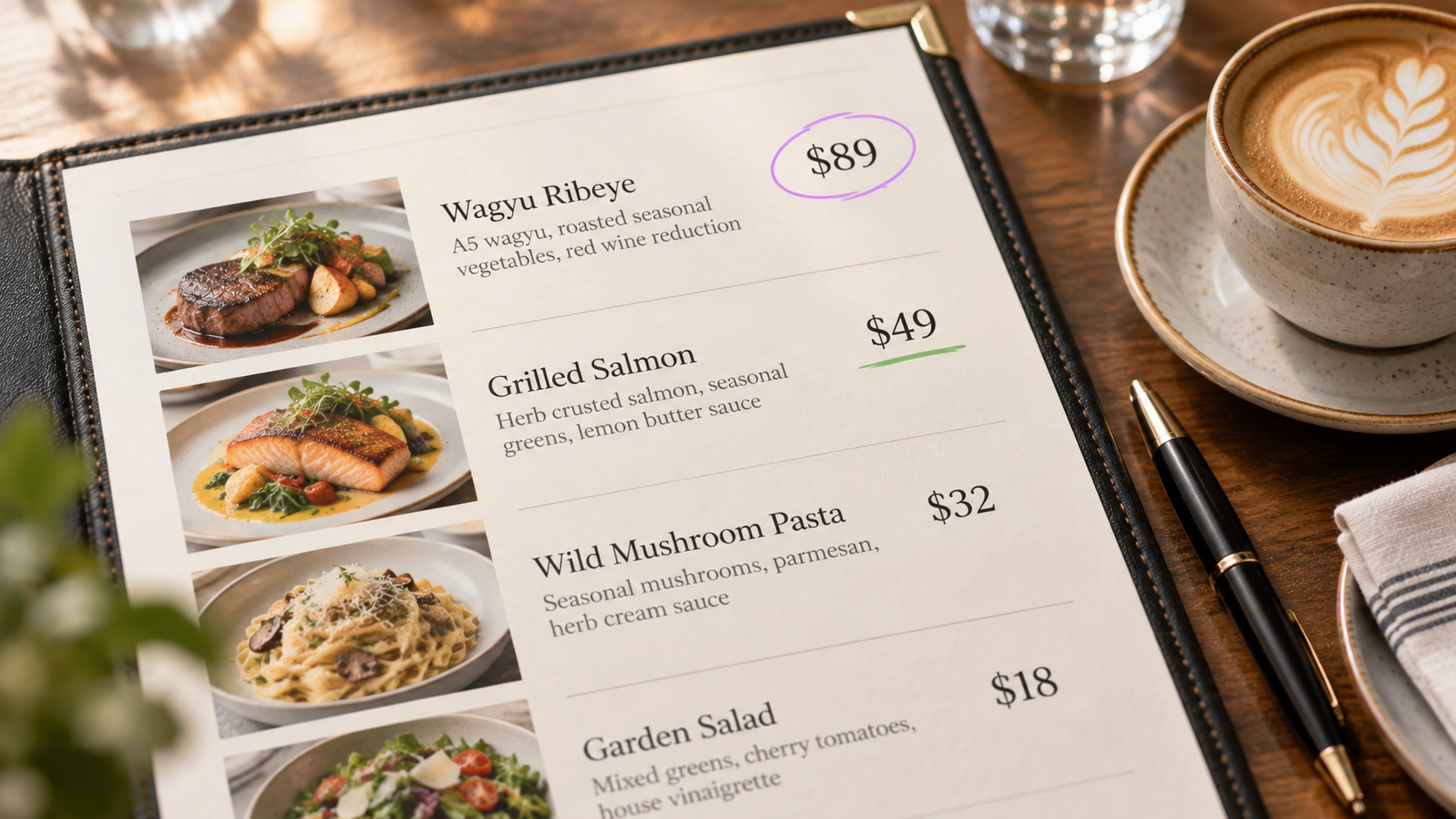
A well-structured Brand Website should give search engines and guests the same thing: clear, complete, and easy-to-use information. That means mobile-friendly pages, an HTML menu instead of only a PDF, natural descriptions of cuisine and dietary options, location pages with neighborhood context, FAQ content, structured data, and clear paths to order, reserve, call, or get directions.
For restaurants with multiple locations, each store should have its own dedicated page with unique content: address, local phone number, hours, photos from that location, neighborhood references, and ordering or reservation options. A page that simply swaps out the city name does very little for local visibility.
Google Business Profile Is Still the Front Door
Your Google Business Profile remains one of the most important assets for local restaurant discovery. For many guests, it is the first interaction they have with your restaurant. Before they visit your website, they may check your rating, photos, hours, menu, reviews, directions, and whether you are open right now.
Every restaurant should keep core information current: business name, address, phone number, categories, regular and holiday hours, website link, ordering link, menu items, pricing, dining options, recent photos, review responses, and timely posts for specials or events.
Photos deserve particular attention. Restaurants are visual businesses. Guests want to see food, dining room, exterior signage, menu items, and recent activity before making a decision. Fresh photos also signal that the business is active and maintained.
Social content is becoming more connected to this discovery layer. Google’s 'What’s Happening' feature allows eligible food and drink businesses to highlight timely updates such as events, specials, and promotions on their Business Profile, either manually or through linked social accounts. Availability varies by market and business type, but fresh, location-specific content is clearly becoming part of how restaurants are discovered.
Reviews Are More Than Reputation
Reviews have always influenced restaurant decisions. A strong rating can help a guest feel confident choosing a new place. A weak or outdated review profile can create hesitation before the guest even looks at the menu.
But reviews now do more than shape perception. They also help search engines and AI systems understand trust.
BrightLocal’s 2026 Local Consumer Review Survey found that 97% of consumers read online reviews for local businesses, while 41% always read reviews when browsing for businesses. The same research found that consumers use an average of six review sites when choosing businesses, which means relying on one platform alone is no longer enough.
For restaurants, review volume, recency, response rate, and content all matter. A steady flow of recent reviews gives search engines more confidence than a handful of old reviews and no visible engagement. The specific words customers use also help describe what your restaurant is known for, from outdoor seating and fast pickup to private dining or gluten-free options.
A Harvard Business School study on Yelp found that a one-star rating increase was associated with a 5-9% revenue increase for independent restaurants, showing why review quality and visibility are tied to business outcomes.
A practical review strategy should include post-visit email or SMS follow-up with proper opt-in, QR codes on receipts, direct mobile-friendly review links, and thoughtful responses. It should avoid pressure tactics, staff review quotas, or requests to mention specific employees.
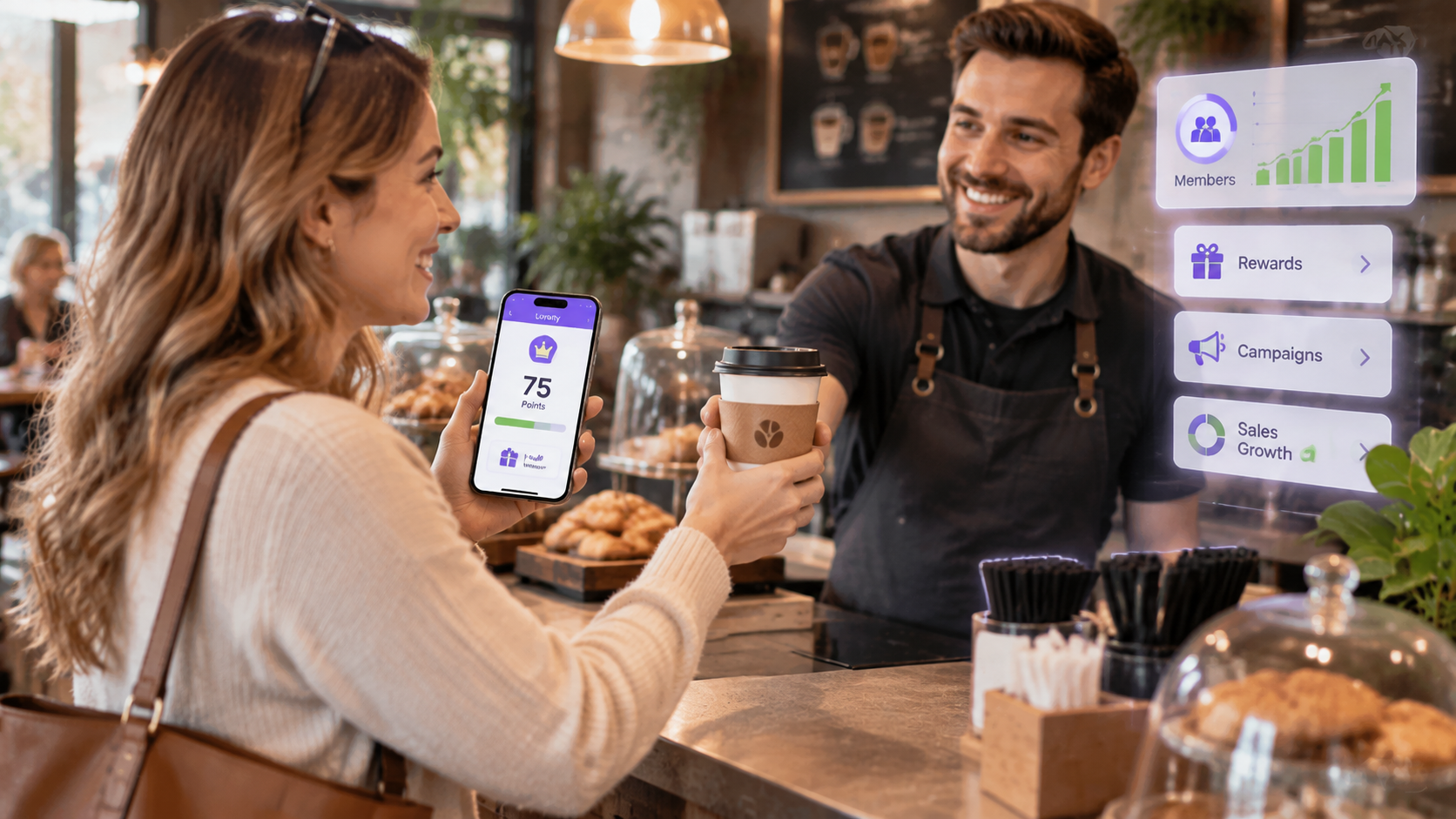
A well-designed Loyalty Program can support this process by creating a natural post-visit communication channel. Instead of relying on awkward in-person requests, restaurants can ask for feedback after the visit, when the customer has had time to reflect and respond.
Local SEO Does Not Stop at the Click
Getting discovered is only the first step. Once a guest finds your restaurant, the digital experience needs to help them take action. Can they read the menu easily on mobile? Can they place an order without friction? Can they see which location they are ordering from? Can they reserve a table or call in one tap? If the experience breaks after discovery, Local SEO does not translate into revenue.
This is why first-party digital experiences matter. A restaurant may use third-party platforms for reach, but if the entire ordering journey happens outside the restaurant’s own ecosystem, operators lose control over brand experience, customer data, conversion tracking, and post-visit engagement.
A first-party ordering setup through Web Ordering or a branded mobile experience helps close the gap between being found and completing the transaction. Local SEO is not only about visibility. It is about usability. A restaurant that is easy to find but hard to order from is still losing demand.
First-party ordering also creates a stronger data foundation. Operators can understand who ordered, what they ordered, when they returned, and which channels drove the transaction. That information can support future marketing, loyalty campaigns, menu decisions, and customer retention. For a deeper operational angle, this connects closely to How to Launch Your Restaurant's Own Online Ordering in 6 Simple Steps.
Multi-Location Restaurants Need Local Consistency at Scale
Local SEO becomes more complex when a restaurant brand operates multiple locations. Each location needs its own accurate Google Business Profile, unique website page, fresh photos, local reviews, correct hours, and consistent business information across directories. At the same time, the brand voice and customer experience need to remain consistent.
The common mistake is treating every location the same. A downtown location page should not be identical to a suburban page except for the address. Search engines and guests both need local photos, hours, neighborhood references, ordering links, NAP consistency, and review response.
For operators managing several stores, a centralized Location Hub can support the operational side of Local SEO. It helps teams maintain accurate information, track location-level visibility, and reduce the manual work that often causes listings, hours, photos, and menus to fall behind.
Consistency is not just an SEO issue. It is an operational issue. If one location has outdated hours, old photos, missing menu details, or unanswered reviews, both visibility and customer trust can suffer at that store. AI-powered discovery makes consistency even more important because these systems often cross-check information before making a recommendation.
AI Search Is the New Layer on Top of Local SEO
AI search should not replace a Local SEO strategy. It should be treated as another reason to make Local SEO stronger.
When guests ask ChatGPT, Gemini, Perplexity, or Google AI Mode for restaurant recommendations, these systems may draw from websites, reviews, business listings, menus, local press, third-party platforms, and structured data. In other words, they rely on many of the same signals that already matter in Local SEO.
The key difference is that AI-powered discovery often depends on whether your restaurant is easy to summarize. If your website clearly explains who you are, where you are, what you serve, and what customers often ask, AI systems have better material to work with. Thin, outdated, or scattered information is harder to recommend with confidence.
The actions that improve AI visibility overlap strongly with Local SEO best practices: build FAQ content, use HTML menus with pricing and dietary information, add structured data, keep business information consistent, maintain review freshness, and earn mentions from local media or guides.
An AI Assistant can support this broader system when it helps restaurants provide consistent answers to common guest questions across digital touchpoints. But it should not replace a strong website or complete business information. It works best when the underlying content is already clear, accurate, and structured.
Google is also adding more agentic capabilities to AI Mode, including restaurant booking support in certain markets. The experience is still evolving, but discovery, comparison, and conversion are moving closer together. That makes Local SEO more important, not less.
What Restaurant Operators Should Track
A Local SEO strategy should be measured by more than keyword rankings. Operators should regularly review Google Business Profile views, calls, direction requests, website clicks, menu views, online order click-throughs, organic traffic to menu and location pages, review count, rating, velocity, response rate, mobile performance, and conversion rate from local traffic to orders or reservations.
For multi-location brands, these metrics should be tracked by location. One store may have strong reviews but weak website traffic. Another may rank well but lose customers because the ordering flow is difficult on mobile. A third may have good visibility but inconsistent hours across platforms.
Local SEO performance is rarely captured in a single number. It is a combination of visibility, trust, usability, and conversion. The most useful question is not simply, "Are we ranking?" It is, "Can a guest find us, understand us, trust us, and take action without friction?"
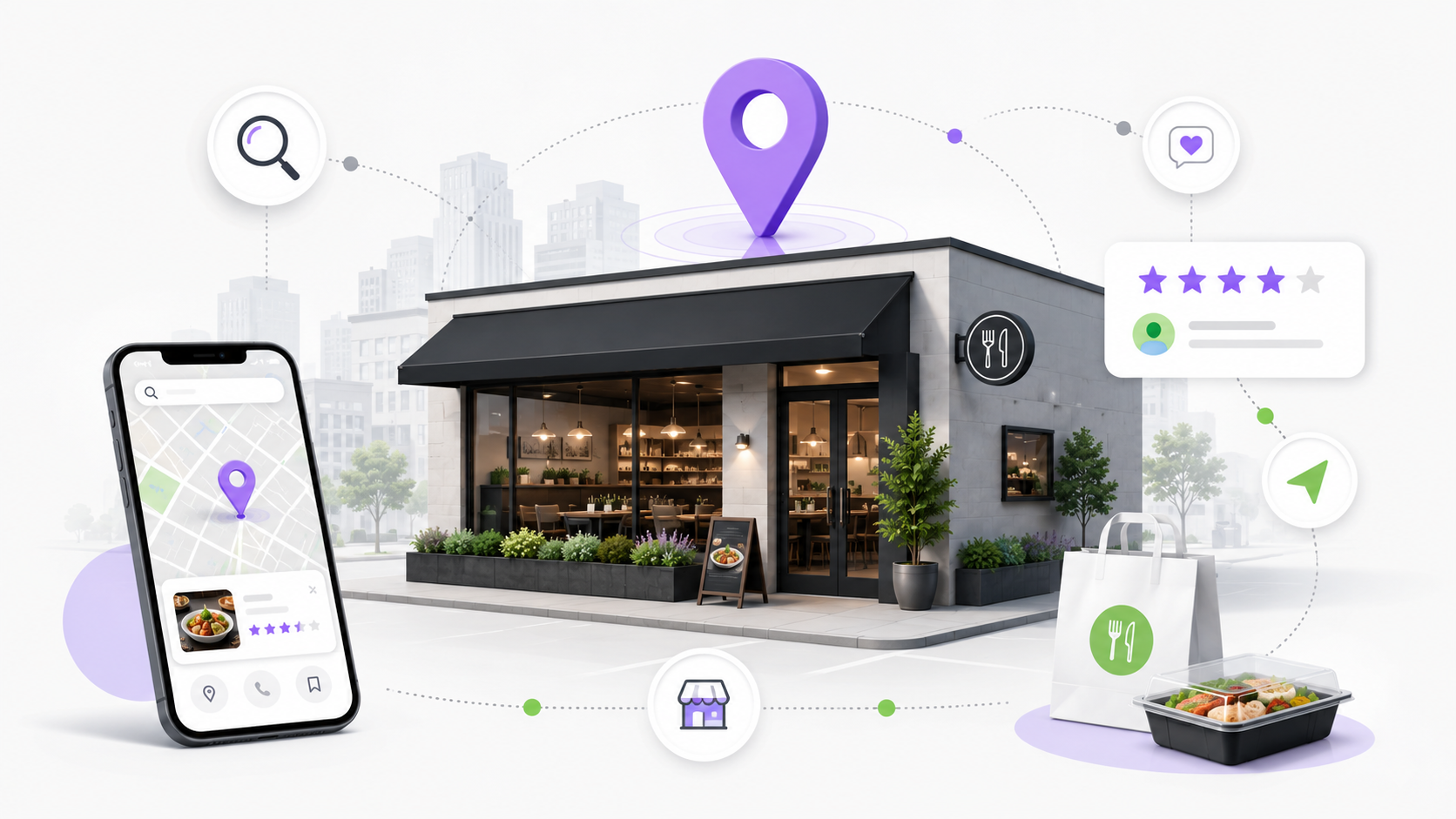
The Bigger Picture: Local SEO Is Digital Infrastructure
Restaurant Local SEO in 2026 is not about adding keywords to a page or updating a Google listing once a year. It depends on the quality of the digital infrastructure underneath.
Your website helps search engines and AI systems understand your restaurant. Your Google Business Profile helps guests make quick decisions. Reviews build trust. Menu content connects searches to dining intent. Ordering turns visibility into revenue. Customer engagement brings guests back and keeps feedback moving.
When these systems are disconnected, Local SEO becomes harder to manage. When they work together, your restaurant becomes easier to find, easier to trust, and easier to choose.
That is the shift behind the current discovery gap: many restaurants are online, but their digital presence is incomplete, inconsistent, or difficult for modern discovery systems to interpret.
Connexup is built around the idea that the path from search to order should be clear, consistent, and owned by the restaurant. The goal is not to replace Local SEO with software, but to give operators the infrastructure that modern Local SEO depends on.
The restaurants that win local discovery will not always have the largest marketing budgets. They will have clearer information, more consistent presence, stronger trust signals, and a smoother path from search to order. That is what modern Local SEO is really about.
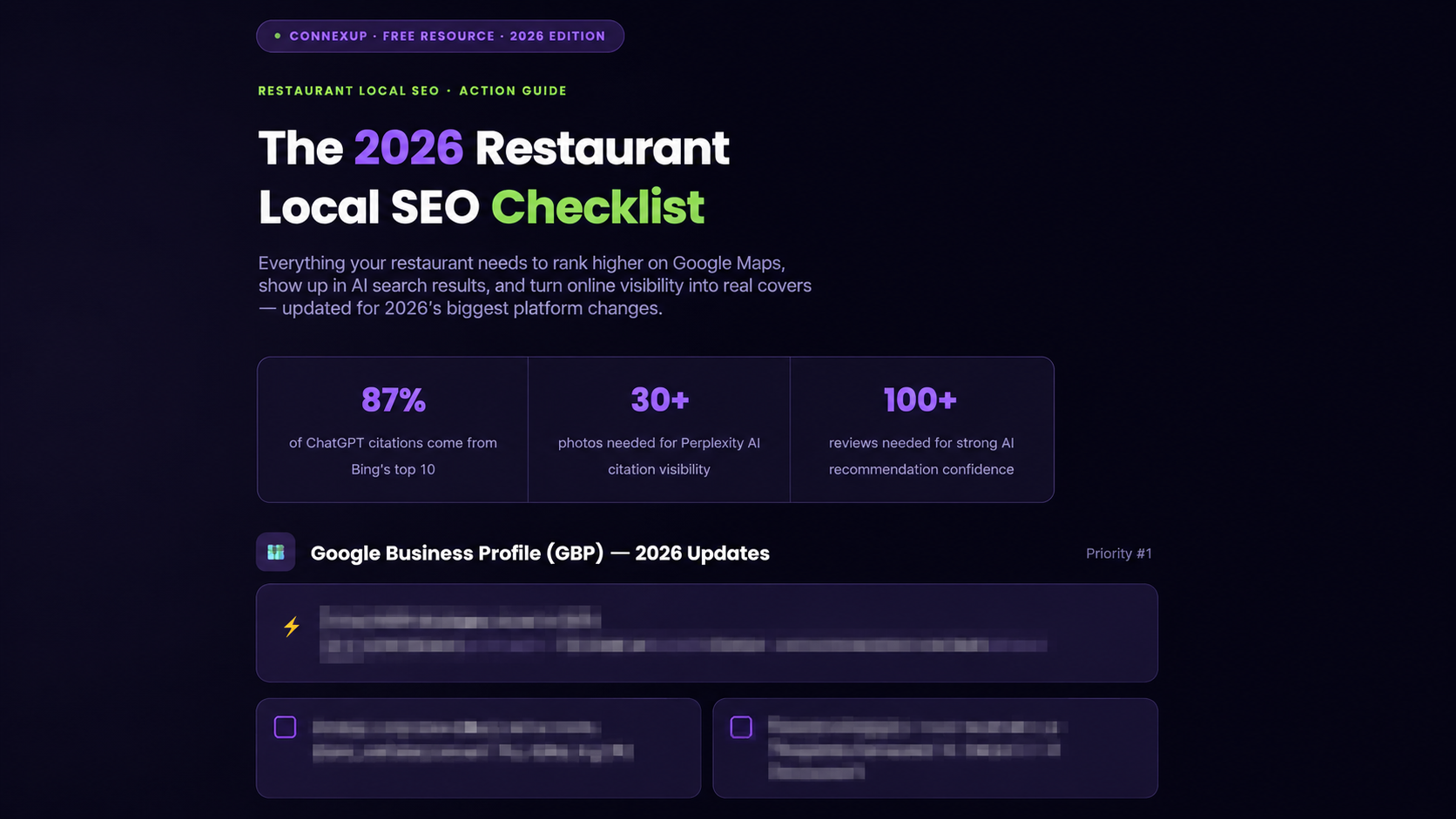
For restaurant operators who want a more practical checklist, Connexup has prepared a free Local SEO guide. Leave your email to receive the full resource.