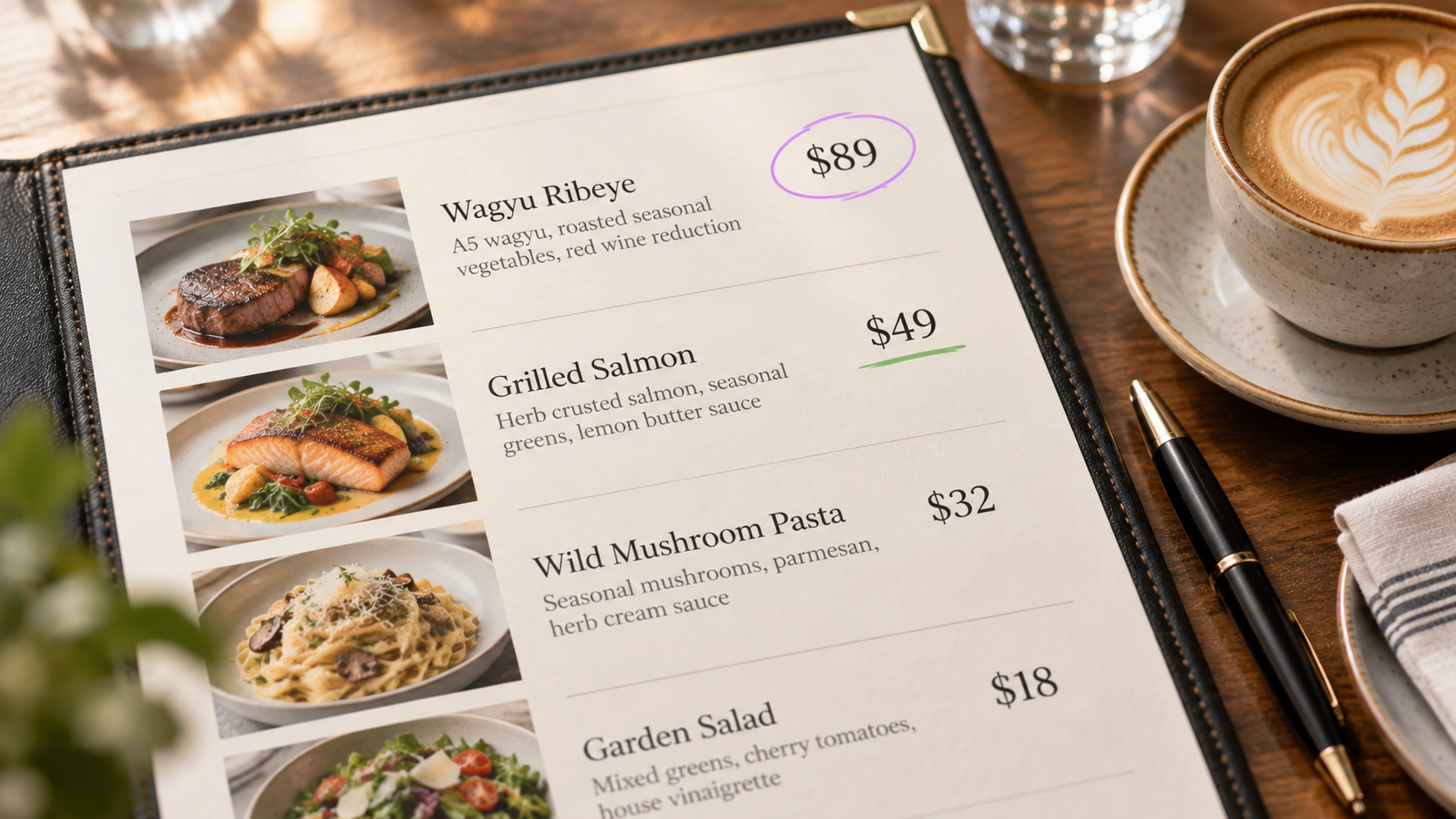
The Smart Way to Design a Profitable Restaurant Menu
Connexup Team
Feb 14, 2026
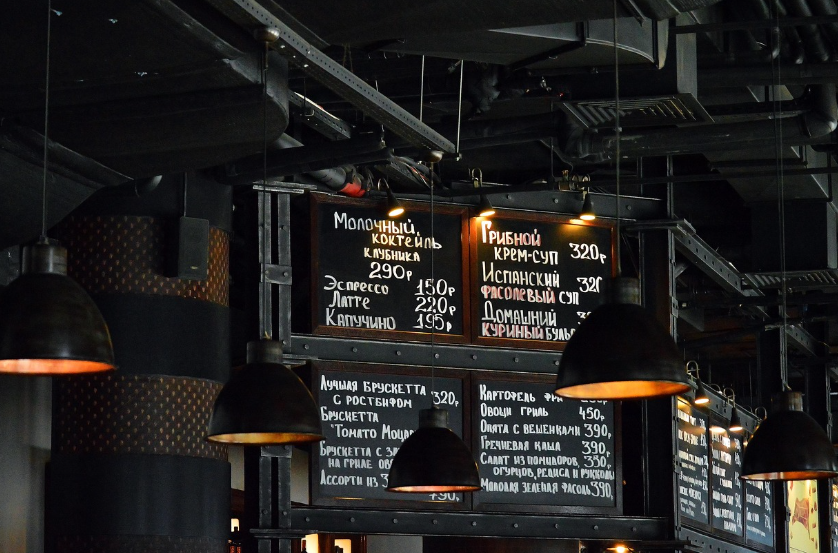
The Cognitive Bias: Why Operators Misread Their Own Menus
Most restaurant operators believe they understand their menu better than anyone else. After all, they created it, they see it every day, and they hear customer feedback constantly. Over time, this creates a powerful cognitive bias: familiarity begins to feel like control.
In reality, familiarity often hides structural problems.
Operators remember compliments from guests and comments from staff. They remember which dishes feel important to the brand and which ones they personally like. What they rarely see clearly is how each item actually performs inside the business system—financially and operationally.
Industry research consistently shows that operators overestimate the profitability of their best-selling items. In many cases, the most popular dishes are not the most profitable ones. They often carry higher ingredient costs, higher prep time, and lower contribution margins, but continue to dominate sales simply because the menu guides guests toward them.
This creates three common assumptions:
“Our best sellers must be our profit drivers.”
“If guests love it, the business benefits from it.”
“If something tastes great, it deserves its place.”
All three feel intuitive. All three are frequently wrong.
A menu can look successful on the surface while quietly eroding 15–20% of potential profit due to misaligned pricing, portioning, and positioning.
The problem is not effort. The problem is that intuition alone cannot see system behavior.
The Real Problem: A Busy Restaurant That Still Feels Stuck
Consider a typical scenario.
A casual dining restaurant is full most nights. Ticket counts are strong. Reviews are positive. From the outside, the business looks healthy. Yet the owner feels constant pressure: food costs keep climbing, labor feels heavy, and net profit stays thin.
This is extremely common.
According to U.S. restaurant industry benchmarks, average net profit margins for independent restaurants often fall between 3–5%, even in high-traffic locations. That means small inefficiencies in menu structure have an outsized impact on survival and growth.
When item-level data is finally reviewed, something surprising often appears: The most frequently ordered dishes also happen to be the ones with the weakest contribution margins and the highest prep complexity.
In other words, the restaurant is busy doing the wrong kind of work.
Guests are choosing what feels safe. The menu is encouraging those choices. The kitchen is built around producing them. And the business pays the price in slow growth and constant operational stress.
At this point, owners realize the real issue is not marketing or traffic. It is menu structure. The menu is not just showing guests what is available. It is programming how the business behaves.
The Methodology: What Menu Engineering Actually Means
Menu engineering is the discipline of analyzing menu items based on two primary forces:
Profitability (contribution margin)
Popularity (sales mix)
But at a professional level, it goes further. It asks:
What role does each item play in the financial and operational system of the restaurant?
Instead of asking “Is this dish good?”, the methodology asks:
Does this item create margin leverage?
Does it drive traffic but limit profit?
Does it slow the kitchen or simplify it?
Does it anchor guests at the right price level?
This is why menu engineering is not about deleting dishes or raising prices randomly. It is about designing guest behavior and business performance at the same time.
Industry studies show that well-structured menu optimization can increase profit margins by 10–30% within the same revenue volume, simply by reshaping what guests choose and how the kitchen executes.
That is not marketing. That is system design.
The Tools: How to Break the Menu Down Structurally
At item level, four metrics matter most:
Contribution Margin
Selling price minus food cost. This shows how much real money each item contributes after ingredients are paid for.
Sales Mix (Popularity)
The percentage of category sales each item captures. It shows what guests actually choose.
Food Cost Percentage
Important, but secondary. Two items can have the same food cost percentage and very different profit impact.
Velocity
How quickly items sell over time. Low-velocity items increase waste and complexity.
When these metrics are tracked over 60–90 days, each item naturally falls into one of four roles:
Stars – High margin, high popularity
Plowhorses – High popularity, low margin
Puzzles – High margin, low popularity
Dogs – Low margin, low popularity
This matrix replaces emotion with structure.
It shows where profit is being created, where it is being diluted, and where guest behavior is being unintentionally misdirected.
The Business Meaning: Why Menu Engineering Changes How You Run a Restaurant
When a menu is engineered properly, three strategic shifts happen:
Revenue Becomes Designed
Industry data shows that improving average check size by just 8–10% can generate over $100,000 in annual revenue for a 200-cover-per-day restaurant. That growth does not require more guests. It requires better menu structure.
Operations Become Lighter
Reducing menu complexity by even 20% has been shown to decrease waste by up to 15% and reduce kitchen labor hours by 10–12% in many operations. Fewer items mean faster training, fewer errors, and cleaner execution.
Strategy Replaces Guesswork
Menu decisions stop being emotional debates and become management actions tied directly to margin, labor flow, and positioning.
At this point, the menu is no longer just something guests read. It becomes something leadership uses.
How to Actually Execute Menu Engineering
Menu engineering only works if data can be extracted, analyzed, and reviewed continuously.
Step 1: Ensure Your System Can Export Item-Level Data
Any modern restaurant system should be able to:
Export item-level sales by date range
Show quantity sold and revenue per item
Link items to recipe or ingredient cost data
If your data cannot be exported into standard formats like CSV or spreadsheets, meaningful menu analysis is nearly impossible.
Step 2: Use an Analysis Tool That Supports Structural Metrics
The tool itself doesn’t matter — the capability does. It must support:
Contribution margin calculations
Sales mix percentages
Two-axis classification (profit × popularity)
Trend tracking over time
This can be done with spreadsheets or with business intelligence systems. The key is not complexity, but clarity.
Step 3: Create a Recurring Review Cycle
Menu engineering is not a one-time project. It requires:
Weekly or monthly item performance reviews
Automatic summaries of margin trends
Identification of low-velocity and low-margin items
Before/after comparisons following changes
If data must be rebuilt manually every time, decisions slow down and improvements fade.
Step 4: Connect Front-End Sales With Back-End Cost Data
Sales data without cost data only shows what sells — not what earns.
True menu optimization happens when revenue, food cost, and operational complexity are analyzed together. That’s when the menu becomes manageable, not emotional.
Final Perspective
Every restaurant already has a system.
The only question is whether that system was designed intentionally—or whether it evolved by accident.
Menu engineering is how operators take control of that system.
Not by adding more dishes. Not by chasing trends. But by understanding how structure, psychology, and profit connect at the moment guests choose what to order.
Connexup is built around one principle: restaurants grow when their systems are designed intentionally. Menu engineering is one of the most powerful places to start. It governs how the business behaves every day. And in modern restaurant management, that is one of the most powerful tools an operator can have.