Sushi Restaurant Review Management: How to Improve Guest Trust, Ratings, and Repeat Visits
Connexup Team
Jun 19, 2026
Introduction
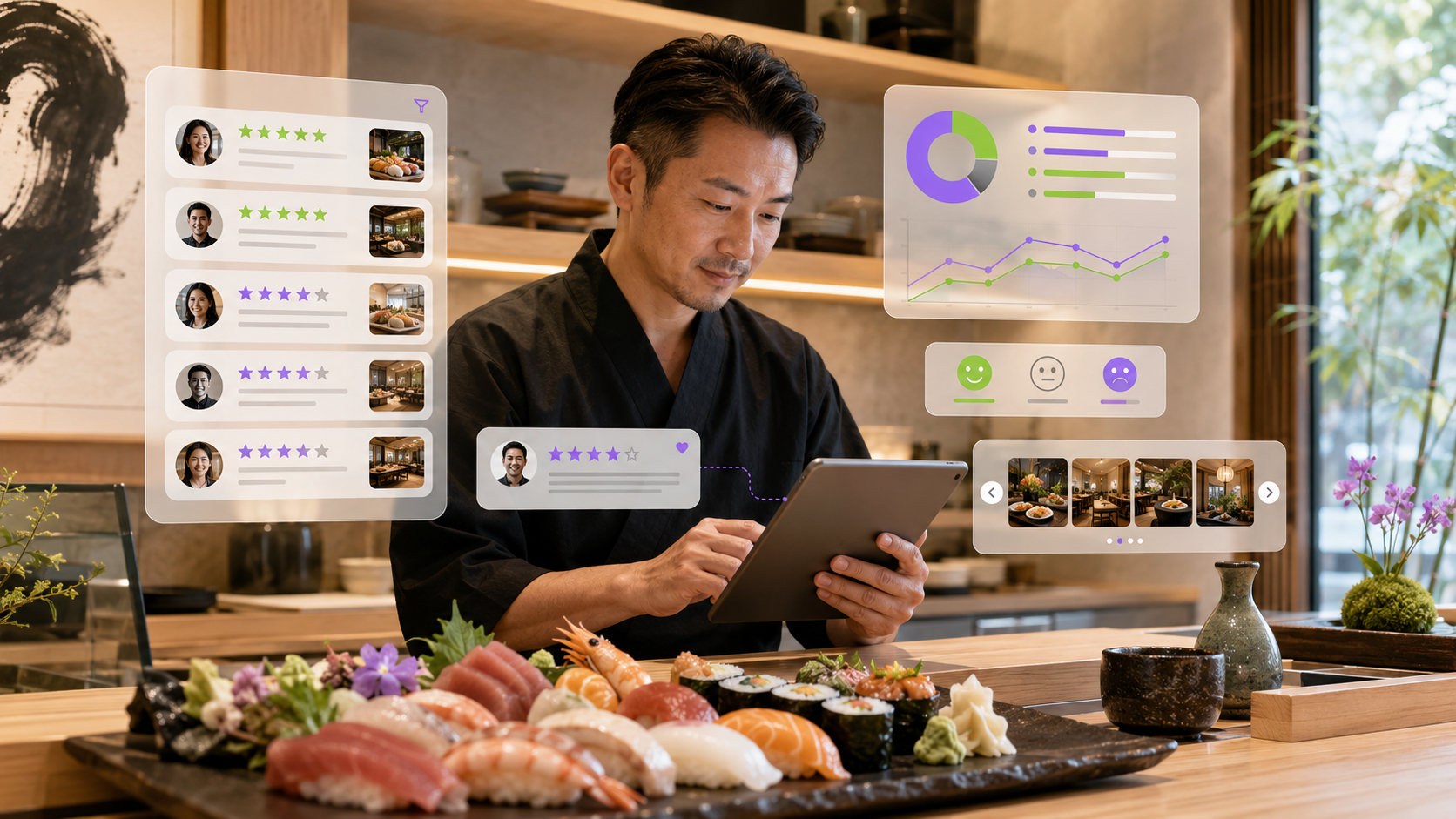
When someone searches "sushi near me," they rarely click straight to a menu. Before deciding where to eat, most guests check the star rating, scroll through recent reviews, look at customer photos, and pay close attention to whether other diners mentioned freshness, cleanliness, service, or value. For sushi restaurants, this behavior carries more weight than it does for many dining categories.
Sushi is a high-trust dining experience. Guests are ordering raw fish, and they know it. They are trusting a restaurant to handle, store, and prepare ingredients correctly - and that trust is on the line before the first bite. When choosing between two nearby sushi spots on a Friday night, a potential guest is not just looking for the most attractive menu. They are looking for signals that tell them this restaurant is safe, consistent, and worth the price.
This is why review management for sushi restaurants cannot be treated as a generic customer service task. Reviews can influence both local search visibility and guest decision-making, while active responses help potential guests see that the restaurant is attentive and engaged. For sushi restaurants, review management is closely connected to Restaurant Local SEO in 2026, because reviews shape how guests evaluate a restaurant before they visit the website or place an order.
Whether a review praises the "freshest salmon I have had in years" or flags a packaging issue on a delivery order, each one is contributing to a picture of your restaurant's trustworthiness. The important question is not only how to reply, but how to keep that feedback visible enough to improve the next guest experience.
Section 1: For Sushi Restaurants, Reviews Are Really About Trust
At first glance, a comment like "the fish tasted fresh" looks like a simple compliment about flavor. But it is actually something more significant. The guest is not just describing a preference - they are saying they trusted this restaurant to handle raw seafood correctly, and that trust was justified.
The same logic works in reverse. When a review says "smelled a little off," "the rice felt warm when it arrived," or "not very clean around the sushi bar," those comments carry more weight than a similar complaint at a burger restaurant would. Every future guest who reads those reviews is making a quiet safety judgment. A missed response - or a defensive one - to a freshness or cleanliness concern can do lasting damage to a sushi restaurant's reputation.
This is the insight that shapes everything else: sushi restaurant reviews are not just a collection of opinions about taste. They are a running record of whether guests felt they could trust your operation.
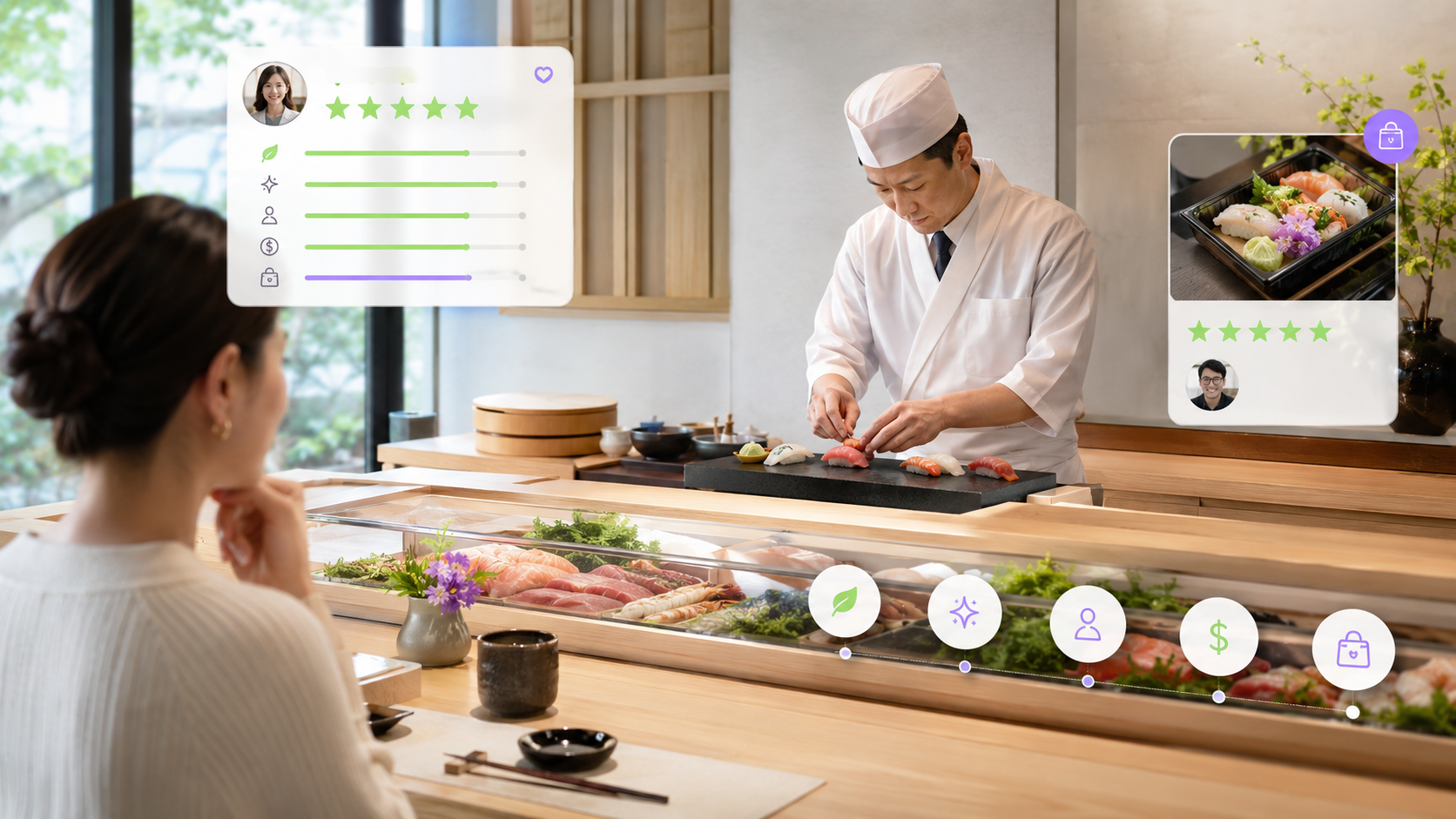
Most sushi reviews fall into five trust signal categories:
Freshness and ingredient quality. Comments about fish quality, smell, texture, temperature, rice balance, and ingredient consistency are the most closely watched signals in the category.
Cleanliness and presentation standards. Guests notice the sushi bar, visible prep areas, restrooms, table setup, and packaging, especially when preparation is part of the dining experience.
Chef and service interaction. Whether the chef acknowledged a table, whether staff felt attentive or rushed, and whether the pace matched the dining format all show up in reviews.
Price perception. For sushi, value reviews are usually about whether the total experience justified the price, not just whether individual items felt fairly priced.
Takeout and delivery experience. Reviews about packaging, presentation, rice texture on arrival, and order accuracy have become their own category of trust signal.
The goal for sushi restaurant owners is not simply to sort reviews into "good" and "bad." It is to identify which trust signal each review is responding to. A structured Reviews Management workflow can help operators keep feedback, response status, and recurring themes easier to organize, so those signals do not stay scattered across platforms or individual staff inboxes.
Section 2: Key Review Signals to Track Every Week
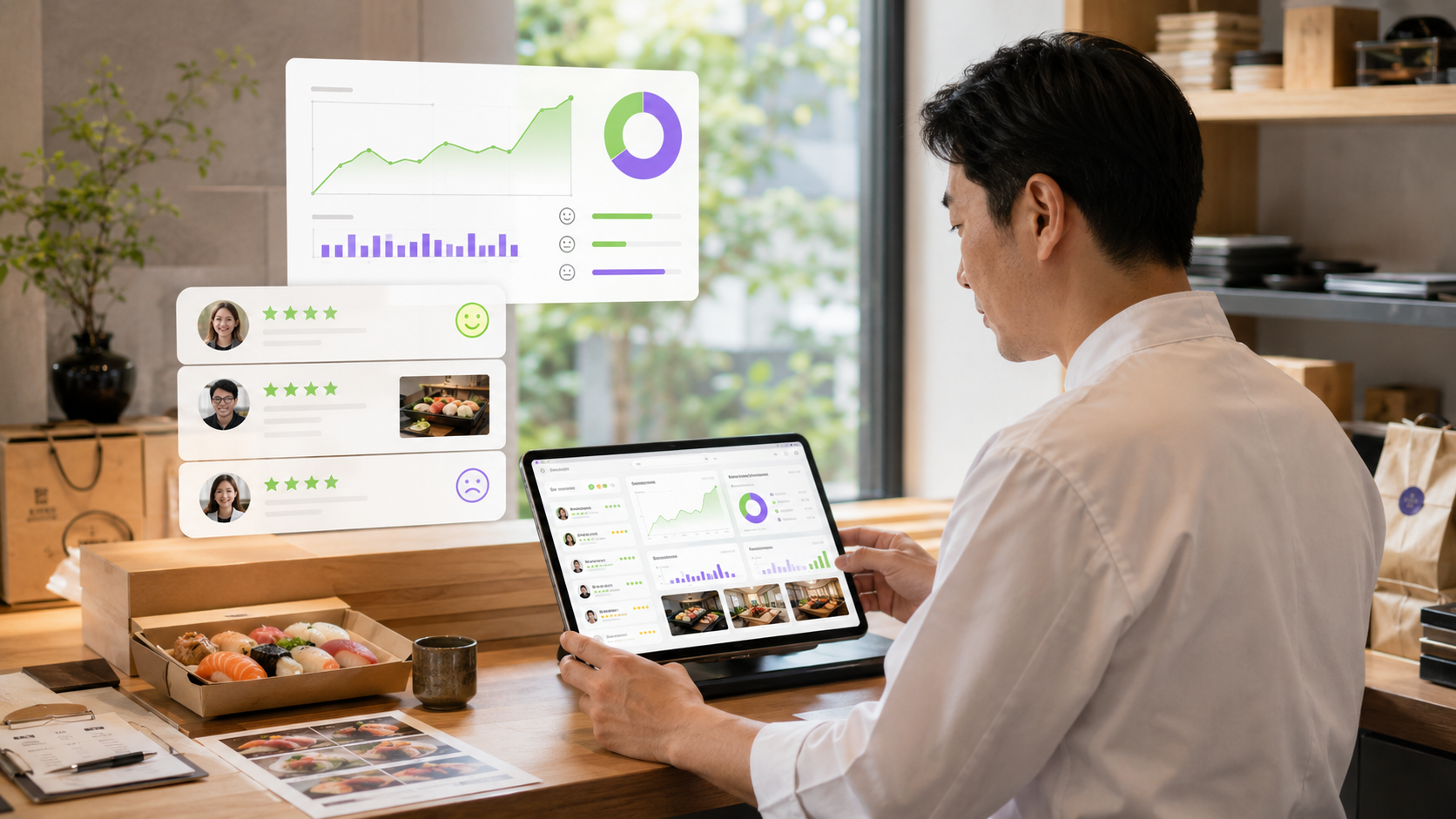
Knowing that reviews are trust signals is only useful if you know what to look for. A practical review routine should help sushi restaurant owners track recurring themes, understand what those themes may signal, and decide what to improve next.
1. Freshness and Ingredient Quality
Look for: fresh, fishy, dry, warm, cold, clean taste, high quality, old, inconsistent, or slimy.
If multiple reviews over a few weeks mention freshness concerns, the pattern usually points to something specific: a supplier issue, storage conditions, the timing between prep and service, or menu items that are ordered infrequently enough that ingredients sit longer than they should. A single mention might reflect a one-time problem. Recurring mentions mean something needs to change.
2. Rice, Temperature, and Texture
The fish gets most of the attention, but sushi rice is equally important to the overall experience. Guests notice when vinegared rice is too firm, too loose, too warm, or too cold. For takeout and delivery, rice texture is especially vulnerable because it can change quickly once the order leaves the restaurant.
If several delivery reviews mention rice quality, that may point to packaging choices, the gap between preparation time and pickup, or certain menu items that simply do not hold up well in transit.
3. Omakase, Substitutions, and Special Requests
Sushi restaurants regularly receive requests for allergy accommodations, dietary restrictions, custom rolls, no wasabi, extra sauce, and omakase adjustments. Many negative reviews are not about the food itself. They are about a communication or execution gap around a specific request.
Tracking reviews that mention these requests helps identify whether guest instructions are being captured and fulfilled reliably, especially during high-volume service periods.
4. Wait Times and Service Pace
Sushi restaurants often face pressure around sushi bar wait times, slow dine-in service during peaks, takeout pickup delays, and unclear order status. Reviews that mention "long wait," "not ready when I arrived," or "service felt rushed" usually point to workflow or communication issues rather than a single bad night.
5. Takeout and Delivery Packaging
Sushi depends heavily on visual presentation. If a guest opens a delivery bag and finds rolls that have shifted, sauce containers that have leaked, or fish that moved during transit, the experience has been damaged before the first bite. These reviews are often some of the most actionable feedback a sushi restaurant can receive.
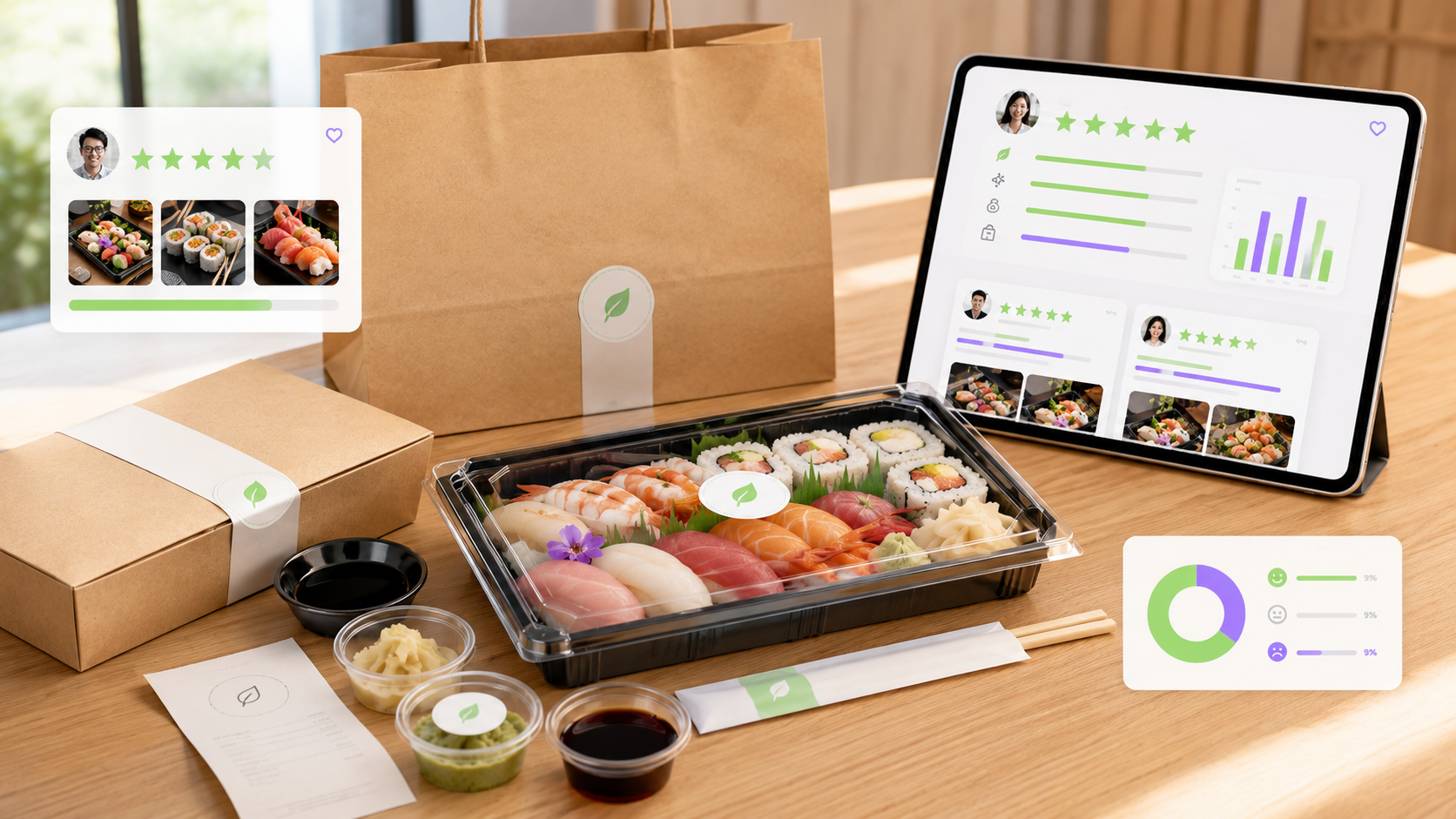
If takeout timing, special requests, or order accuracy appears repeatedly in reviews, improving Web Ordering can help create a more controlled direct ordering experience. Tools like Connexup's Web Ordering can support clearer order flow, especially when restaurants want more visibility into direct takeout volume rather than relying only on third-party channels.
Section 3: How to Respond to Different Types of Reviews
Sushi restaurant reviews are often specific and detailed. A generic "Thank you for visiting!" response to a review that mentions a particular chef, a specific dish, or a meaningful service moment will read as inattentive - exactly the opposite of what you want to communicate. Response strategy should match the type of review, not just the star rating.
Responding to Positive Reviews: Mirror the Specifics
When a guest mentions the salmon nigiri, their omakase experience, a chef's attentiveness, the freshness of the tuna, or the cleanliness of the space, your response should reflect those details. A reply that acknowledges what the guest specifically noticed feels genuine and reinforces your restaurant's strengths for every other reader who encounters that exchange.
Responding to Mixed Reviews: Acknowledge the Incomplete Experience
"The sushi was great, but the wait was too long." This type of review is one of the most valuable a sushi restaurant can receive. The guest liked the food, but an operational issue affected the overall experience. Responding well means thanking the guest, acknowledging the wait time specifically, and briefly noting what your team is working on. Avoid being defensive, and avoid vague promises.
Responding to Negative Reviews About Freshness, Cleanliness, or Food Quality
These are the highest-stakes responses a sushi restaurant owner will write. If a guest mentions an off smell, a temperature concern, a visible cleanliness issue, or anything that sounds food safety-related, the tone must be calm, specific, and accountable. Acknowledge that the experience did not meet your restaurant's standard, invite the guest to contact you directly, and do not argue publicly.
Other potential guests reading this exchange will be forming a judgment. A measured, professional response to a negative review about food quality often does more to maintain trust than any number of responses to positive reviews.
Responding to Delivery and Takeout Reviews
If a guest reports that sushi arrived with pieces out of place, leaking sauces, or a noticeable temperature drop, your response needs to acknowledge the experience they actually had. You can note that delivery logistics introduce variables outside your direct control, but the guest still received something that fell short of what they expected.
What Not to Do in Sushi Review Responses
Do not argue publicly about freshness, cleanliness, or food quality concerns.
Do not copy and paste the same response to every review.
Do not dismiss delivery complaints simply because a third-party platform was involved.
For restaurants managing review responses across multiple platforms, maintaining consistent tone takes real effort. As discussed in From Hype to Revenue, AI is most useful when it helps restaurant teams save time, identify patterns, and take practical action instead of simply generating generic replies. In practice, Connexup's review and AI-supported tools are most useful when they help teams keep responses professional while still leaving room for human judgment.
Section 4: Turn Reviews Into Operations, Not Just Responses
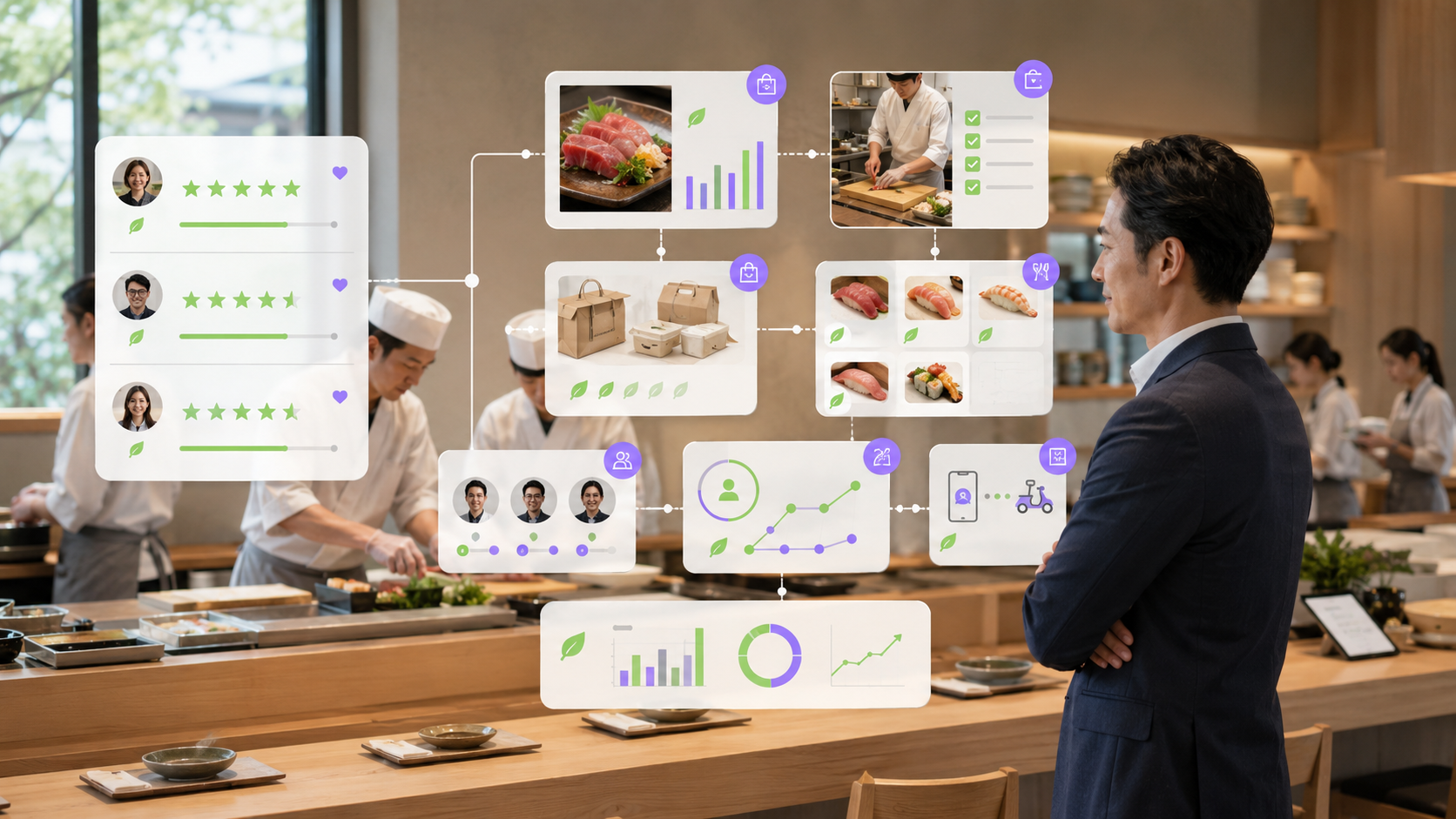
Review responses are visible to potential guests, and they matter. But the more valuable use of your review data is internal: identifying recurring patterns that point to real operational issues and acting on them.
A sushi restaurant that treats reviews only as a communication task is leaving a significant feedback loop untouched. When the same theme appears in three, five, or ten reviews over a month, that is not just a reputation concern. It is a reliable signal that something in your operation needs adjustment.
Pattern 1: Multiple Reviews Mention Slow Lunch Service
If a cluster of reviews mentions lunch wait times, the cause is rarely one difficult day. More often, it points to staffing levels during the lunch window, a prep workflow that was not designed for the volume, a situation where takeout and dine-in orders compete for the same kitchen attention, or a communication gap between front of house and kitchen. Possible improvements include adjusting peak-hour staffing, simplifying the lunch menu, improving pickup communication, or separating dine-in and takeout preparation flows more clearly.
Pattern 2: Multiple Reviews Mention Takeout Sushi That Arrived Poorly
When several delivery reviews describe rolls that came apart, sauces that spilled, or presentation that was significantly worse than expected, the fix is rarely better responses. It usually involves examining packaging choices, cut sizes, sauce placement, whether certain menu items are realistic for delivery, and whether preparation timing creates a window where quality degrades before pickup.
Pattern 3: Multiple Reviews Mention Price Concerns
"Too expensive for what it was" is a specific signal. It usually means the guest did not perceive enough value for the price they paid - not necessarily that the price itself was wrong. This kind of feedback often points to a communication gap between what your restaurant delivers and what guests understand before they order.
Improving menu descriptions, highlighting premium ingredients, creating an accessible lunch set, or building repeat visit incentives can address value perception more effectively than constant discounting. For sushi restaurants trying to protect margins while encouraging repeat visits, Loyalty Points vs Discounts can be a better long-term conversation than simply offering deals.
In each of these cases, the most important improvement is operational, not just communicative. Review data that drives changes to menu design, packaging, kitchen workflow, staffing, or ordering experience creates a feedback loop that gradually improves both the guest experience and the reviews that experience generates. In a connected Connexup workflow, those review insights can sit closer to ordering, loyalty, and operations instead of staying isolated on review platforms.
Section 5: A Weekly Review Management Routine for Sushi Restaurants
Review management does not need to be a major time commitment. But it does need to be consistent. Here is a practical routine that fits most sushi restaurant operations without requiring a dedicated staff role.
Daily: Check for Reviews That Need Prompt Attention
Spend five to ten minutes reviewing recent submissions, with priority on low-star ratings, detailed comments, and any review that mentions freshness, cleanliness, wait time, delivery quality, or a possible food safety concern. These are the categories where a timely response matters most.
Two to Three Times Per Week: Respond in Focused Sessions
Rather than responding to reviews as they come in throughout the day, set aside dedicated blocks for response work. Address negative and mixed reviews first, then move to positive reviews that contain specific, meaningful details. The quality of the response matters more than speed in most cases.
Weekly: Organize Reviews by Theme
Once a week, categorize recent reviews according to the trust signals they represent: freshness and quality, cleanliness, service and pace, wait time, delivery and packaging, value, menu or ordering confusion, and consistent praise. This gives you a clearer picture of what guests are actually paying attention to.
Monthly: Connect Review Themes to Business Decisions
At the end of each month, look at which themes appeared most frequently and bring those findings into operational planning. A consistent pattern in freshness reviews might prompt a supplier conversation. A pattern in delivery reviews might lead to packaging changes or a revised delivery menu. A pattern in service pace might affect staffing during peak periods.
The restaurants that improve most consistently are the ones where review data informs decisions about ordering experience, kitchen workflow, and guest communication - not just the content of individual responses. A connected system like Connexup can make this routine more manageable by placing reviews closer to the broader guest experience rather than treating them as a separate task.
Conclusion: Better Reviews Come From Better Guest Experiences
For sushi restaurants, the goal of review management is not primarily to improve a star rating. It is to build and sustain the kind of trust that brings guests back - and that convinces new guests to choose you over the restaurant a few blocks away.
Every review is a signal. Freshness comments reflect what guests believe about your ingredient sourcing and kitchen standards. Cleanliness comments reflect what they observed about your physical environment. Service and pace comments reflect whether your operation delivered on the experience it was designed to provide. Value comments reflect whether what you served matched what you communicated. Delivery reviews reflect what happens to your product once it leaves your kitchen.
The sushi restaurants that manage reviews well are not the ones spending the most time crafting the perfect public response. They are the ones using guest feedback consistently - week after week - to make real improvements that gradually reduce the gap between the experience guests expect and the experience they actually receive.
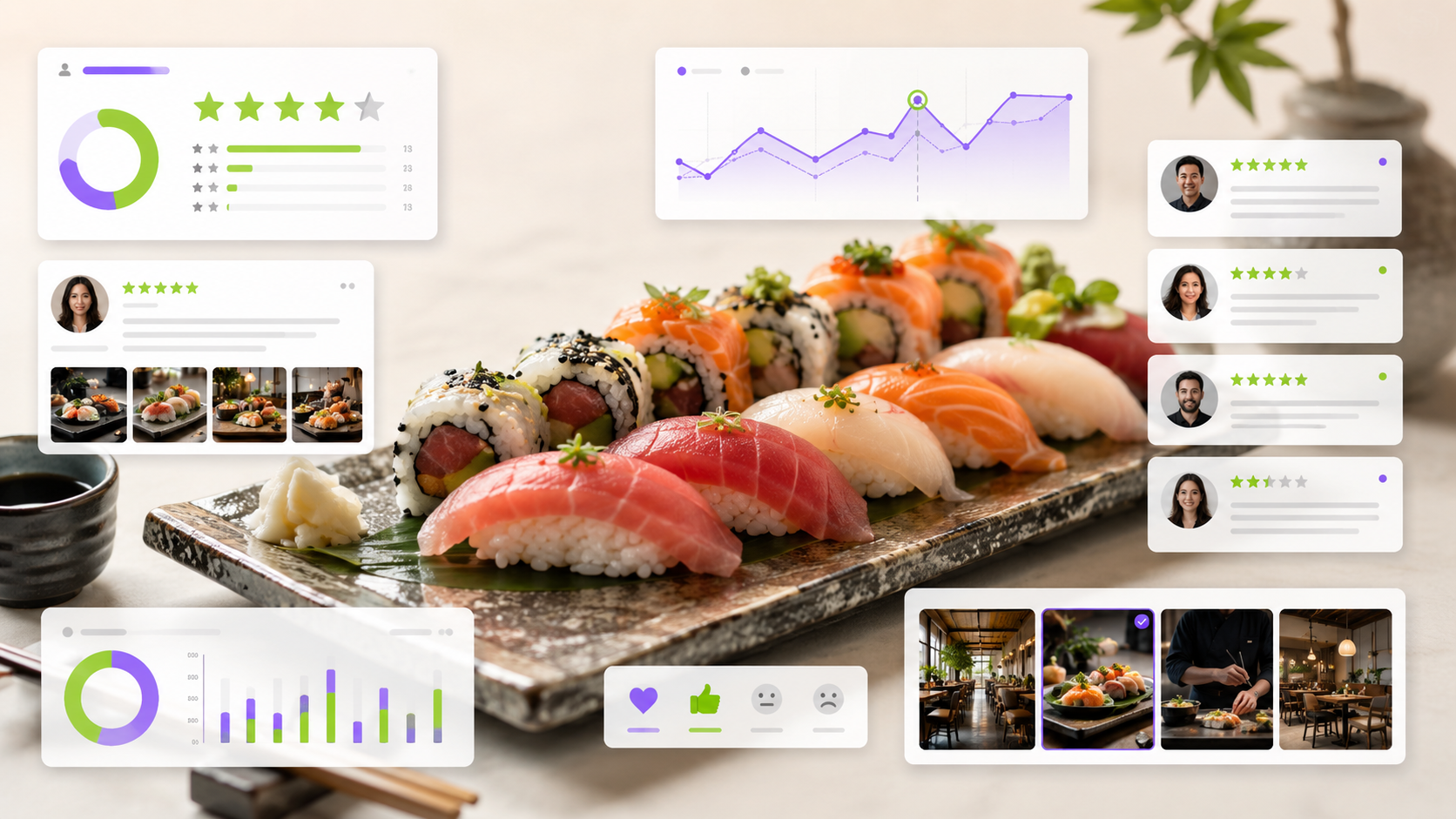
For operators using Connexup, review management is most useful when it works alongside digital ordering, customer engagement, and loyalty. For sushi restaurants, that means guest feedback does not stay isolated on review platforms. It becomes part of how the restaurant improves service, operations, and repeat visits.