How to Use ChatGPT to Run Your Restaurant More Efficiently
Connexup Team
Jul 3, 2026

AI chatbot headlines are everywhere lately. Voice ordering, smart customer service, automated marketing — the coverage makes it sound like AI can solve every marketing and operations problem a restaurant has.
One example that comes up often is Domino's Pizza. Years ago, Domino's began experimenting with voice- and chat-based ordering, rolling out chatbot ordering across its app, Facebook Messenger, and Google Assistant. A customer could simply say:
"I want a large pepperoni pizza delivered."
The system would recognize the request, match it to the menu, and generate the order — almost entirely without human involvement.
It's an appealing experience, but the investment behind it is much bigger than it looks. A chain like Domino's has the resources to train AI on different accents, connect menu, ordering, and payment systems, and maintain all the edge cases that come with it on an ongoing basis.
For most small and mid-sized restaurants, this kind of AI is still far removed from day-to-day operations — there's no dedicated tech team, and no order volume to justify the cost of building and maintaining it long-term. If you're chasing that trend just because "everyone else is using AI," it can add more work than it saves — or backfire outright if the experience isn't fully baked. (We covered this gap between AI hype and what actually works for restaurants in more depth in From Hype to Revenue: Where AI Actually Works in Restaurants.)
So is there an AI tool that an independent restaurant — with no tech team and a full plate of purchasing, scheduling, delivery platforms, and social media already — can actually use?
There is.
For most restaurant owners, ChatGPT is the most accessible, lowest-cost, and genuinely usable AI tool available today. No development work, no system integrations — just open the app or website, type a question, and get something you can use or adapt right away.
Here's how ChatGPT can help with some of the most common jobs on a restaurant owner's plate.
Practical Ways to Use ChatGPT in Restaurant Operations
1. Creating Social Media Content
Most restaurant owners know social media matters. The hard part isn't deciding to post — it's figuring out what to post every day. Without a dedicated content team, and with a restaurant to run, there's rarely time to brainstorm ideas, write captions, and shoot videos on a consistent schedule.
This is where ChatGPT adds real value. It can help generate content ideas, short-video scripts, and captions, and can pair with an AI image tool to draft visuals as well.
To get useful output, though, you need to give it context first — your cuisine, your target audience, your marketing goal. The more specific the input, the more usable the result.
Try this prompt:
I own a Chinese restaurant in the U.S. and want to attract local young diners. Generate 7 Instagram/TikTok content ideas, each with a title, a shot-by-shot script, a one-line caption, and hashtags.
Don't copy the output as-is. Check it against your actual menu and your restaurant's physical space before you shoot anything. Treat ChatGPT as a content planning assistant, not the final creative — that's what makes it sustainable for regular posting.
2. Responding to Google Reviews
For local restaurants in the U.S., Google Reviews are often the deciding factor before a customer walks in. Many diners check the rating, the most recent reviews, and whether the owner responds to feedback before they decide where to eat.
But responding to reviews every day is time-consuming, and it's easy to run out of things to say — especially with negative reviews, where emotion can creep into the response and make things worse.
ChatGPT can help you build a set of standardized reply templates first, then adjust them for specific reviews. That keeps your responses fast, professional, and consistent in tone.
Try this prompt:
Write 10 Google Review response templates: 5 for 5-star reviews, 5 for 3–4 star reviews, and 5 for 1–2 star reviews. Keep the tone friendly but not overly apologetic, appropriate for a U.S. restaurant.
Or:
Here's a negative review: "XXX." Write 3 versions of a response — a light clarification, a standard apology, and a solution-focused response.
Pick whichever version fits the situation — whether the customer misunderstood something or there was an actual issue in-store. If your response includes a refund or compensation, make sure it matches your restaurant's actual policy before you post it.
For a deeper look at managing your restaurant's online reputation, see 5 Best Restaurant Review Management Tools for Growing Restaurants and Restaurant Reputation Management in a Google-First World.
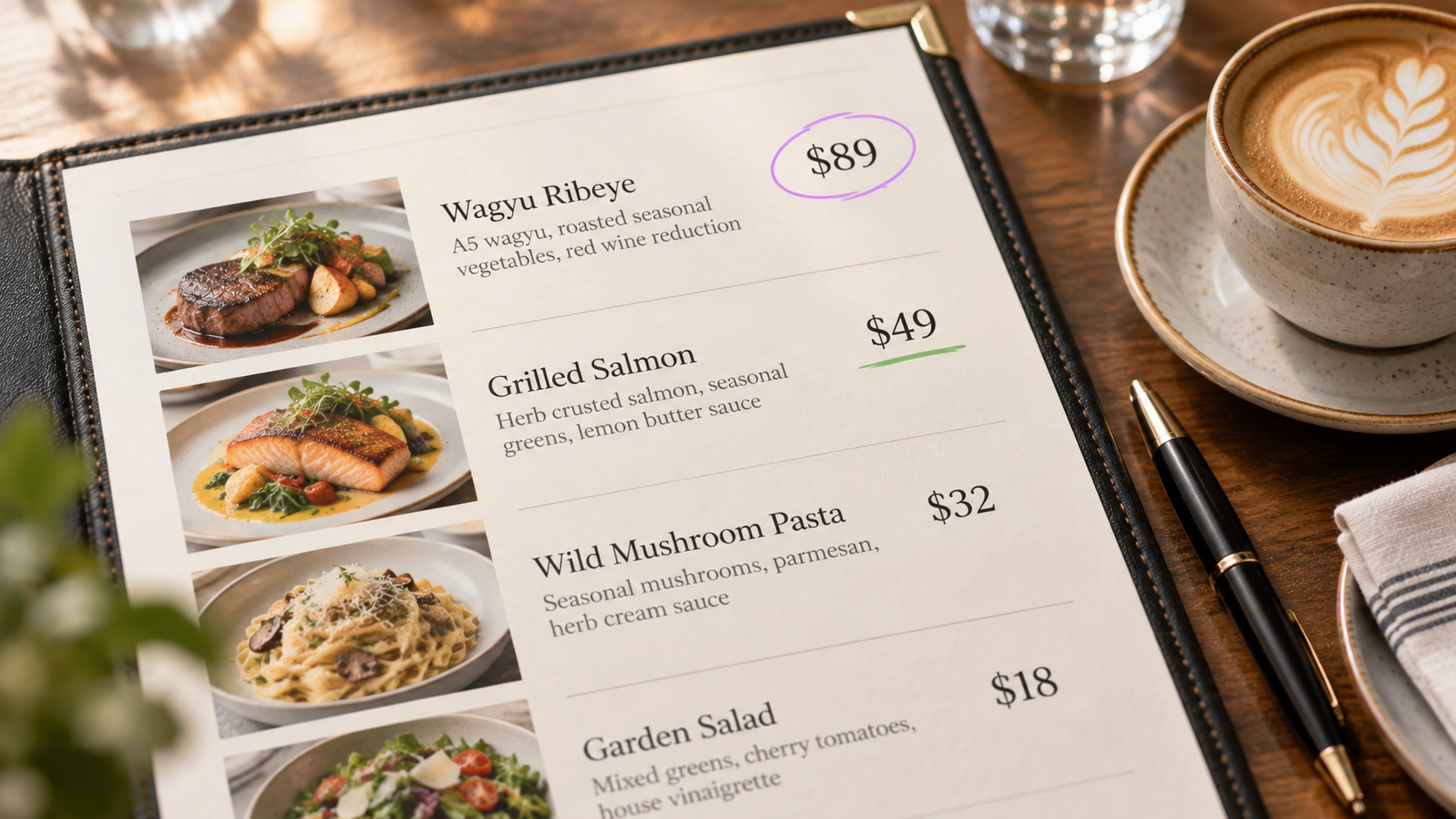
3. Optimizing Your Menu to Increase Average Check Size
Your menu doesn't just tell customers what to order — it directly shapes your margins.
How dishes are arranged, how they're named, and how they're bundled into combos all influence what customers order and how much they spend.
Hand your menu to ChatGPT, and it can help you analyze the structure and suggest marketing-level improvements.
Try this prompt:
Here's my restaurant menu. Please analyze:
Which items likely have high profit margins
Which items could be bundled into combos
How to rename items to make them more appealing
3 combo suggestions that could work as customer-acquisition offers
Keep in mind that ChatGPT doesn't know your actual food cost, labor cost, or sales data. Its suggestions are a useful starting point for analysis, not a final decision — it's good at spotting opportunities, but the real profitability call still depends on your own numbers.
You can also ask it to review your menu layout — whether your signature dishes are placed where customers' eyes naturally land, or whether the way prices are displayed makes customers more price-sensitive than they need to be. These are low-cost changes that can still move the needle on conversion. For a more systematic approach to menu design, see The Smart Way to Design a Profitable Restaurant Menu.
4. Staff Training (Without Having to Train Every New Hire Yourself)
Many small restaurants run into the same problem: high staff turnover means the owner ends up re-teaching the same basics — greeting guests, taking orders, recommending dishes, handling complaints — over and over.
Turning these processes into a standardized SOP lets new hires learn the basics on their own first, then fill in the details on the job, cutting down significantly on the time owners spend retraining.
ChatGPT can help you build the SOP framework quickly, which you can then refine for your specific restaurant.
Try this prompt:
Write a front-of-house service SOP for a U.S. restaurant, covering: greeting guests, taking orders, recommending dishes, handling complaints, and checkout. Keep it simple and easy to follow.
Once you have a draft, walk through it against how your restaurant actually operates — your refund policy, your go-to recommendations, how you typically handle complaints. The more specific the SOP is to your real operations, the faster new staff will get up to speed.
5. Writing Ad Copy
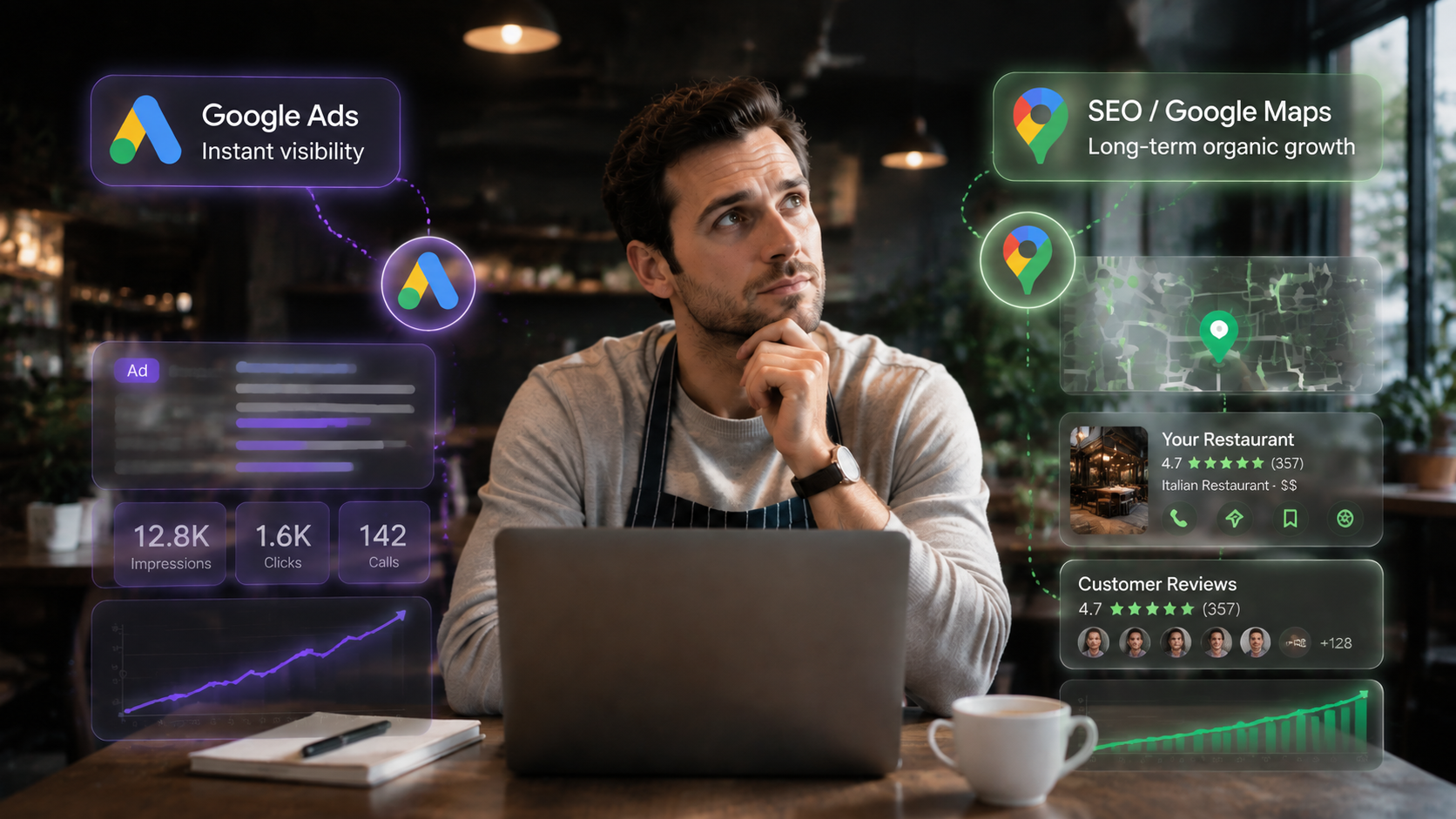
If you're running Google Ads or Meta Ads, your ad copy has a direct impact on click-through rate and customer acquisition cost.
ChatGPT can generate multiple versions of ad copy around different audiences and selling points, so you can test variations without starting from scratch every time.
Try this prompt:
Write 3 sets of Google Ads copy targeting people searching for Chinese food nearby. Emphasize: fast, authentic, and family-friendly.
Test the different versions and let click-through and conversion data guide which one you scale up. Make sure whatever you highlight in the ad — "authentic," "family-friendly," or otherwise — actually reflects your restaurant, so you're not promising something you can't deliver.
From ChatGPT to Connexup
By now you've probably noticed a pattern: every one of these use cases requires you to explain your restaurant to ChatGPT first — your cuisine, your target audience, your menu, your brand positioning.
Every new conversation, you're re-entering that same context. Skip it, and the output tends to get generic fast.
If you'd rather not repeat that setup every time, Connexup is built specifically for restaurants.
Connexup was designed around restaurant operations from the ground up, so it already understands Google Reviews, menu management, local marketing, and social media in a restaurant context. You fill in your restaurant's basic information once, and everything generated after that — social content, review responses, marketing suggestions — is built around your actual restaurant, without you having to re-explain the background every time the way you would with ChatGPT.
The Bottom Line
The most useful AI isn't the one that looks the smartest — it's the one closest to your actual business, the one that genuinely saves you time and makes you more efficient.
For most small and mid-sized restaurants, chasing AI technology that's expensive and hard to implement isn't the answer. Get the most out of a tool like ChatGPT first — hand off the repetitive work to AI, and put more of your time back into your guests, your food, and running your restaurant.
AI won't run your restaurant for you. But it can be the operations assistant you actually use, every day.
If you'd like to see how Connexup can build these capabilities directly into your daily operations, we'd love to talk.