7 Rules for Building a Points-Based Loyalty Program That Works
Connexup Team
Sep 18, 2026
More and more restaurants are launching points-based loyalty programs, hoping that rewards will encourage customers to return more often. But in reality, many restaurants discover that while membership numbers continue to grow, actual customer spending does not always follow.
Customers sign up but never actively use the program. Points remain untouched. Rewards go unredeemed. These are challenges that many restaurant operators face.
In most cases, the problem is not that restaurants fail to offer rewards. The real issue is that the loyalty program was designed without fully understanding the customer experience. Some restaurants create complicated points systems that customers cannot easily understand. Others set redemption thresholds so high that customers need months before seeing their first reward. Some even turn their loyalty programs into simple discount tools, causing customers to focus only on price rather than building a genuine preference for the brand.
The data reflects this challenge. More than 60% of restaurants now offer loyalty programs, yet more than 30% of operators say their programs have not delivered the results they expected. At the same time, consumers consistently report that many loyalty programs are too complicated to join or too difficult to earn meaningful rewards from.
An effective loyalty program is not simply about creating a “spend money, earn points, redeem rewards” system.
A program that genuinely improves customer retention needs to make participation clear and ensure customers feel value throughout the entire experience. Restaurants need the right points structure, achievable reward milestones, and precise customer engagement strategies to turn loyalty programs into real drivers of repeat business.
This article breaks down 7 key rules for designing a points-based loyalty program, using examples from brands like Chipotle, DoorDash, and Chili’s. It also provides a practical template that restaurant operators can adapt to build a stronger customer retention system.
Rule 1: Make Points Simple Enough That Customers Never Have to Calculate
When designing a loyalty program, the first step is not deciding how many rewards to offer. It is making sure customers can understand the system immediately.
After joining a loyalty program, customers usually have three simple questions:
How much do I need to spend to earn points?
How long until I can redeem a reward?
How close am I to my next one?
If customers need to spend time figuring out complicated point conversions, the program itself becomes a barrier to participation.
That is why successful loyalty programs usually follow one simple principle:
customers should immediately understand the connection between spending and rewards.
One of the most common approaches is “spend $1, earn 1 point.” It is transparent and requires no mental calculation. Spend $25, and customers instantly know they have earned 25 points.
Chipotle Rewards follows this model. Customers earn points through everyday purchases and redeem them for rewards. This simple structure reduces the learning curve and makes the loyalty program easier to integrate into regular purchasing habits.
Of course, there is no universal points ratio that works for every restaurant. Different businesses can adjust their structure based on average check size, visit frequency, and reward value. What matters is not the size of the number, but whether customers can quickly understand what their points are worth.
For example, Royal Perks uses a “spend $1, earn 10 points, redeem at 200 points” structure. Although the numbers are higher, the system remains easy to understand. Customers still know exactly how their purchases translate into rewards.
This shows that the points ratio itself does not determine whether a loyalty program succeeds. What matters is whether customers clearly understand how their spending turns into value.
A strong loyalty program should not make customers calculate points. It should make them naturally think: “A few more visits, and I’ll earn my next reward.”
 Rule 2: Shorten the Distance to a Customer's First Reward
Many restaurants focus on whether the reward is attractive enough, but overlook one critical question:
How long does it take a customer to earn their first reward?
The first redemption is often the moment that determines whether customers continue engaging with the program.
If customers need several months to earn their first reward, they are likely to lose interest. On the other hand, if rewards are too easy to obtain, the program may feel less valuable and become little more than a giveaway.
The goal is to find the right balance: rewards should feel valuable enough to motivate customers, but achievable enough that they can reach them without excessive effort.
A practical guideline is to set the first reward threshold at around 2–3 times the average check size, allowing customers to earn their first reward within 3–4 visits.
DoorDash Rewards follows a similar approach. When the average order value is around $12, setting the first redemption threshold at approximately $30 in cumulative spending allows customers to experience value quickly after only a few purchases.
Research also shows that once customers complete their fourth visit, repeat behavior can increase significantly. The goal of a loyalty program is not to encourage customers to accumulate points forever. It is to help them complete those first few purchases and gradually build a repeat habit.
Two important psychological principles are involved here.
The first is the goal-gradient effect. People become more motivated as they move closer to achieving a goal. A well-designed reward distance helps customers see progress and stay engaged instead of abandoning the program because the target feels too far away.
The second is loss aversion. Once customers accumulate points, they begin to perceive them as something they already own. When those points are close to expiring, customers are more likely to return and make another purchase to avoid losing their accumulated value.
An effective loyalty program does not simply offer rewards. It creates the right reward journey to give customers a reason to keep coming back.
Rule 3: Use Bonus Points to Encourage Specific Customer Behaviors
A loyalty program should do more than reward customers after they make a purchase. It can also become a powerful tool for guiding specific customer behaviors that support restaurant growth.
Many restaurants treat points as a simple cashback mechanism, but overlook their potential as a marketing tool. For example, restaurants can use points-based incentives to address common business challenges such as:
Low traffic during certain time periods;
Limited customer adoption of new menu items;
Slow sales for high-margin products;
Lower weekday visit frequency.
Instead of offering broad discounts, bonus point campaigns create additional value for customers while encouraging the behaviors restaurants want to drive.
Common approaches include:
Double points during specific time periods;
Extra points for selected products;
Limited-time point promotions.
Fast-casual brand ChopShop used a targeted loyalty campaign during breakfast hours to encourage customers to visit during that period. As a result, breakfast sales increased by 21%. This example shows that loyalty programs should not simply reward purchases after they happen — they should actively support broader restaurant marketing strategies.
From a customer behavior perspective, this works because it reinforces habit formation.
Most purchasing habits follow a simple cycle:
Trigger → Behavior → Reward
For example, a customer feels the need for coffee in the morning, chooses the same restaurant, and receives points as a reward. Over time, this positive reinforcement helps turn occasional visits into repeat habits.
The goal is not to give away more points. The goal is to use points strategically to encourage the actions that matter most for your business.
Rule 4: Don’t Let Points Train Customers to Wait for Discounts
One of the biggest mistakes restaurants make with loyalty programs is allowing customers to focus only on discounts instead of building a stronger connection with the brand.
If a loyalty program always follows this pattern:
Purchase → Earn points → Redeem discount
customers may eventually remember the restaurant only because it is cheaper, not because they genuinely prefer the brand.
For restaurants, the value of a loyalty program is not simply driving one additional transaction. It is creating long-term customer preference.
That means rewards should go beyond discounts and include more experience-driven benefits, such as:
Free upgrades;
Complimentary add-ons;
Early access to new menu items;
Birthday rewards;
Exclusive member experiences.
These rewards may not have a high cost, but they can significantly strengthen the relationship between customers and the brand.
Chipotle Rewards, for example, provides customers with different reward options that create frequent opportunities for engagement beyond simply accumulating points.
Compared with waiting months for one large discount, smaller and more frequent rewards help customers feel continuous value from the loyalty program.
This is where personalization becomes increasingly important. Instead of sending every customer the same offer, restaurants can use customer preferences and purchase history to create rewards that feel more relevant and meaningful.
The psychology behind this is the principle of reciprocity. When brands provide unexpected value, customers are more likely to respond positively — whether through repeat visits, larger purchases, or recommendations to others.
A successful loyalty program is not about offering more discounts. It is about creating more reasons for customers to choose your restaurant again.
Rule 5: Reduce Friction and Make Joining and Redeeming Effortless
Many loyalty programs fail not because the rewards are unattractive, but because the experience is too complicated.
Customers are unlikely to complete lengthy registration processes, remember complicated rules, or ask employees for help just to earn a small reward.
An effective loyalty program should make the entire process simple:
Easy registration;
Automatic point accumulation;
Clear redemption process;
Minimal staff involvement.
Ideally, customers should only need to scan a code or complete a quick sign-up once. After that, points and rewards should be tracked automatically.
Chili’s previously received customer feedback that its loyalty experience was too complicated. The brand later integrated registration and redemption into in-store digital devices, allowing customers to sign up, check points, and redeem rewards without requiring assistance from employees.
This reduced friction for both customers and restaurant staff.
Industry data also supports this approach. Loyalty programs with clear structures and simple participation processes are more likely to drive engagement and long-term usage.
For restaurants, simplicity is not just a better customer experience — it is a growth strategy. Complex systems create unnecessary barriers, while automated experiences make loyalty easier to maintain.
 Rule 6: Make Every Customer Interaction Count Across All Channels
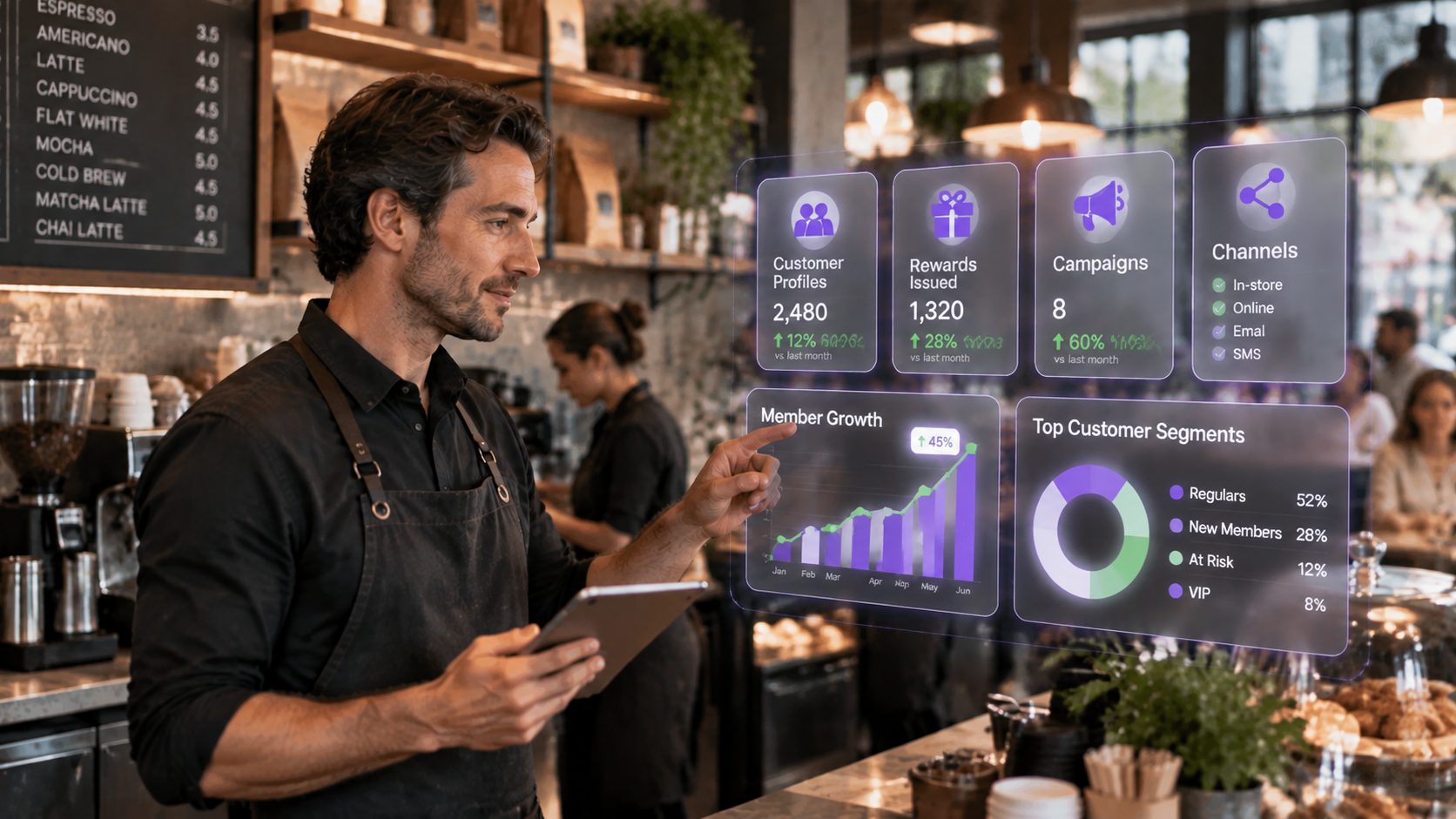
Today’s customers interact with restaurants across multiple channels. They might dine in, order from the website, use the mobile app, or order through a delivery platform.
If these channels operate separately, restaurants lose valuable customer insights and cannot provide a consistent loyalty experience.
That is why an integrated loyalty ecosystem is no longer an advantage — it has become a foundation for modern restaurant operations.
Chili’s, for example, connected its loyalty experience with digital ordering and in-store technology to provide customers with a consistent experience across different touchpoints.
For restaurants, an integrated loyalty system is not only about convenience. It is also about building ownership of customer data.
Compared with relying entirely on third-party platforms, having direct customer data allows restaurants to:
Understand purchasing patterns;
Identify high-value customers;
Create more targeted marketing campaigns;
Reduce dependence on third-party channels.
When customers order directly through a restaurant’s own channels, brands can build stronger customer relationships while maintaining greater control over the customer experience.
The true value of a loyalty program is not only rewarding customers. It is helping restaurants build a long-term customer asset.
Rule 7: Use Personalized Engagement to Keep Members Active
A customer joining your loyalty program is not the finish line. It is the beginning of the relationship.
Many restaurants lose the opportunity because they stop engaging after customers register.
Without ongoing communication, customers may forget about their points, overlook available rewards, and have no reason to return.
Restaurants should use customer data to create more relevant engagement, such as:
Reminding customers about their available points;
Recommending products they previously enjoyed;
Sharing exclusive member offers;
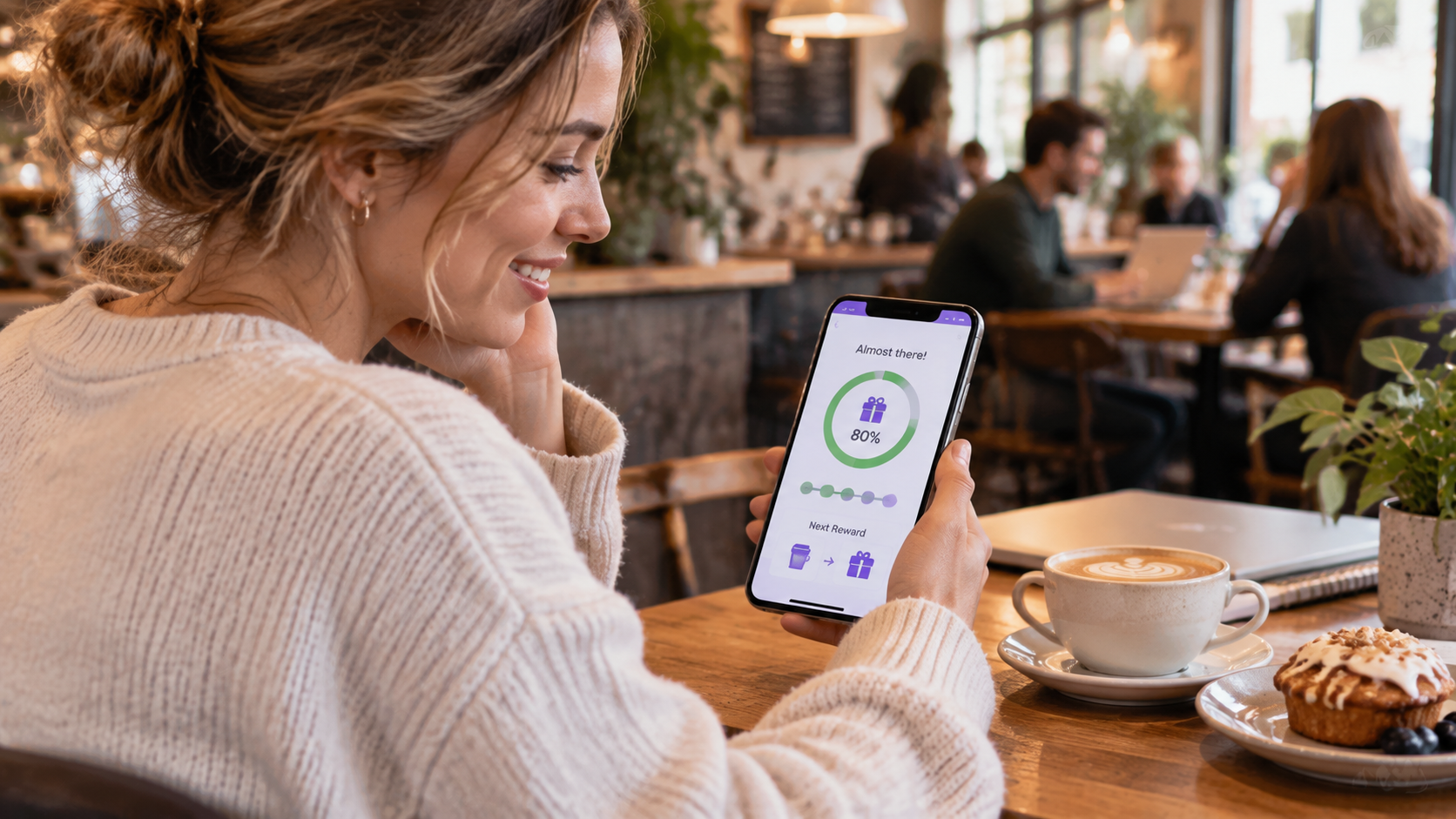
Notifying customers when they are close to earning a reward.
Compared to sending the same message to everyone, personalized communication gets more responses. Brands using AI-driven personalization see a 35% higher redemption rate than those using traditional one-size-fits-all marketing.
The reason is simple:
Customers respond to messages that feel relevant to them.
A customer who regularly buys coffee is more likely to be drawn in by "extra points on your usual drink today" than by a generic promotion sent to everyone.
The key is understanding that customer data alone does not create value.
Data becomes valuable only when restaurants use it to create timely, personalized interactions that encourage customers to return.
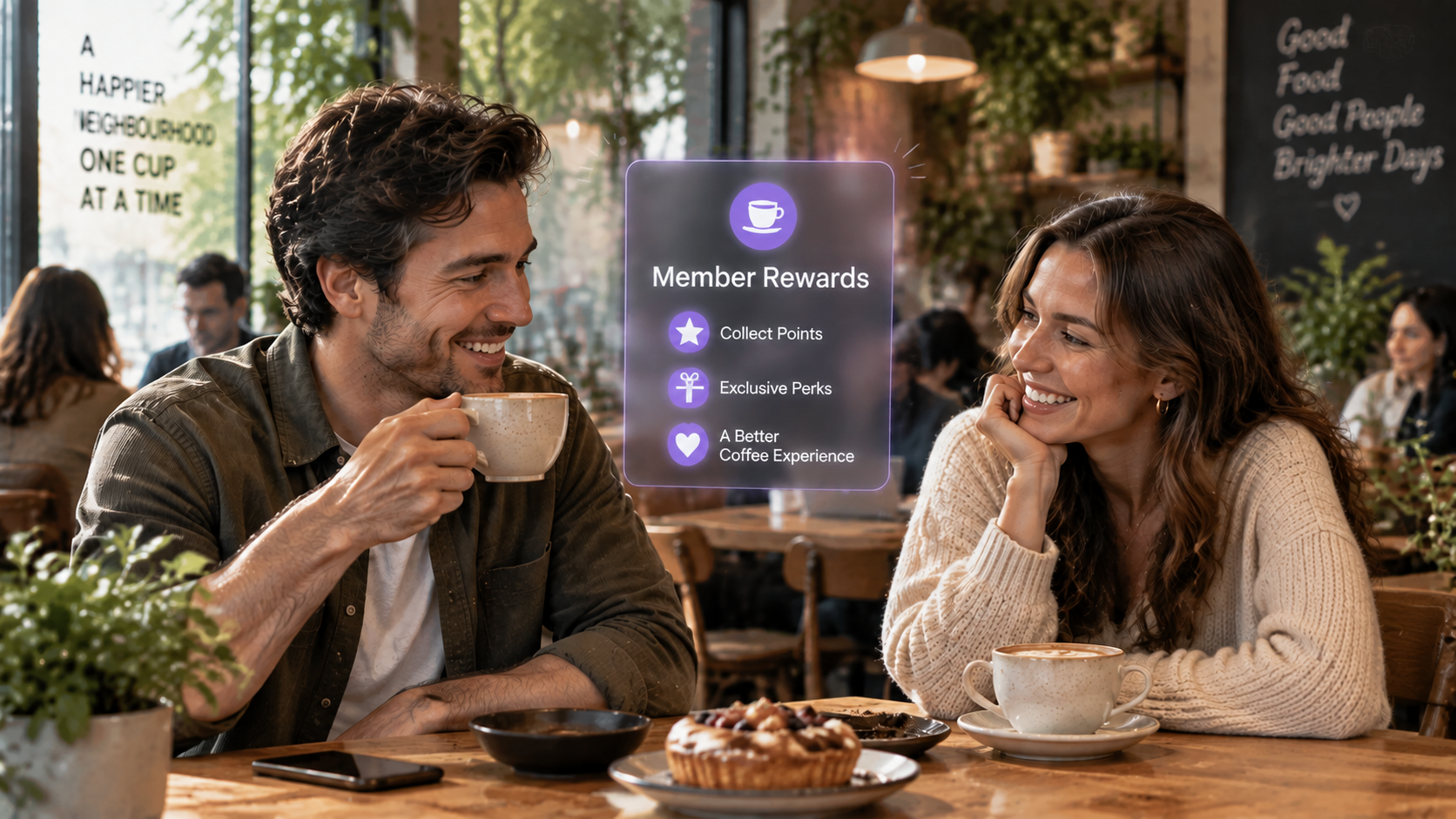 Practical Example: How a Community Coffee Shop Can Apply These 7 Rules
Imagine a neighborhood coffee shop with an average order value of $12. The goal is to increase weekday visits and build stronger customer relationships.
Based on the 7 rules above, the restaurant could design its loyalty program like this:
Design Element | Setup | Related Rule |
|---|---|---|
Points structure | $1 spent = 1 point | Rule 1: Easy to understand |
First reward | 25 points = free coffee | Rule 2: Achievable first reward |
Promotion | Double points every Tuesday morning | Rule 3: Encourage specific behaviors |
Instant benefit | Free upgrade when joining | Rule 4: Avoid discount-only thinking |
Registration | Scan to join, automatic tracking | Rule 5: Reduce friction |
Channels | In-store, website, and mobile ordering connected | Rule 6: Unified experience |
Engagement | Personalized reminders twice per week | Rule 7: Maintain engagement |
A successful loyalty program should not only measure how many members have joined. It should measure whether those members are actually contributing to business growth.
Restaurants can evaluate performance through metrics such as:
Whether members visit more frequently than non-members;
Whether average order value increases;
Whether reward redemption remains healthy;
Whether the time between visits decreases;
Whether loyalty-driven revenue continues to grow.
If membership numbers increase but customer behavior does not change, the program may simply be functioning as a discount tool rather than a true retention system.
From Design to Operations: The Real Challenge of Managing a Loyalty Program Long Term
Designing a points-based loyalty program is not complicated. Each individual component is relatively easy to implement. The real challenge of running an effective loyalty program over the long term lies in consistently managing and optimizing countless details day after day.
Restaurants need to continuously handle a range of important but time-consuming tasks, including adjusting point structures, managing reward campaigns, updating member benefits, connecting different ordering channels, analyzing customer behavior, and sending personalized marketing communications.
For independent restaurants, these tasks often require significant time and effort. Without the right system support, maintaining consistent execution can become increasingly difficult. A loyalty program may run smoothly at the beginning, but after a few months, daily operational demands can cause restaurants to gradually reduce their focus on it — and the program eventually becomes inactive.
This is the challenge Connexup aims to solve.
Through Connexup’s loyalty program tools, restaurants can transform these loyalty strategies from manual management into an automated system:
Customizable Reward Structures allow restaurants to flexibly set point ratios, reward thresholds, and bonus point campaigns, enabling different businesses to design loyalty programs based on their own operational goals.
Omni-Channel Coverage helps restaurants connect different customer touchpoints, including in-store purchases and online ordering, ensuring every transaction contributes to the loyalty program.
Automatic Sync with Customer Profiles enables restaurants to continuously collect customer data and deliver more personalized loyalty engagement based on purchase history.
Promotion Integration allows loyalty rewards and restaurant promotions to work together instead of operating as two separate systems.
Ultimately, restaurants no longer need to spend large amounts of time manually maintaining their loyalty programs. Instead, they can set up the system once and allow the program to run continuously.
By transforming these 7 rules from “manual execution” into a “set once, run automatically” system, independent restaurants can build loyalty management capabilities similar to larger restaurant brands while maintaining ownership of customer data and the advantages of direct ordering channels.
A successful loyalty program is not about simply giving customers more discounts. It is about making participation easier, making rewards visible faster, and guiding customer behavior in the right direction.
When these processes can run automatically, a loyalty program is no longer a system that requires constant manual effort. Instead, it becomes a system that continuously generates repeat visits and business growth.
This is what Connexup aims to help independent restaurants achieve: turning each transaction into a long-term customer relationship.