How Restaurants Can Bring Guests Back Without Relying on Delivery Platforms
Connexup Team
Jun 26, 2026
For many restaurants, third-party delivery platforms first look like a growth opportunity. Orders come in. Visibility improves. Slower hours may even bring in some extra revenue.
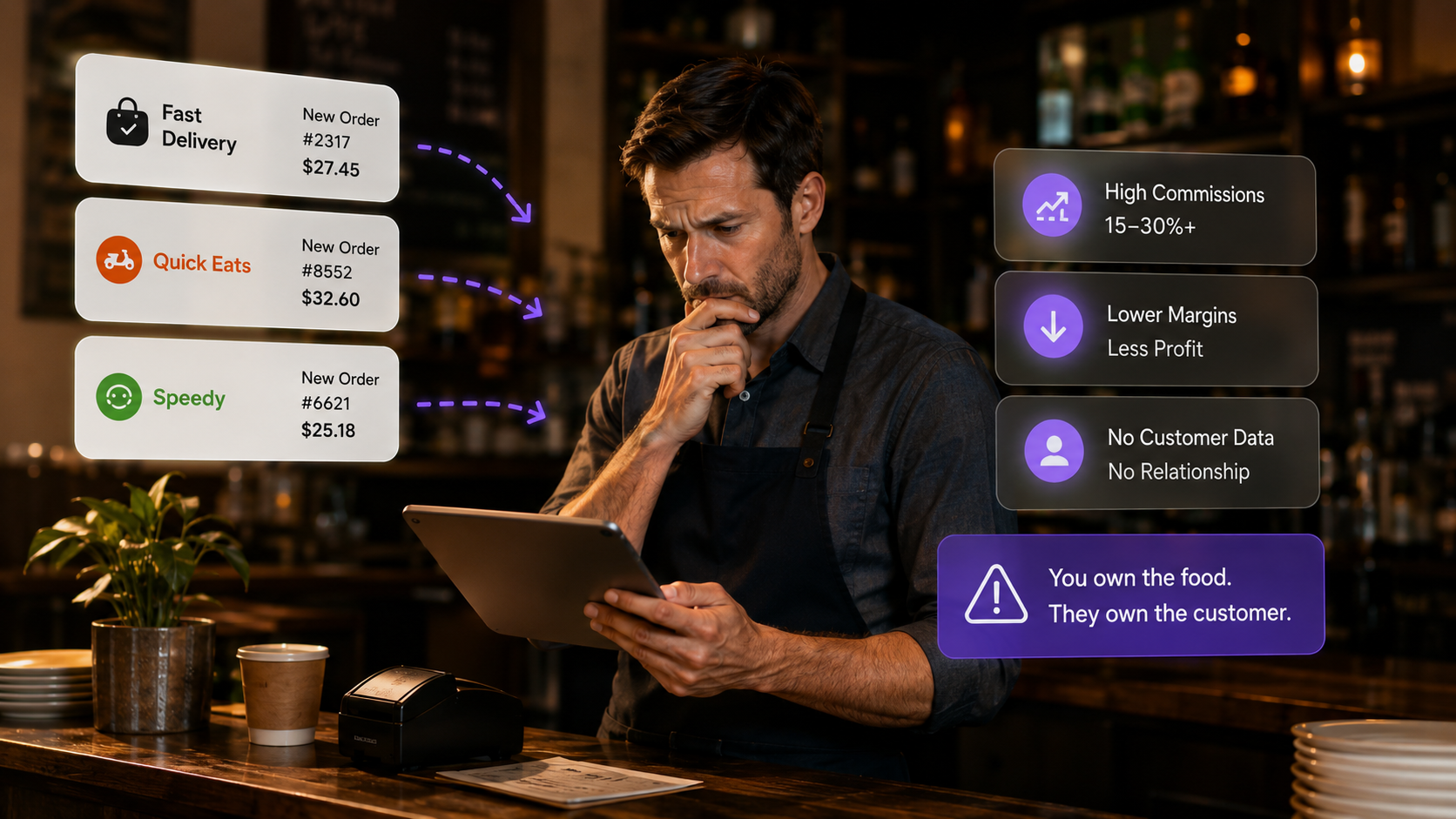
But over time, the trade-off becomes harder to ignore: commissions rise, margins shrink, and guests remember the platform more than the restaurant brand.
According to DoorDash's merchant pricing, restaurants can choose delivery commission plans of 15%, 25%, or 30%, depending on the level of marketing support and benefits included. If a restaurant generates $30,000 in monthly sales through a third-party platform and pays a 25% commission, $7,500 is deducted every month. Over a year, that becomes $90,000 — before food cost, labor, packaging, rent, and marketing are even considered.
The more important issue is not only cost. It is customer ownership.
According to a consumer study, 42% of guests mainly use third-party apps to reorder from restaurants they already know. Only 11% primarily use those apps to discover new restaurants. In other words, many guests have already tried your food and know your restaurant — but when they reorder, they return to the platform instead of your website, storefront, or loyalty system.
The real question is not whether restaurants should offer delivery.
It is this: if orders keep coming through platforms someone else controls, does the restaurant truly own the guest relationship?
To reduce platform dependency, restaurants need their own growth loop:
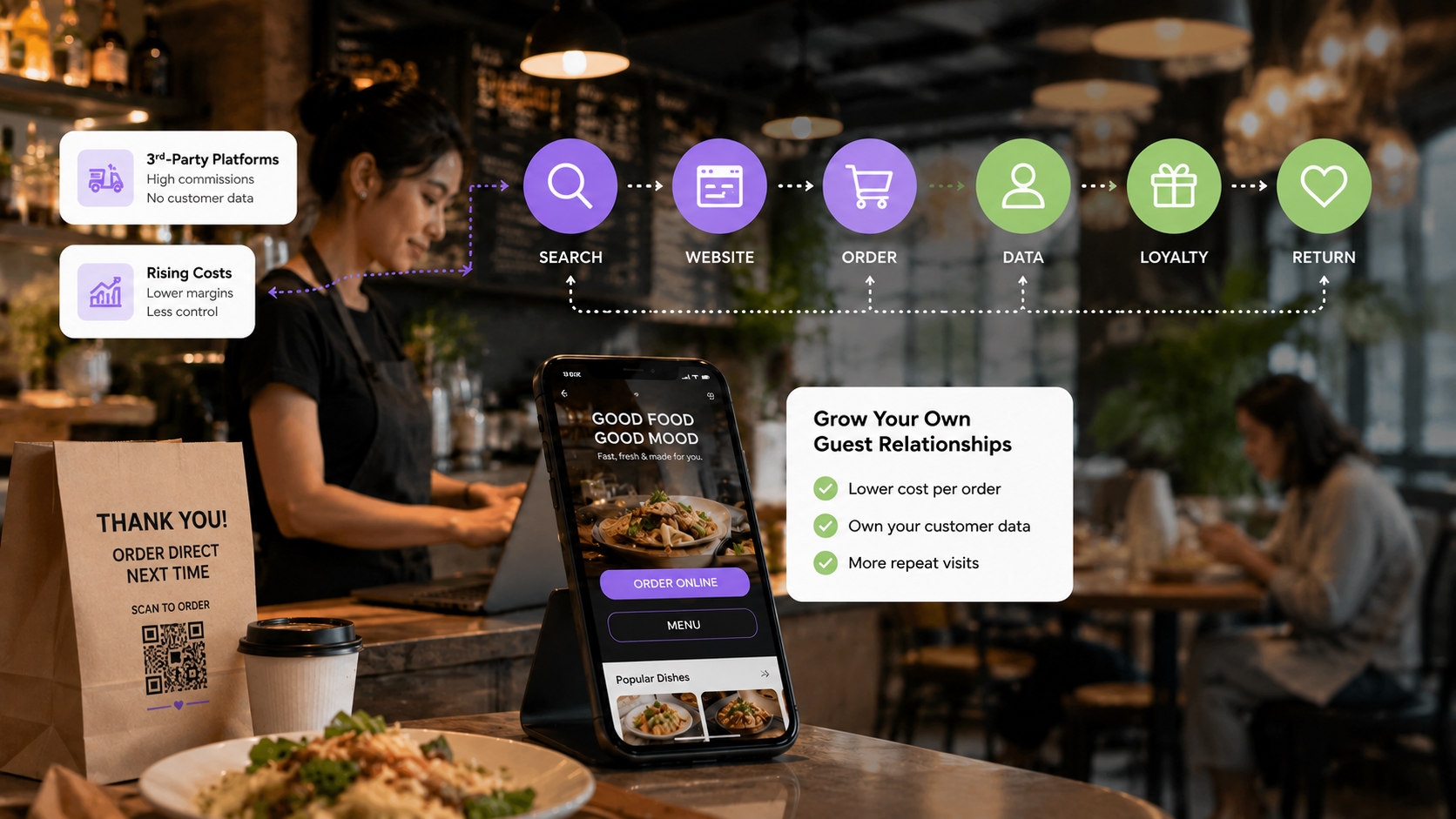
Be found → Get chosen → Take direct orders → Capture guest data → Drive repeat visits → Bring guests back again.
This does not mean restaurants need to abandon third-party platforms completely. It also does not mean direct ordering has no cost. The goal is more practical: help restaurants gradually take back control of visibility, ordering, customer data, and repeat business.
1. Delivery Platforms Bring Orders, But Not Always Customers
Third-party platforms can solve real short-term problems. They help new restaurants gain exposure, support takeout demand, and make delivery more convenient.
But they also have a natural limitation: they bring transactions, not always sustainable customer relationships.
When guests order through a delivery app, they are browsing a platform. Your restaurant appears as one option among many. The next time they want a similar meal, they may open the same app again instead of searching for your website or ordering from you directly.
That means a restaurant may have won the guest's taste preference, but not the guest's reorder path.
The bigger challenge is data. Many restaurants do not fully know who the guest is, how often they reorder, what they like, why they stop coming back, or how to reach them again. Without that information, every customer acquisition cycle starts almost from zero.
Today's order may bring revenue. But tomorrow, the restaurant still needs to pay, promote, or wait for the next order to come through.
That is the real operational risk. Not a lack of orders, but a lack of customer memory. Not a lack of guests, but a weak path to bring those guests back.
Third-party platforms can be one channel. They should not become the foundation of restaurant growth. Sustainable growth comes from the channels, data, and repeat relationships the restaurant can control.
2. Be Found First: Make Sure Guests Can Discover You
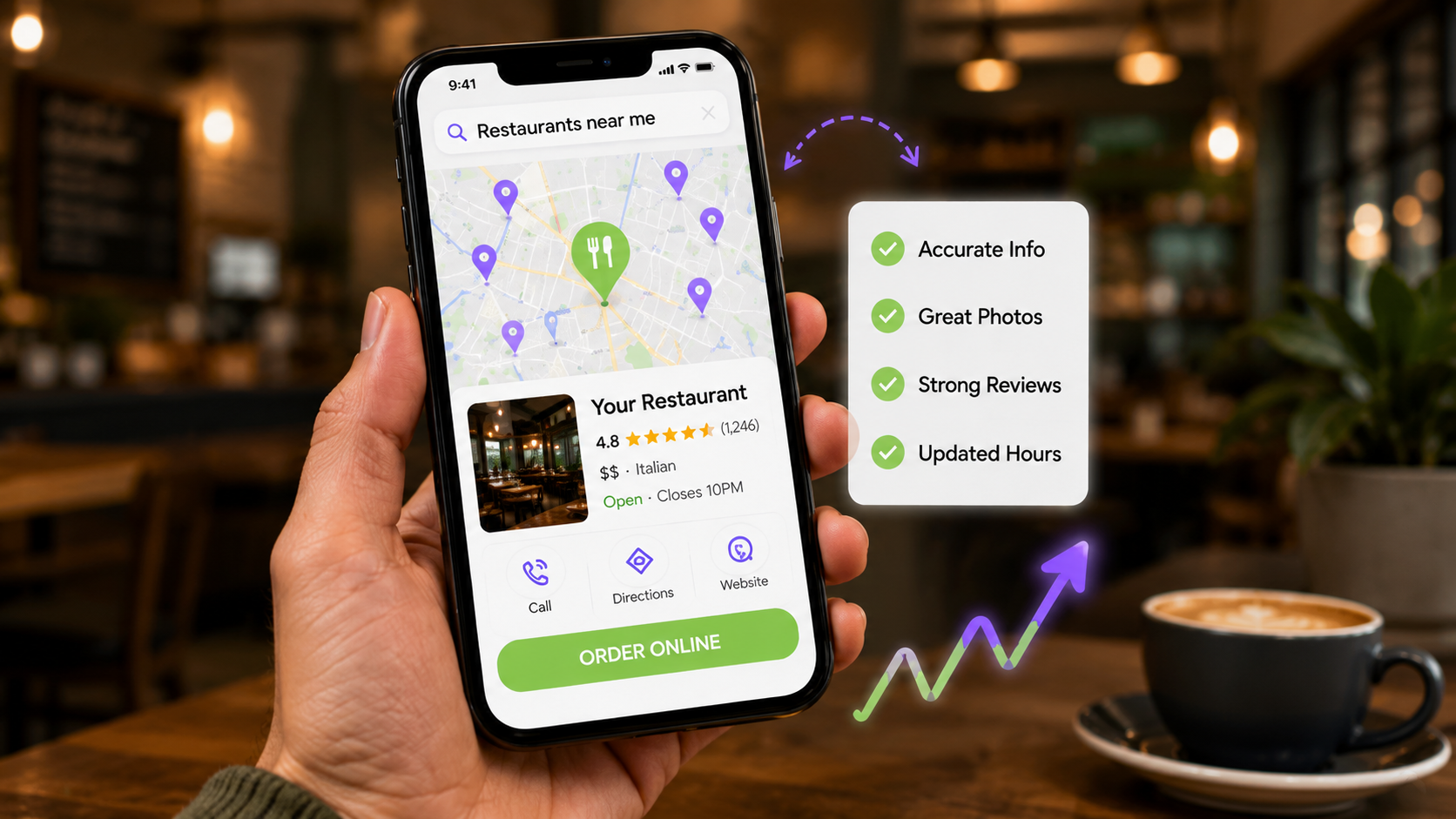
Guests do not always begin with a delivery app.
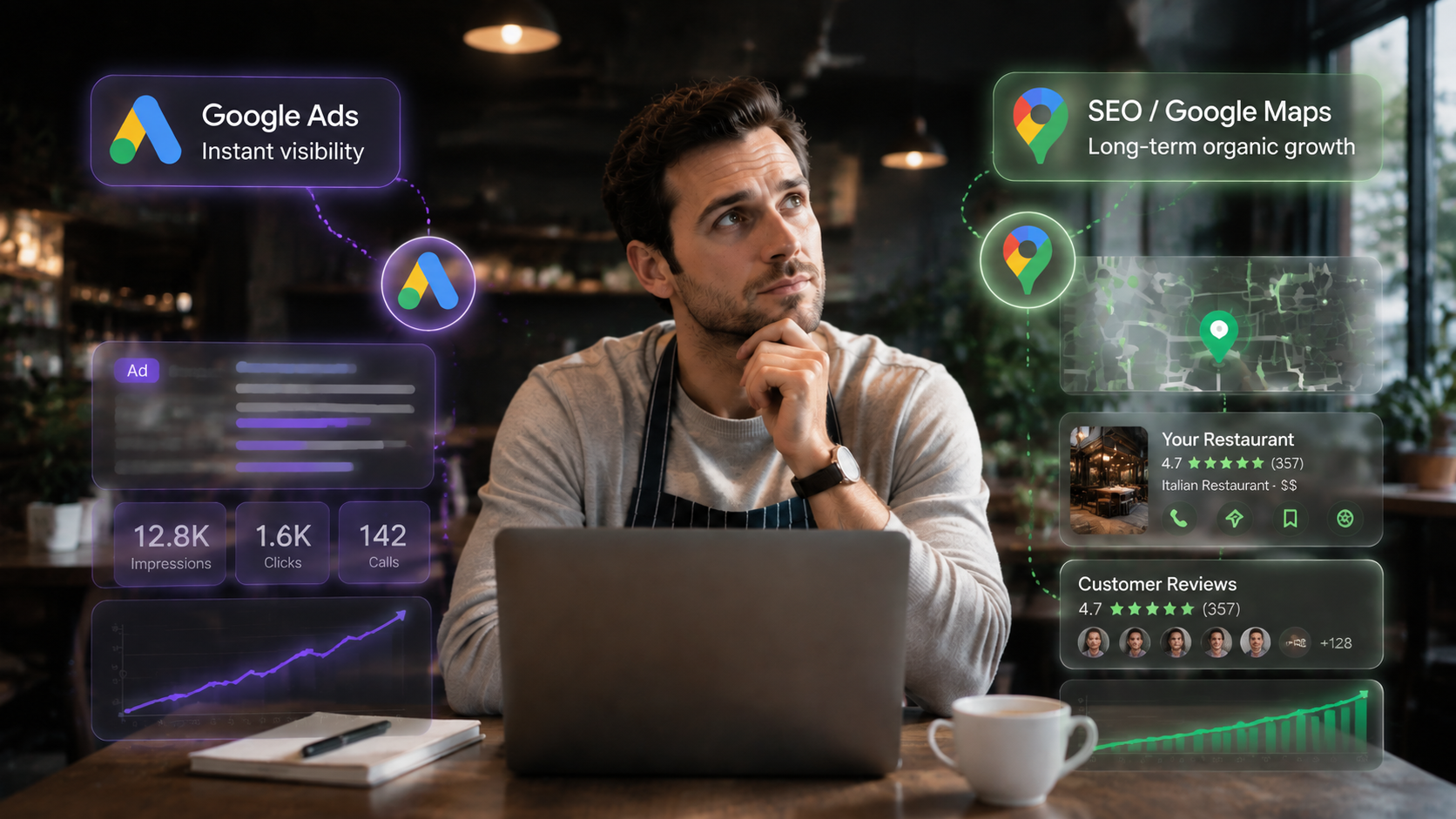
They may search "restaurants near me" on Google. They may check Google Maps for ratings, photos, hours, and directions. Increasingly, they may also ask AI tools for nearby restaurants that fit a specific occasion, such as "a good place for group dinner" or "a restaurant near me with online ordering."
This makes local SEO more than a marketing task. It is part of a restaurant's digital infrastructure.
Search engines, maps, AI tools, and guests all need to understand what your restaurant is, where it is, what it serves, and why it is relevant.
At a minimum, restaurants should keep these basics strong:
1.Keep the Google Business Profile accurate, including address, phone number, hours, holiday hours, menu links, and ordering links.
2.Update food, storefront, dining environment, and promotion photos regularly.
3.Manage reviews consistently, responding to positive reviews and addressing negative ones.
4.Make sure the website clearly explains the cuisine, location, dining occasions, and next step for the guest.
Many restaurants do not lose customers because the food is weak. They lose them because the restaurant is unclear at the moment of search.
If a system cannot confidently understand whether a restaurant is relevant, trustworthy, open, or active, it may favor another option with more complete information.
Being found is the first step in bringing guests back into your own system.
3. Get Chosen: Your Website Is Not Just a Brochure
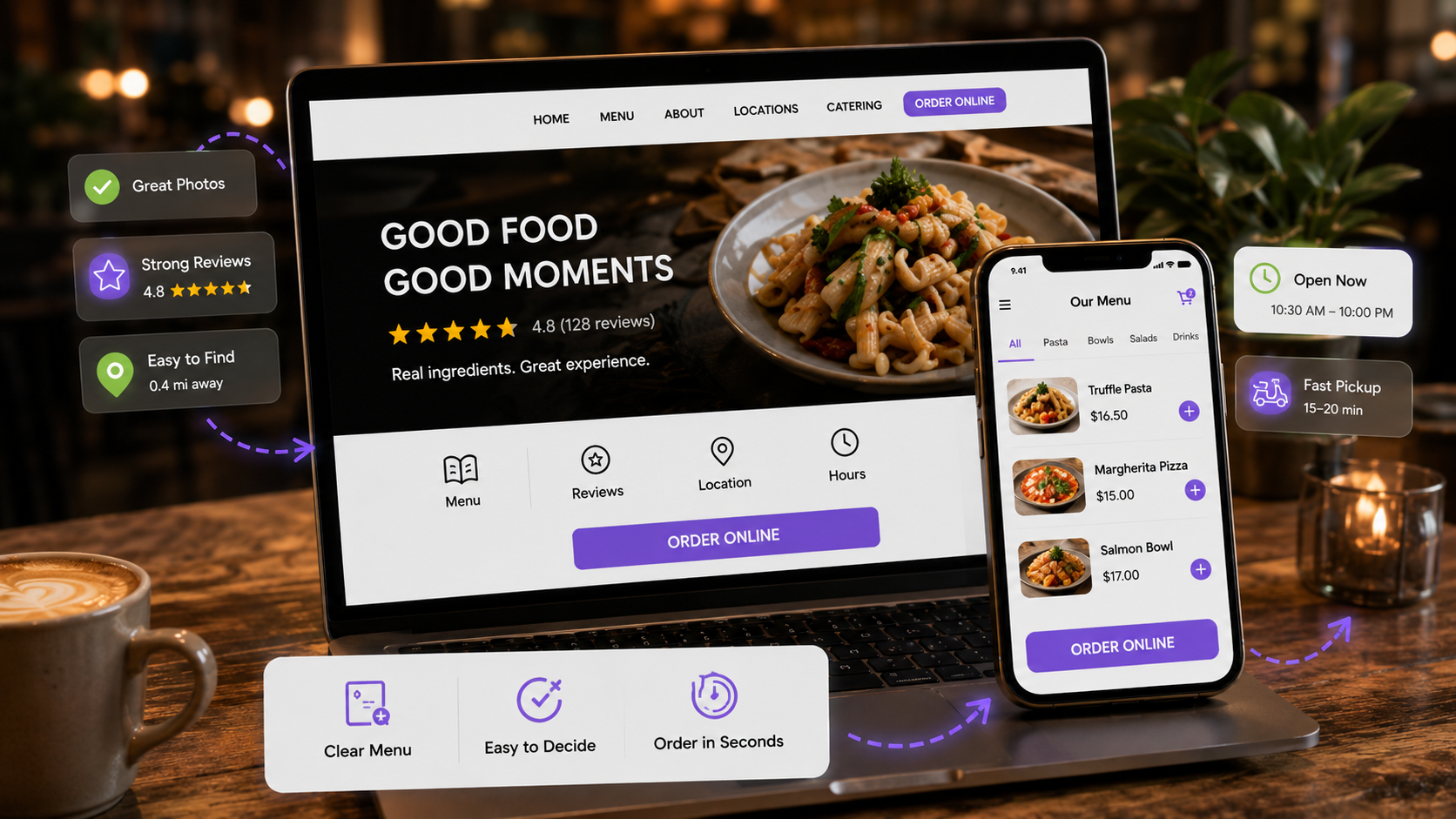
After a guest finds your restaurant, they make a quick decision.
Can they read the menu easily? Are prices clear? Are the photos recent? Do the reviews feel trustworthy? Can they order, call, book, or get directions smoothly on mobile?
These details decide whether the guest chooses your restaurant — or goes back to a delivery app to keep comparing.
A brand website used to be a simple place for a restaurant to list its address, menu, and a few photos. Today, it should play a more active role.
First, it should help search engines understand the restaurant. Cuisine, location, menu, service options, and dining occasions should all be clearly structured.
Second, it should help guests make decisions quickly. Menu, hours, phone number, directions, reservations, and online ordering should be easy to find on mobile.
Third, it should make the brand memorable. If there are five sushi restaurants, pizza shops, cafes, or milk tea stores nearby, why should guests choose yours? Is it handmade pasta, family-style dinner, fast lunch pickup, office catering, seasonal drinks, or late-night comfort food?
That positioning needs to be visible.
One practical detail matters: do not rely only on a PDF menu.
PDF menus are often hard to read on mobile. Guests need to zoom, drag, and search manually. They are also harder for search engines to understand.
A better approach is a mobile-friendly web menu where item names, descriptions, prices, and categories can be read clearly by both guests and search systems.
Your website should not simply show that your restaurant exists. It should help guests decide, trust, and order.
4. Make Direct Ordering Easy Enough to Become the Default
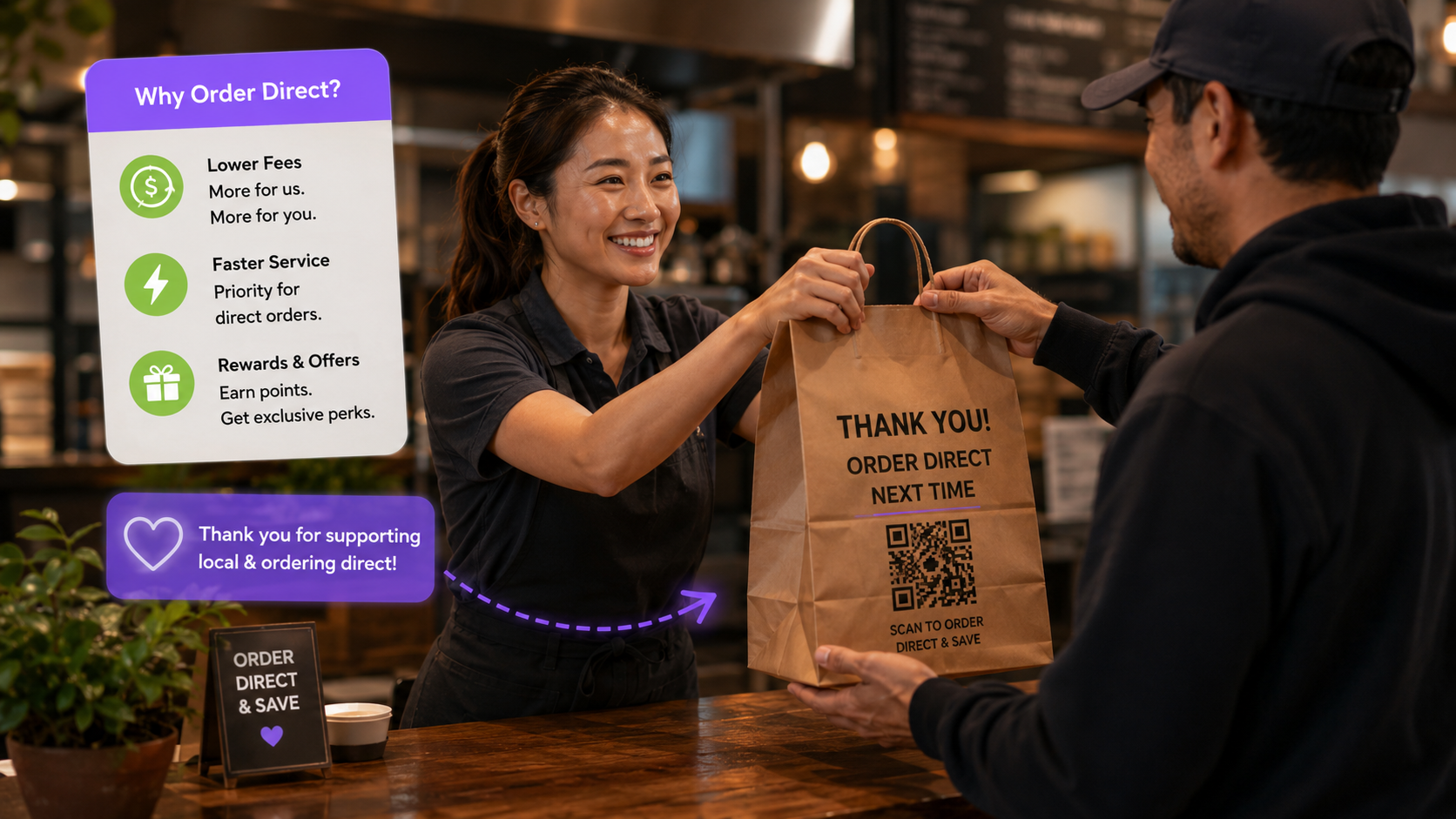
Many restaurants print a simple message on delivery bags:
"Please order directly from our website next time."
The message is valid, but it is not enough.
Guests will not change their habits only because they want to “support the restaurant.” They care about convenience first. Can they order faster? Is pricing clear? Is pickup or delivery timing easy to understand? Can they reorder without starting over?
The same consumer research found that 63% of guests would order directly because of lower costs, transparent pricing, or special offers. It also found that 50% of guests are more likely to order directly if they can save payment details and past orders.
This shows that guests are not always loyal to DoorDash, Ubereats, Grubhub, or any other platform. They are loyal to convenience, speed, clear pricing, and predictable experiences.
That means web ordering cannot depend only on goodwill. It has to become a better choice for the guest.
It should feel smooth, clear, and worthwhile. It should also help the restaurant build a healthier cost structure.
Direct ordering is not free. There are still payment, delivery, software, and operational costs. But compared with high third-party commissions, a restaurant-owned ordering channel can lower the cost per order while giving the restaurant more control over customer data, brand experience, and repeat visits.
Restaurants can start with simple actions:
Add a clear "Order Online" button on the homepage. Add the direct ordering link to the Google Business Profile. Place QR codes on delivery bags, receipts, table cards, and in-store signage. Invite guests to use the restaurant's own ordering channel next time.
A first direct-order incentive can help, but it does not need to be a large discount. A small appetizer, loyalty points, next-visit reward, or member-only benefit may be enough to start changing the habit.
If ordering direct feels harder than using a platform, guests will go back to the platform. But if it feels faster, clearer, and more valuable, their ordering habit can change.
5. Capture Data: Every Order Should Create the Next Opportunity
Restaurants do not only need more orders today. They need a way to reach guests again tomorrow.
That is the value of first-party data.
Did the guest order from your website? Did they join your loyalty program? What do they usually order? Do they prefer lunch or dinner? How long has it been since their last visit?
These may look like backend details, but they shape how a restaurant turns one-time orders into long-term customer relationships.
Without data, restaurants send the same offer to everyone.
With data, restaurants can create more relevant reasons for different guests to return.
A first-time direct-order guest may need a welcome reward and a reason to try again. A frequent guest may respond better to points, tiers, or exclusive perks. A guest who has not ordered in 30 days may need a gentle reminder. A weekday lunch guest may be interested in a lighter office-friendly set. A catering customer may need a simple, reliable group-ordering path.
The goal is not to send more messages. The goal is to make each touchpoint more meaningful.
Restaurants can collect guest data through web ordering, a loyalty program, birthday rewards, Wi-Fi login, table QR codes, feedback forms, and catering inquiry forms. From there, they can build simple repeat-visit paths:
Welcome new guests after their first direct order. Reward loyal guests when they reach a milestone. Re-engage inactive guests at the right time. Give high-value guests early access to new items or limited menus.
When a restaurant understands who is buying, what they buy, and when they return, marketing stops being guesswork. It becomes relationship-building.
6. Bring Guests Back With Smarter Incentives, Not Bigger Discounts
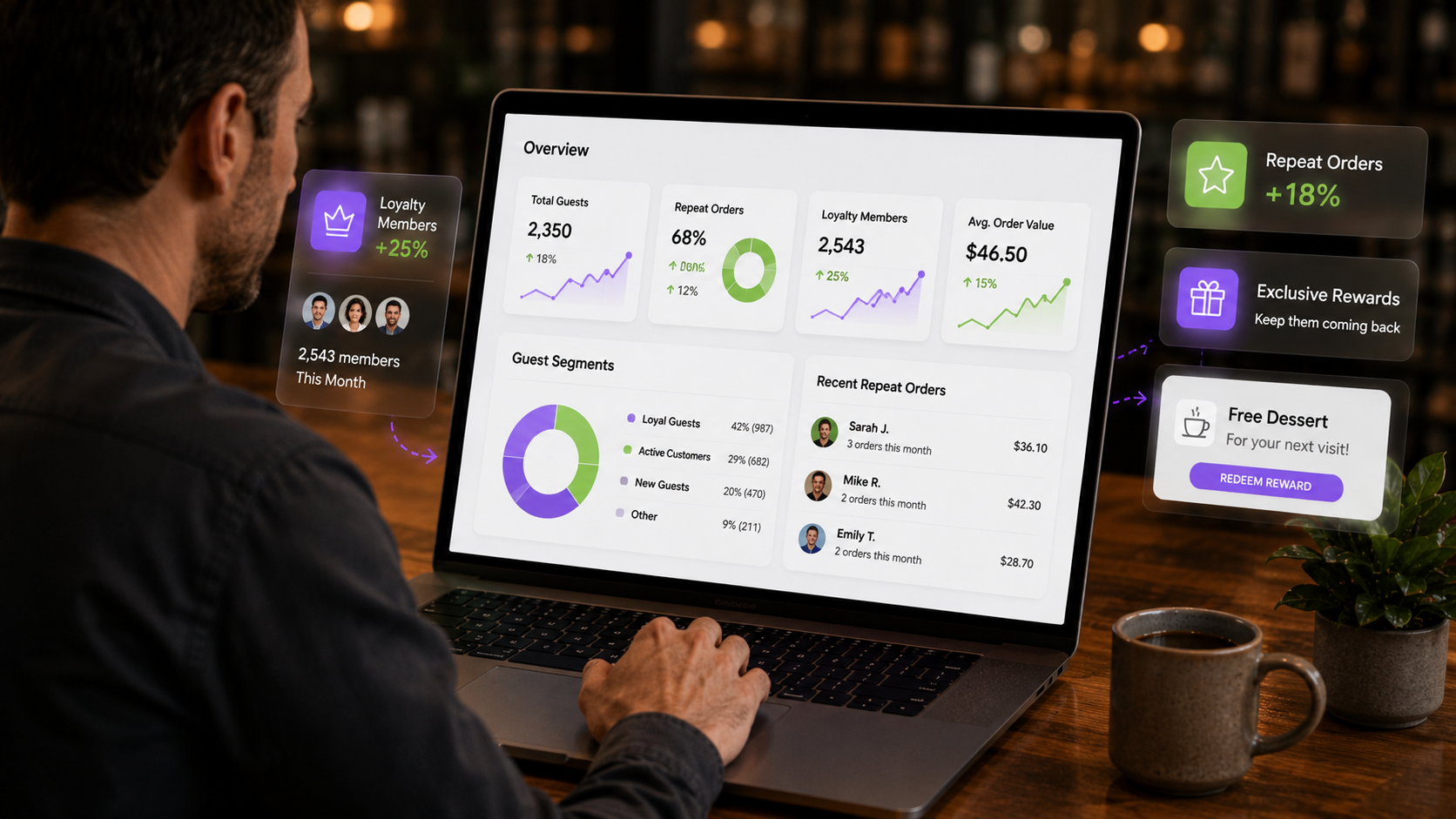
Discounts are not the problem. They can work well for slow periods, first-time trials, new menu launches, and special events. The issue starts when discounts become the default reason for guests to return.
Over time, this trains guests to wait for deals instead of valuing the regular experience.
A smarter approach is to design incentives around specific business goals. A first direct-order reward can help move platform guests to your own website. Lunch sets or limited-time bundles can support slower weekdays. Points, birthday rewards, and visit milestones can encourage repeat visits. Add-ons and family bundles can lift average order value, while targeted return offers can help bring back inactive guests.
This makes promotions more intentional. Instead of lowering prices for everyone, the restaurant gives different guests a relevant reason to come back.
The same thinking can also extend into the local community. Nearby offices, hotels, gyms, schools, clinics, and apartment buildings can become repeat demand sources through office lunch menus, group-ordering links, fixed pickup times, weekday sets, event-day reservations, or member-only benefits.
Effective repeat business is not about making guests wait for the next discount. It is about giving the right guest the right reason to return.
A platform can bring one order. A restaurant-owned repeat system can bring the guest back again and again.
7. Real Growth Is Not About Leaving Platforms. It Is About Taking Back Control
Reducing dependency on delivery platforms does not mean restaurants need to stop using every third-party channel immediately.
Platforms can still bring visibility and orders. They may remain useful for new guest discovery, delivery coverage, and temporary traffic support.
But restaurants cannot stop at receiving orders. The more important question is what happens after the order.
Can the guest find you again? Remember your brand? Order from you directly? Join your loyalty program? Return through your own system next time?
Sustainable restaurant growth should be built on visibility, ordering paths, customer data, and repeat relationships that the restaurant can control.
Guests may first discover your restaurant through search, but the real goal is to keep them connected after that first visit or order. When your website, reviews, direct ordering, customer data, and loyalty program work together, each interaction creates a stronger reason for guests to come back.
That is the growth loop a restaurant can truly own.
Connexup connects the key parts of that loop: Local SEO, Brand Website, Web Ordering, Reviews Management, and Loyalty Program. Together, these tools help restaurants move from relying mainly on platform orders to building their own customer relationships.
Platforms can bring orders. But the restaurant's own system is what turns those orders into lasting guests.