How Bubble Tea and Fried Chicken Shops Can Increase Profit and Grow Faster
Connexup Team
Jul 10, 2026
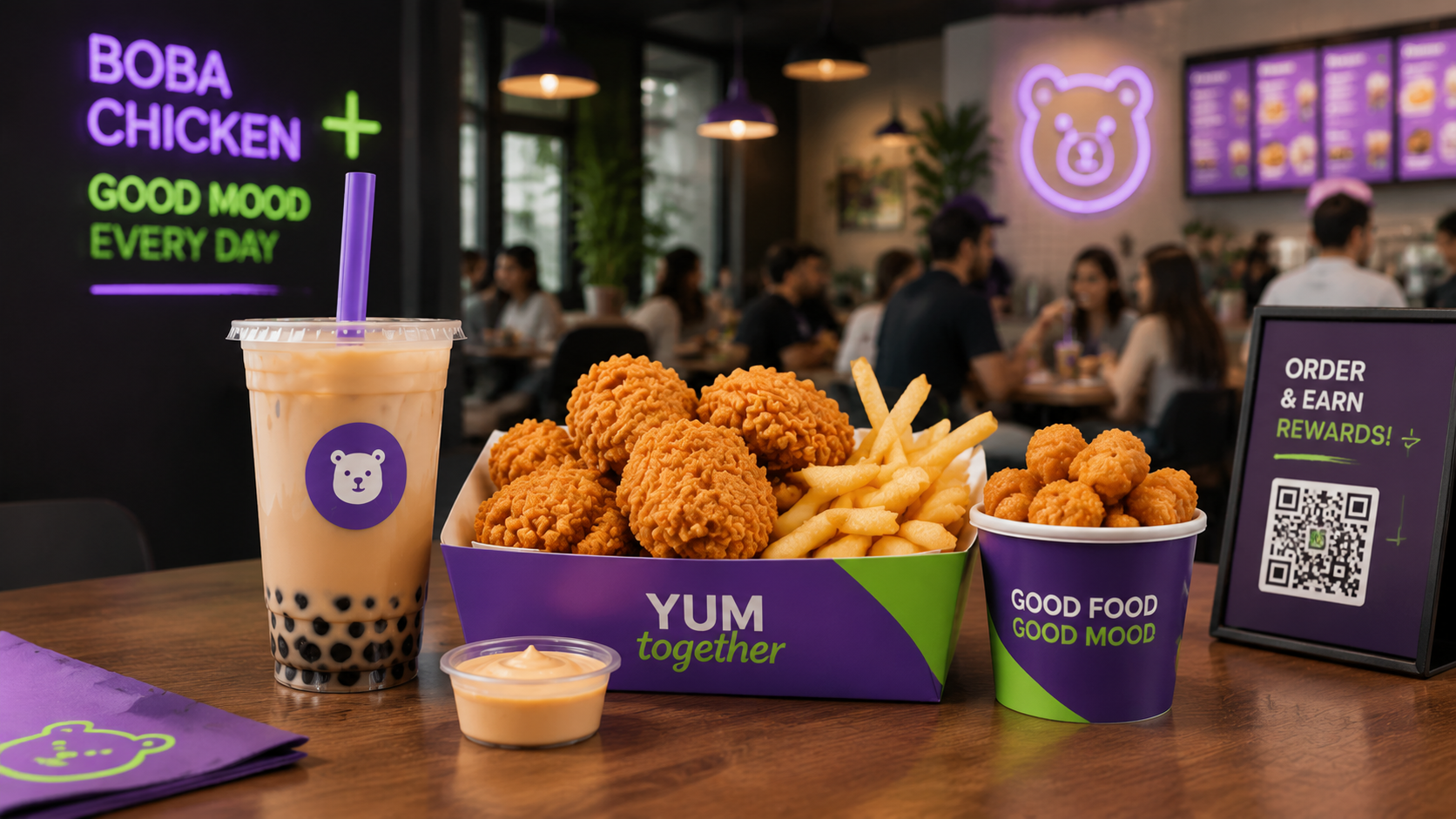
In recent years, the boba and fried chicken hybrid restaurant model has gained increasing attention from restaurant operators. By combining a high-frequency beverage category with a more filling and shareable food offering, this type of concept allows restaurants to serve more occasions, increase customer dwell time, improve average order value, and create more opportunities for repeat visits.
Compared with single-category restaurants, the advantage of the boba + fried chicken model is not simply adding more menu items. Instead, it creates a complementary business structure within one location: fried chicken and snack items attract customers by offering meal options, sharing occasions, and more substantial food choices, while bubble tea supports frequent purchases and stronger profit margins.
For example, major chains such as Kung Fu Tea and TKK Fried Chicken have explored this model through store collaborations and shared menu strategies to expand their market presence. Meanwhile, local concepts like Only Bear have built their identity around a "fried chicken + boba" offering to develop a stronger connection with their community. Together, these examples demonstrate how the hybrid model can work across different business scales, from large-scale brand expansion to independent neighborhood restaurants.
For restaurant operators, this hybrid approach creates opportunities to reach more customer occasions while increasing order value and customer engagement. However, achieving sustainable profitability requires more than combining two popular products. Restaurants need to understand the role each category plays within the business model and optimize areas such as menu design, customer retention, and operational efficiency to maximize long-term growth.
1. Understanding the Profit Model
Many restaurant owners focus primarily on their best-selling products. However, in a hybrid restaurant model, each category plays a different role.
Bubble tea is often the primary profit contributor because beverage ingredients have lower costs and preparation can be standardized. Beverage margins can often reach approximately 60%-80%.
Fried chicken typically operates with lower margins, around 35%-55%, but its value comes from attracting customers and creating stronger meal occasions.
Snacks and sides such as fries, popcorn chicken, and specialty sauces increase order value by encouraging customers to move from single-item purchases to combos.
A successful boba and fried chicken business model requires a clear product strategy:
Bubble tea drives profitability, fried chicken attracts customers, and snacks increase order value.
Understanding these roles is essential because restaurant growth is not only about selling more products. It is about designing a menu where every order generates greater value.
2. Increase Average Order Value Through Menu Design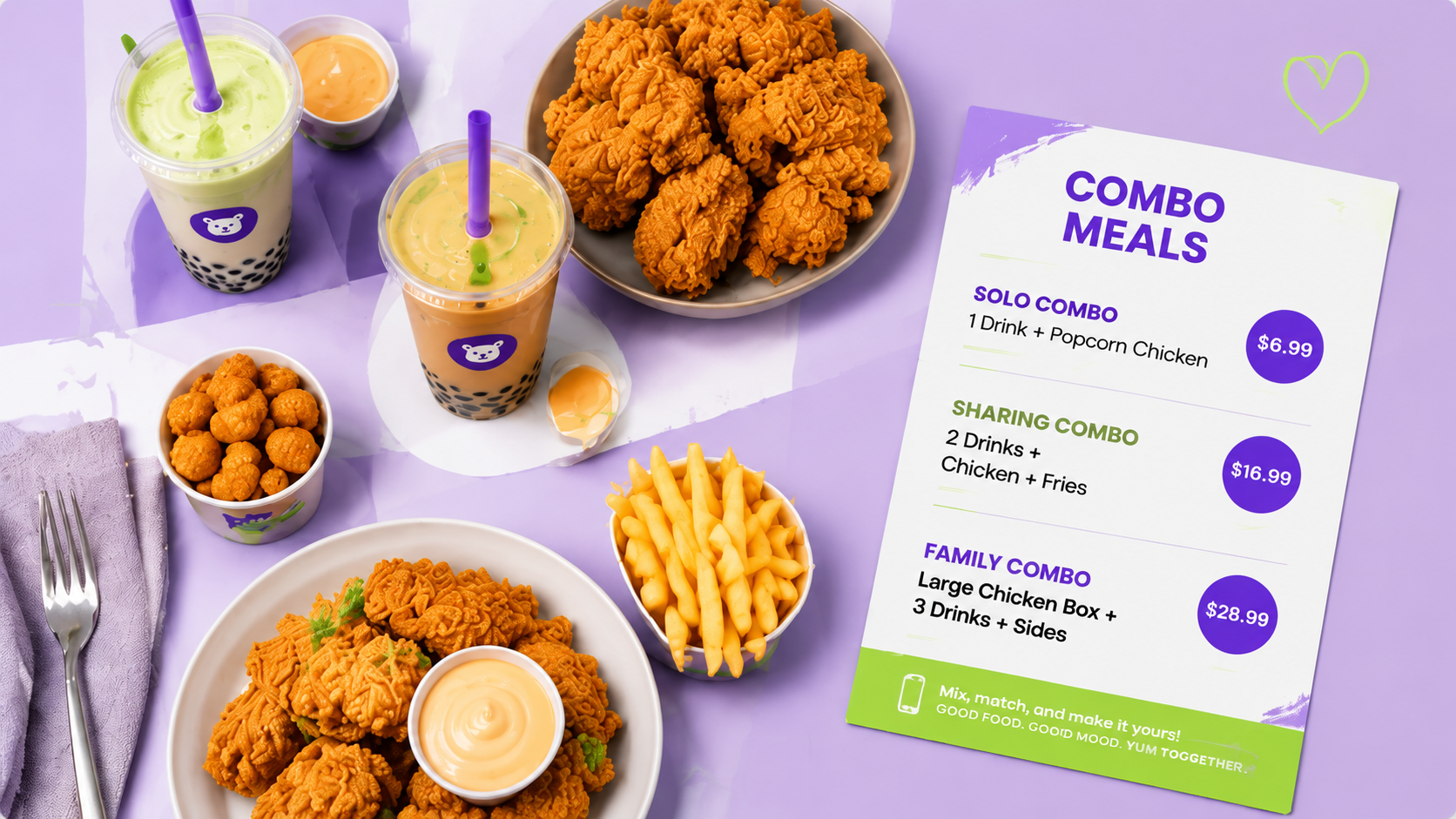
One of the biggest advantages of the boba and fried chicken model is the ability to create higher-value combinations.
Instead of relying on single-item purchases, restaurants can encourage customers to choose complete meals through:
Individual combo: Drink + Popcorn Chicken;
Sharing combo: Two drinks + Fried Chicken + Fries;
Family sharing packages.
Many customers enter a restaurant already knowing what they want to purchase. Asking them to choose a completely different and more expensive item may create friction. However, small upgrades can increase spending without changing the customer's original purchase decision:
+$1 upgrade drink size;
+$2 add popcorn chicken;
+$1 add dipping sauce or cheese foam.
The key behind these upgrades is the low psychological barrier. Customers are often willing to spend an additional $1-$2, while these small additions can create meaningful improvements in profitability over time.
Great menu design is not simply about displaying products. It is about guiding customer decisions through thoughtful combinations and add-ons that create more value for both the customer and the business.
3. Build Customer Loyalty and Increase Repeat Visits
One of the biggest challenges in the restaurant industry is not getting customers to visit once, but encouraging them to return consistently.
Compared with many food categories, bubble tea has a naturally high repeat-purchase potential. A customer may first visit because of fried chicken, but continue returning because of a favorite drink, loyalty rewards, or new product launches.
For this reason, restaurants need to move beyond one-time transactions and focus on building long-term customer relationships.
Common strategies include:
Punch card programs, such as buying 10 drinks and receiving one free;
Loyalty points that reward customers based on spending;
Weekly promotions or limited-time offers that encourage repeat visits.
These programs help increase visit frequency while allowing restaurants to collect valuable customer data for future marketing efforts.
4. Reduce Platform Dependency and Build Direct Ordering Channels
Delivery platforms have helped restaurants quickly gain access to online customers. However, relying too heavily on third-party platforms can create significant pressure on profitability.
Many platforms charge restaurants approximately 15%-30% commission fees, while restaurants may also need to invest in additional advertising to improve visibility. In highly competitive markets, platform promotions and price competition can further reduce margins.
The solution is not to completely abandon delivery platforms, but to gradually build stronger direct ordering channels. For restaurants with an established customer base, a realistic goal is to shift 20%-40% of orders toward their own channels over time:
In-store and pickup incentives;
Direct ordering discounts;
QR code ordering;
Website ordering incentives.
Building a direct ordering system not only reduces platform costs but also helps restaurants collect customer data and improve future retention and marketing efforts.
5. Capture More Local Customers Through Local Search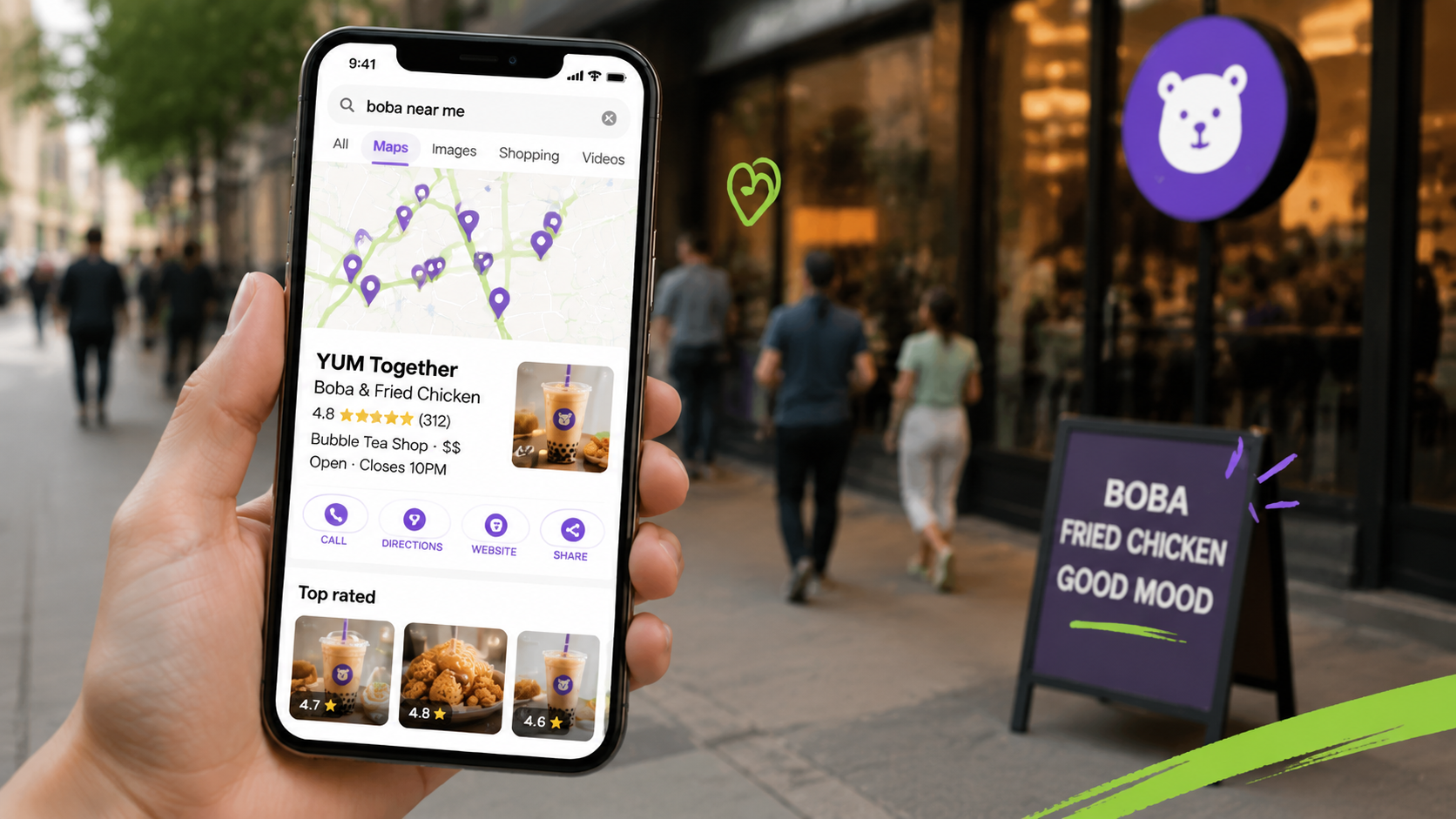
For brick-and-mortar restaurants, local customers remain one of the most valuable sources of growth.
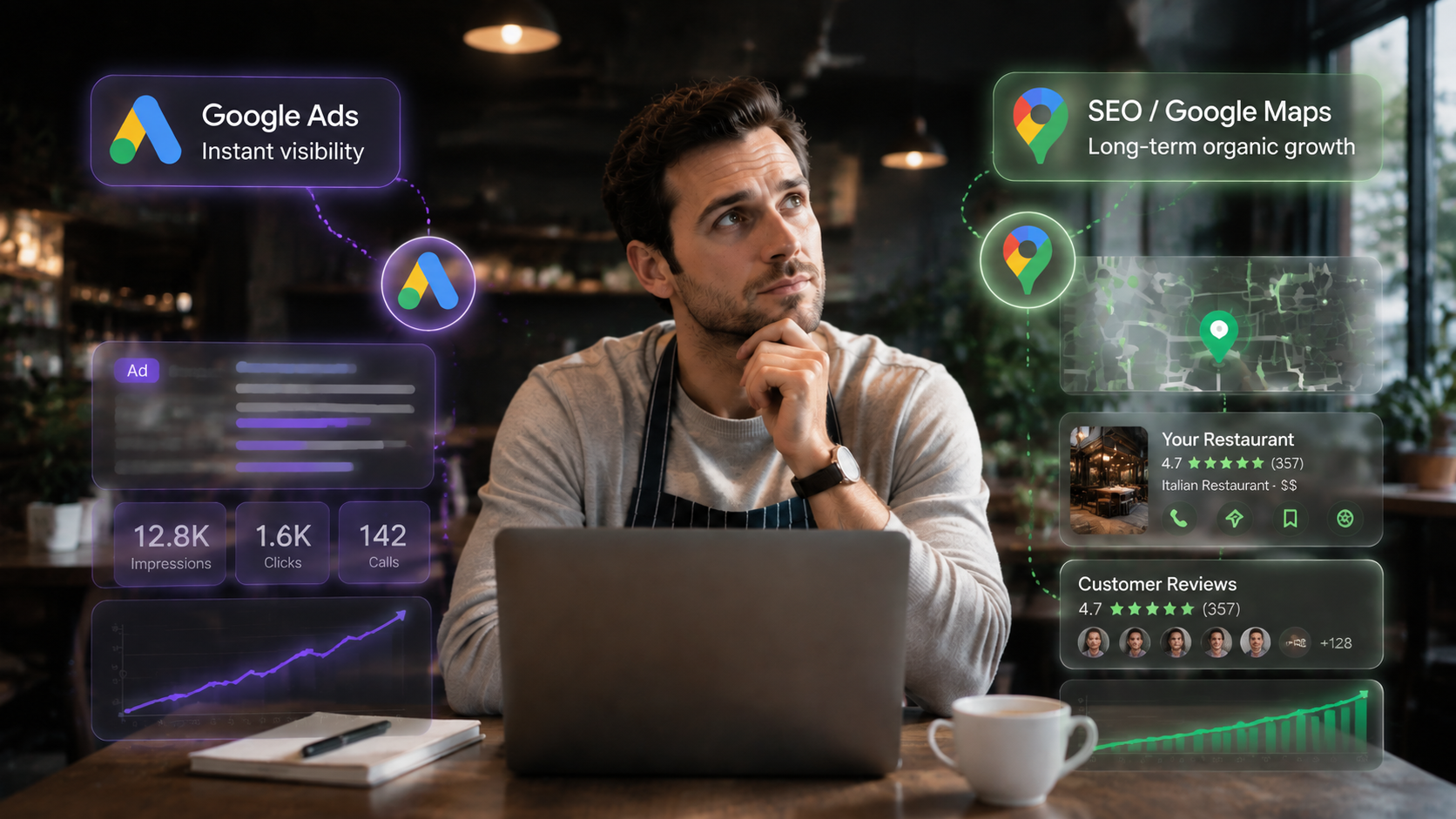
Before deciding where to eat, many consumers search for nearby options. As a result, local search channels such as Google Business Profile have become essential tools for restaurants looking to attract nearby customers.
A well-optimized business profile helps customers quickly understand important information such as location, hours, menu options, and customer reviews. It also builds trust through photos, updates, and online reputation.
Restaurants can improve local visibility by:
Optimizing business categories, such as covering both Bubble Tea Shop and Fast Casual Restaurant;
Regularly updating photos, menus, and store updates;
Responding to customer reviews to strengthen credibility.
At the same time, targeting search terms based on real customer behavior helps restaurants reach consumers with strong purchase intent, such as:
boba near me
fried chicken near me
snack shop near me
Unlike traditional advertising, local search captures customers who are already looking for a solution. The goal is to make your restaurant easier to discover when that demand occurs.
6. Improve Operations and Build a Scalable Restaurant Model
As a restaurant grows, the biggest challenge often shifts from attracting customers to serving them efficiently.
Hybrid concepts require managing both beverage and food preparation. Without standardized processes, restaurants may experience slower service, higher labor costs, and inconsistent quality.
Improving operational efficiency requires creating simpler and more standardized workflows.
For example, fried chicken preparation can be optimized through batch cooking and better production planning during peak hours. Beverage operations should focus on consistent recipes, ingredient preparation, and standardized procedures to maintain quality across different employees.
Reducing low-performing but complex menu items can also lower inventory pressure, simplify training, and improve overall efficiency.
In addition, digital ordering solutions such as QR code ordering and self-service kiosks can reduce front-counter workload, allowing employees to focus more on food preparation, customer service, and store operations.
For restaurant brands looking to scale, efficiency is not simply about faster service. It is about building systems that allow the business to grow while maintaining consistency and quality.
Conclusion: Building a Sustainable Growth Model for Hybrid Restaurants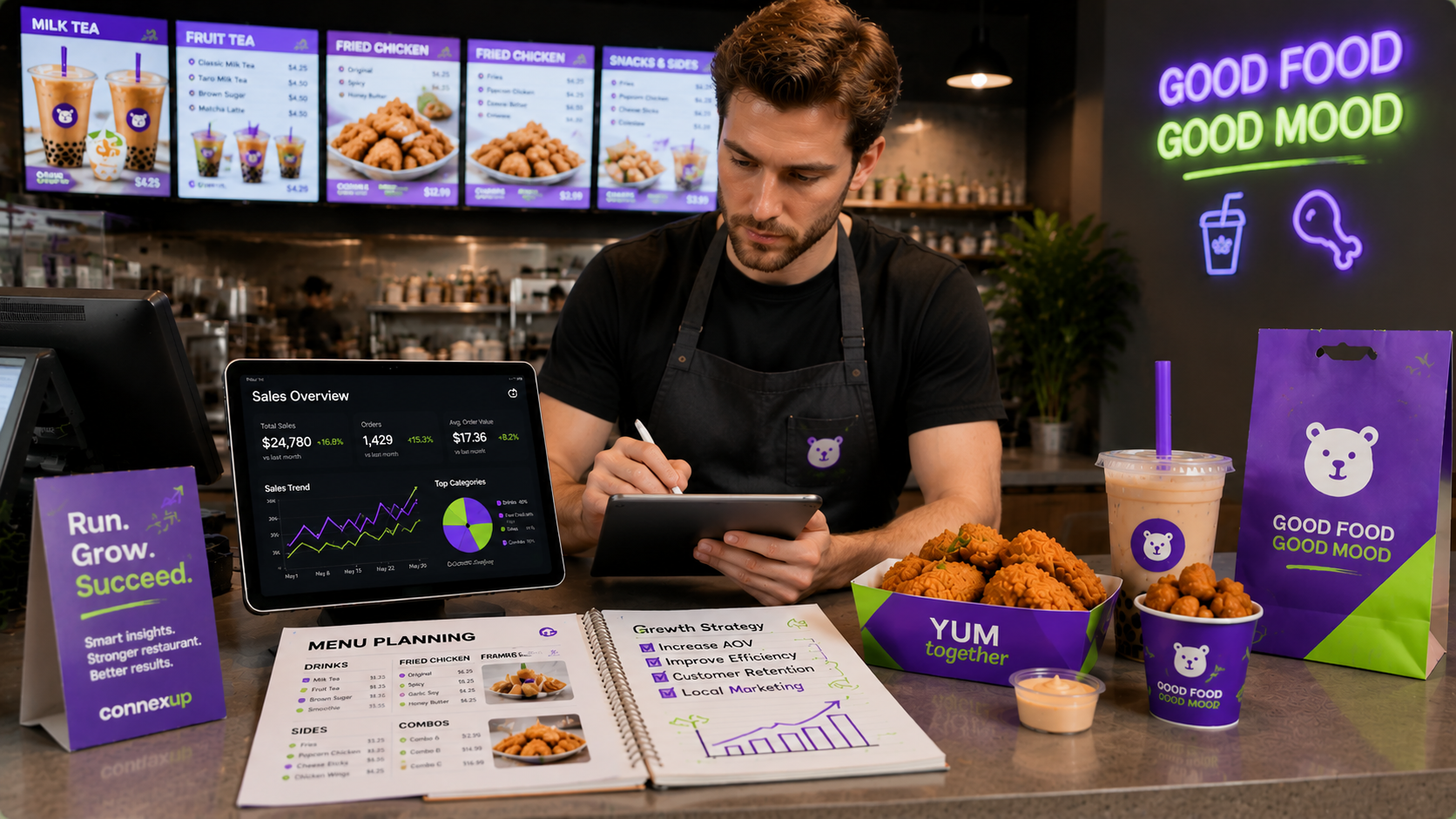
The growth potential of boba and fried chicken restaurants is not simply based on combining two popular food categories. It comes from creating a stronger business model where each product, channel, and operational decision supports long-term growth.
By clearly defining the role of each product category, restaurants can use fried chicken to attract customers, bubble tea to improve margins, and digital strategies to increase customer lifetime value.
In the future, restaurant competition will not only depend on product innovation, but also on how effectively brands manage customer relationships, optimize operations, and build scalable systems.
For restaurant brands looking to improve profitability and achieve sustainable growth, Connexup provides a digital solution suite designed around menu optimization, loyalty management, online ordering, local marketing, and operational efficiency — helping restaurants move beyond simply selling products and build a complete growth system.