How Choice Brooklyn Increased Google Direction Requests by 47.5% With Local SEO
Connexup Team
Aug 7, 2026
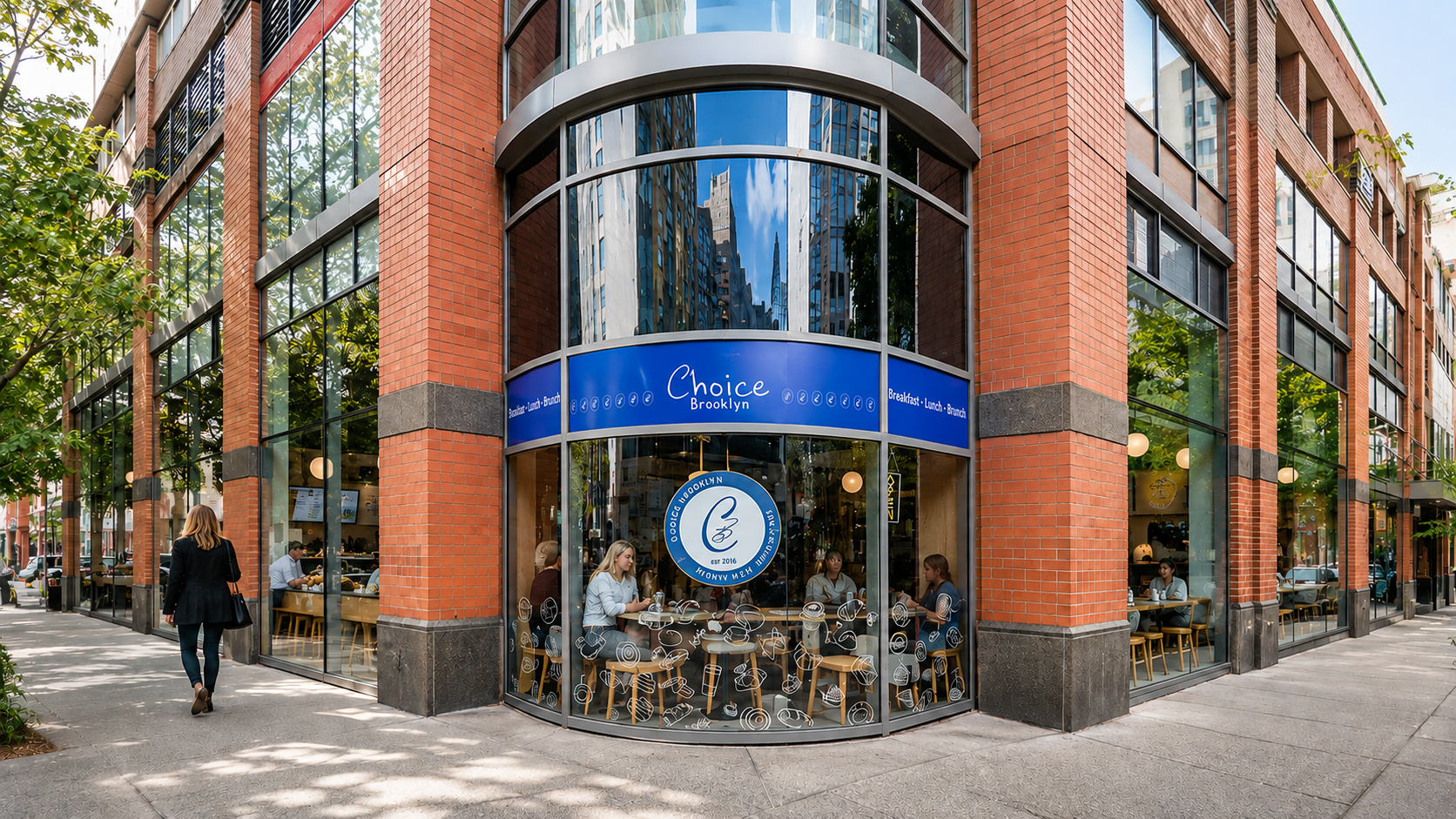
After Choice Brooklyn opened its second location on Manhattan's Upper West Side, Connexup optimized its website and Google Business Profile. Measurable improvements appeared within about two weeks, core keyword visibility nearly doubled in the first month, and direction requests increased by 47.5%.
Choice Brooklyn was not a new restaurant brand. The family-owned café had been part of Brooklyn's Clinton Hill neighborhood since 2005, serving freshly baked pastries, specialty coffee, breakfast, and brunch.
In 2026, Choice Brooklyn opened its second location on Manhattan's Upper West Side. The space was ready, the team was in place, and the menu was finalized. Online, however, the new café was almost invisible to nearby diners.
Choice Brooklyn had historically relied almost entirely on Instagram for online visibility. The brand built awareness through influencer partnerships and customer-generated content, without investing systematically in local SEO. The owner had also tended to see social media as the more immediate driver of exposure.
That approach worked well when there was something new to promote. In March and April 2026, the Upper West Side location received strong attention around its opening. In May, Choice Brooklyn celebrated its 20th anniversary, with most of the promotion again happening through Instagram. Influencer collaborations and user-generated content kept the restaurant visible during those campaign periods—but they also made exposure heavily dependent on short-term social activity.
By June, there was no new store event to keep that momentum going, and online visibility began to drop noticeably. For a new location still establishing itself on the Upper West Side, that exposed a growth ceiling: without constantly running events, working with creators, or creating another social media moment, how could the restaurant keep reaching nearby diners and ultimately drive more visits and sales?
That was what brought Choice Brooklyn to Connexup. The owner did not come in already convinced that SEO was the answer. The business had reached a point where its existing growth model was becoming less reliable, and it needed another way to build consistent visibility.
When Connexup came on board in June, the first step was to review the website, Google Business Profile, and the customer journey from search to visit. The team found that the issue was not a lack of brand awareness. Choice Brooklyn had simply never built a meaningful local search foundation. The new location was open, but its website and Google Business Profile were not sending Google a clear, consistent set of signals about who the business was, where it was located, or which local searches it should appear in.
The results that followed supported that diagnosis. Even without a new store event in June, Choice Brooklyn’s online visibility climbed back to levels comparable with its campaign months, while some search and customer-action metrics moved beyond them. For the first time, the brand could see that local search could complement social media by creating a more consistent source of discovery between campaign peaks.
Even an Established Brand May Need to Start From Zero
Many restaurant owners assume that opening a second location simply means adding a new address to the website and Google Maps. Local search does not work that way.
Nearby diners usually search by location, dining occasion, or what they want to eat—not by brand name. They may search for “breakfast near me,” “brunch on the Upper West Side,” or “café near Broadway.”
Google uses location details, website content, business information, menus, reviews, and other online signals to determine whether a restaurant is relevant to those searches. If a new location's information is incomplete or inconsistent across channels, it may need to build its own local SEO foundation, even when the original location has been operating successfully for years.
For Choice Brooklyn, the problem was not the absence of a website or Google Business Profile. The problem was that the two did not present one clear, consistent picture of the new location.
Why Was the New Location “Invisible” on Google?
After taking on the Upper West Side location, Connexup first reviewed the website, Google Business Profile, and the customer journey from search to visit.
Rather than immediately recommending a website redesign, the team identified the specific issues preventing Google from understanding the location. The diagnosis revealed three main problems.
1. The New Location Did Not Have a Consistent Online Identity
The business name and phone number on the website did not fully match the information on the Google Business Profile. Different website pages also referred to the brand as both “Choice Market” and “Choice Brooklyn.”
When business names, phone numbers, and operating hours do not align, Google may struggle to confirm that the information belongs to the same location. Diners may also be unsure which version is accurate.
2. Google Could Not Tell Which Searches the Restaurant Was Relevant To
The website did not clearly state that the new café was located on Manhattan's Upper West Side. It also lacked clear references to its main categories, including café, breakfast, and brunch.
The Google Business Profile was also missing complete menu information, business attributes, photos, and operating hours.
With limited information available, Google had little basis for deciding whether Choice Brooklyn should appear for searches such as “brunch near me” or “Upper West Side café.”
3. Diners Could Not Easily Take the Next Step
Some website pages lacked clear titles and descriptions. There were also broken ordering links and inconsistent operating hours. Customer reviews on the Google Business Profile had gone unanswered.
Even when diners found the restaurant, unclear menu information, hours, or ordering options could prevent them from viewing the menu, getting directions, or placing an order.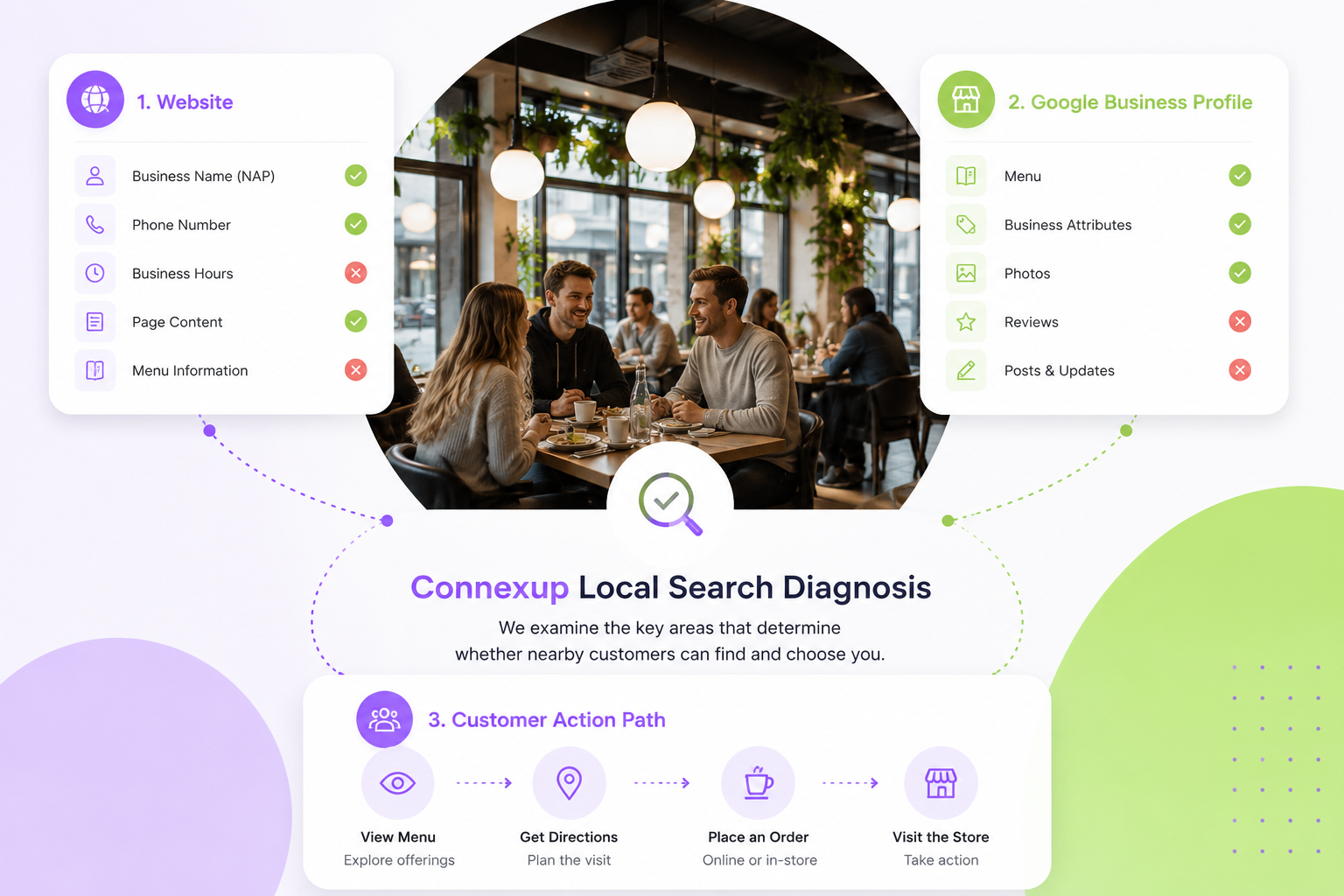
Why Review Both the Google Business Profile and the Website?
A Google Business Profile is a major entry point for restaurant discovery, but it cannot provide every local search signal on its own.
For Google, the Business Profile and the restaurant's website are not separate, unrelated channels. They should support and verify each other, together explaining the location's identity and what it offers.
Local SEO is therefore not just about maintaining a Google listing. The website, business information, menu, reviews, and ordering journey need to form one clear system that customers and search engines can understand.
Within that system, the website plays three important roles.
1. It Gives Google More Complete Location Information
A Google Business Profile can show an address, operating hours, rating, and photos. The website can provide more detail about the neighborhood, core menu categories, signature items, and service options.
For multi-location brands, the website also helps Google distinguish between locations and connect each one with the correct address, phone number, hours, and ordering page.
2. It Expands the Searches the Restaurant Can Appear In
Diners do not always search by brand name. They may search by neighborhood, daypart, menu item, or service.
A Google Business Profile contains relatively fixed information. The website can provide more context through location pages, menu pages, event pages, and brand content. The clearer this information is, the easier it becomes for Google to understand which searches the restaurant is relevant to.
3. It Supports the Diner's Next Action
After finding a restaurant on Google, diners often want to check the menu, prices, atmosphere, operating hours, or ordering options.
The Google Business Profile answers, “Can I find this restaurant?” The website then needs to answer, “Is it right for me?” and “What should I do next?”
If the menu does not load, the hours do not match, or an ordering link is broken, search visibility may still fail to produce a visit or order.
A restaurant website therefore does more than present the brand. It helps Google understand the business and supports the customer journey from discovery to purchase.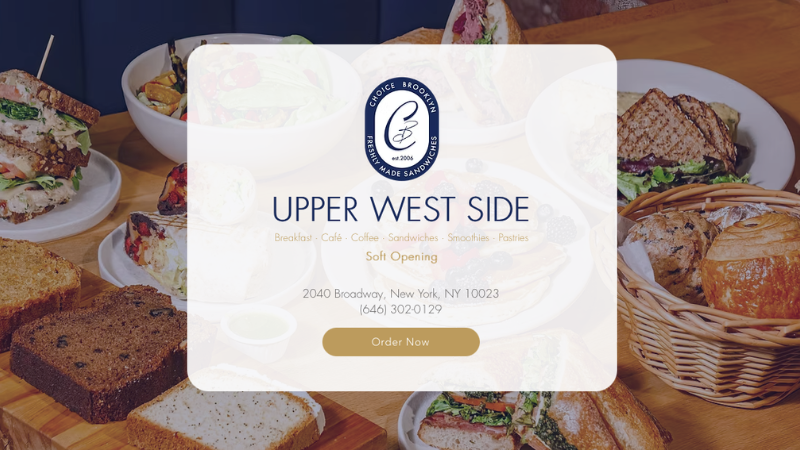
How Connexup Improved Choice Brooklyn’s Local Search Performance Without Rebuilding the Website
Website design, information architecture, and usability all play a role in how diners experience a restaurant online and move from discovery to action. In Choice Brooklyn’s case, however, the owner specifically wanted to preserve the existing website design and overall structure. Connexup treated that preference as an important part of the project brief.
Within that constraint, the diagnosis showed that the issues most directly affecting the new location’s local search performance were elsewhere: inconsistent business information, limited local search context, broken links, and technical gaps that made key location details harder for Google to interpret.
Connexup therefore kept the existing visual design intact and prioritized the information and technical issues that were already creating friction for both Google and diners.
That does not mean website design is separate from local SEO. It means there is no single redesign formula that every restaurant needs to follow. The right approach depends on the current website, the restaurant’s business goals, and the specific problems uncovered during the audit.
For Choice Brooklyn, the most effective path was to preserve the existing design while fixing the information and technical foundations that were limiting the new location’s visibility.
Connexup focused on three areas.
1. Completing and Continuously Maintaining the Google Business Profile
Connexup first completed business attributes for dine-in, takeout, delivery, Wi-Fi, and other services, then uploaded a fully categorized menu with photos and descriptions.
But the work did not stop once the missing information was filled in. Connexup's system continuously monitors key Google Business Profile details and can automatically identify information that is missing, outdated, or needs attention, helping the location stay accurate without relying on the owner to manually check the profile every day.
The team also maintained regular Google updates, added recent photos and videos, and kept holiday and special hours current so diners were less likely to encounter outdated information.
Review management became part of the ongoing workflow as well. With AI-assisted responses, every new review could receive a relevant reply within 24 hours. The location went from responding to none of its reviews to responding to every one.
For the owner, that meant the Google Business Profile no longer depended on someone remembering to log in, check every field, and monitor every new review manually.
2. Correcting Website Information and Keeping Location Details in Sync
On the website, Connexup standardized the business name as “Choice Brooklyn” and corrected the phone number so the site matched the Google Business Profile.
The team also updated page titles and descriptions across the homepage, menu, about, events, and shop pages, naturally incorporating the location and restaurant categories diners were actually searching for.
Missing or duplicate headings were corrected, broken ordering links were repaired, and inconsistent operating hours were aligned across the site.
For information that needs to stay accurate over time, Connexup also reduces the need for restaurants to update each channel separately. Key location details such as addresses, business hours, and contact information can be centrally managed and automatically synchronized across connected platforms, helping prevent the website, Google Business Profile, and other listings from drifting out of sync again.
These changes did not alter the website’s visual design. They made the location easier for both Google and diners to understand while reducing the manual work required to keep business information consistent over time.
3. Adding Technical Information Google Could Read More Easily
Connexup added restaurant structured data to the website, marking the business name, address, operating hours, menu, and other key details in a format Google could interpret more clearly.
Structured data does not change what diners see on the page. It helps Google identify the location more accurately, which is especially important for a new restaurant with little existing search history.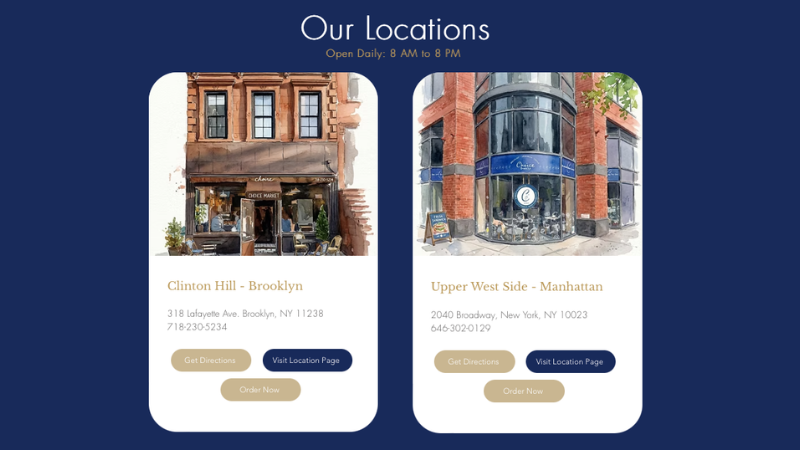
From Search Visibility to Real Visits: What Changed?
The value of local SEO should not be measured only by keyword rankings. The more important question is what diners do after they find the restaurant.
After Connexup began the work, measurable search movement appeared for Choice Brooklyn's Upper West Side location within about two weeks. In the first month, search visibility, menu engagement, and direction requests all improved.
Key metric | Change after optimization |
|---|---|
Average visibility across core keywords | Nearly doubled in the first month |
Direction requests | Increased 47.5% |
Google menu views | Increased 29% |
Overall Google Business Profile visibility | Increased 27.7% |
Time to first measurable movement | About two weeks |
Categories that previously had no search visibility, including “bakery” and “catering,” began appearing in search results.
Some of the strongest gains came from searches such as “breakfast Broadway NYC” and “brunch near me.” These searches typically come from diners actively comparing nearby options and showing clear intent to visit.
The 47.5% increase in direction requests showed that diners were not simply seeing Choice Brooklyn online—they were checking the route and preparing to go. The 29% increase in menu views showed that more people were moving from discovery to active consideration.
At the same time, the location went from replying to no reviews to responding to every review, while maintaining its 4.9-star rating.
These results show why online visibility is more than an abstract marketing metric. Menu views, category searches, and direction requests indicate that diners are moving from “I found this place” to “I may visit.”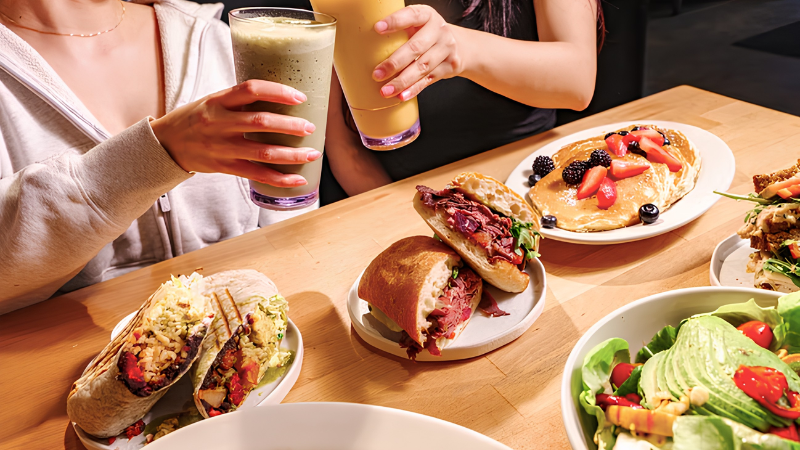
Five Checks for Restaurants Opening New Locations
Choice Brooklyn's experience applies beyond cafés. Restaurant brands opening a second location, entering a new neighborhood, or expanding into a new city can focus on five key checks.
1. Is the Online Presence Ready When the Location Opens?
The Google Business Profile, website location page, menu, operating hours, and directions should go live around the time the restaurant opens. Otherwise, interested diners may be lost simply because they cannot find accurate information.
2. Does Each Location Have a Clear Online Identity?
Every location should have its own correct name, address, phone number, operating hours, and ordering link. That information should remain consistent across the website, Google Business Profile, and other platforms.
3. Does the Website Clearly Explain Where the Restaurant Is and What It Serves?
Beyond the brand story, the website should clearly state the neighborhood, restaurant type, main menu categories, and service options. This helps Google connect the location with real local searches.
4. Is the Google Business Profile Actively Maintained?
Menus, photos, operating hours, holiday schedules, and customer reviews should be updated regularly. A Google Business Profile is not a one-time setup. It is one of the main ways diners decide whether a restaurant is open, current, and worth visiting.
5. Are You Tracking What Diners Do?
Rankings matter, but restaurants should also monitor menu views, direction requests, website clicks, phone calls, and online orders.
Effective local SEO does more than help a restaurant appear in search results. It helps diners move smoothly from discovery to menu viewing, directions, and ordering.
Getting Found Is the First Step in Growing a New Location
Choice Brooklyn’s progress did not come from a major website redesign or from simply adding a few keywords. Connexup first identified the specific issues preventing the new location from being discovered, then brought the website, Google Business Profile, menu, reviews, and customer journey back into alignment.
As a result, Google could understand the location more clearly, while nearby diners could move more easily from search to menu viewing, directions, and an in-person visit. Core keyword visibility nearly doubled in the first month, Google menu views increased by 29%, and direction requests rose by 47.5%.
For multi-location restaurant brands, the challenge is often not knowing that business hours should be updated or reviews should be answered. It is knowing which issues are actually limiting a location’s search performance—and then keeping the website, Google Business Profile, menus, reviews, and location details accurate over time.
For busy restaurant owners, that ongoing work can quickly become another operational burden.
That is why Connexup goes beyond a one-time SEO project. Local search can be fully managed on the restaurant’s behalf, from monitoring business information and maintaining Google Business Profiles to managing reviews and keeping location details synchronized across channels. Owners do not need to become SEO experts or spend additional time checking every listing themselves. Connexup can continue managing the local search foundation in the background while the restaurant focuses on day-to-day operations.
If you are preparing to open a new location, or your restaurant is still difficult for nearby diners to find on Google, Connexup can start with a free local SEO audit. We will review your website, Google Business Profile, location consistency, and customer search journey to identify what may be limiting visibility—so you can understand what actually needs to be fixed before investing more time or budget.