How to Increase Restaurant Repeat Customers Without Discounts
Connexup Team
Jul 24, 2026
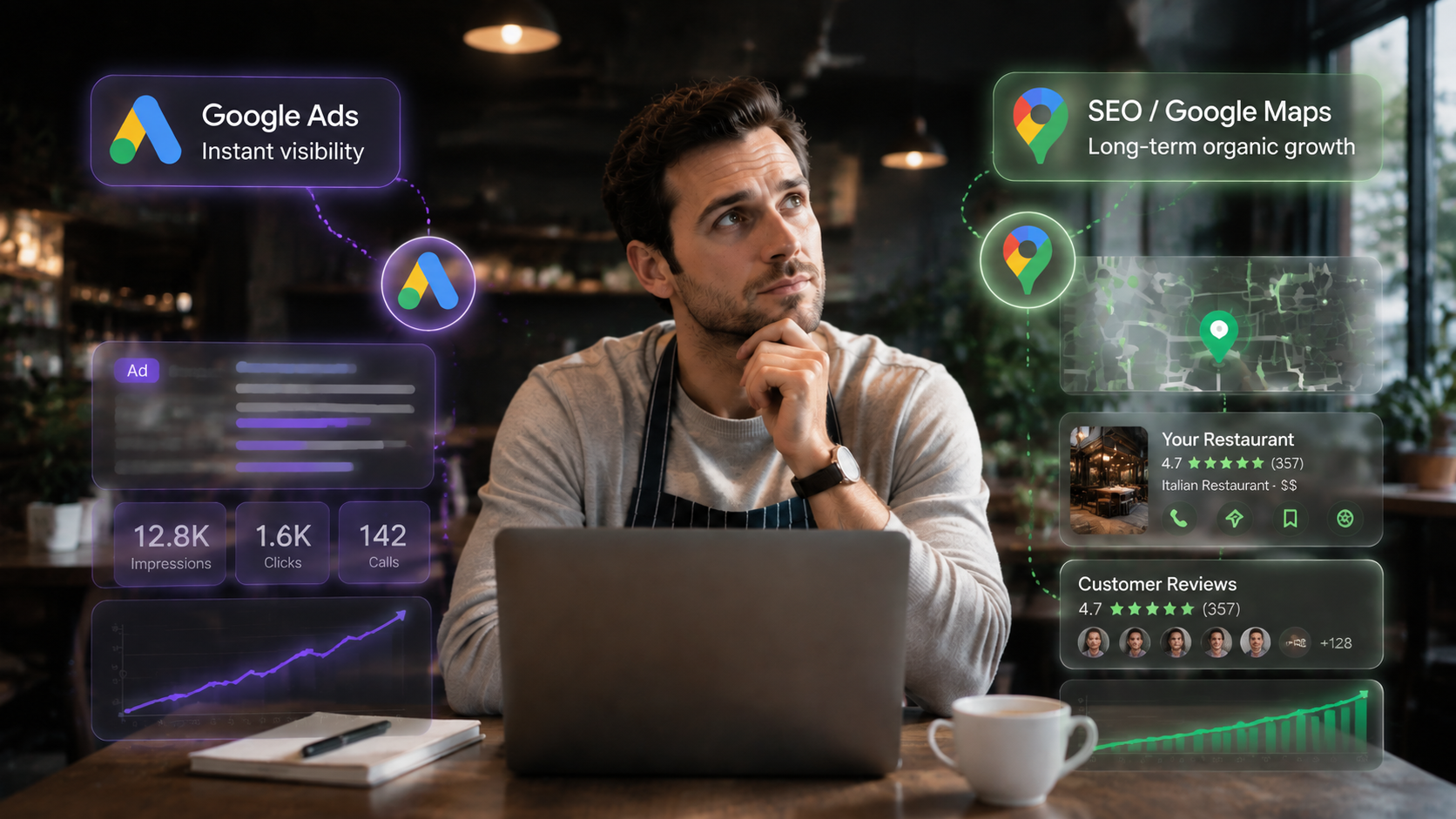
Attracting a new customer to a restaurant is not easy. Restaurants may need to invest in advertising, manage social media, improve their local search rankings, and even pay high acquisition costs through third-party platforms just to generate one new order or in-store visit.
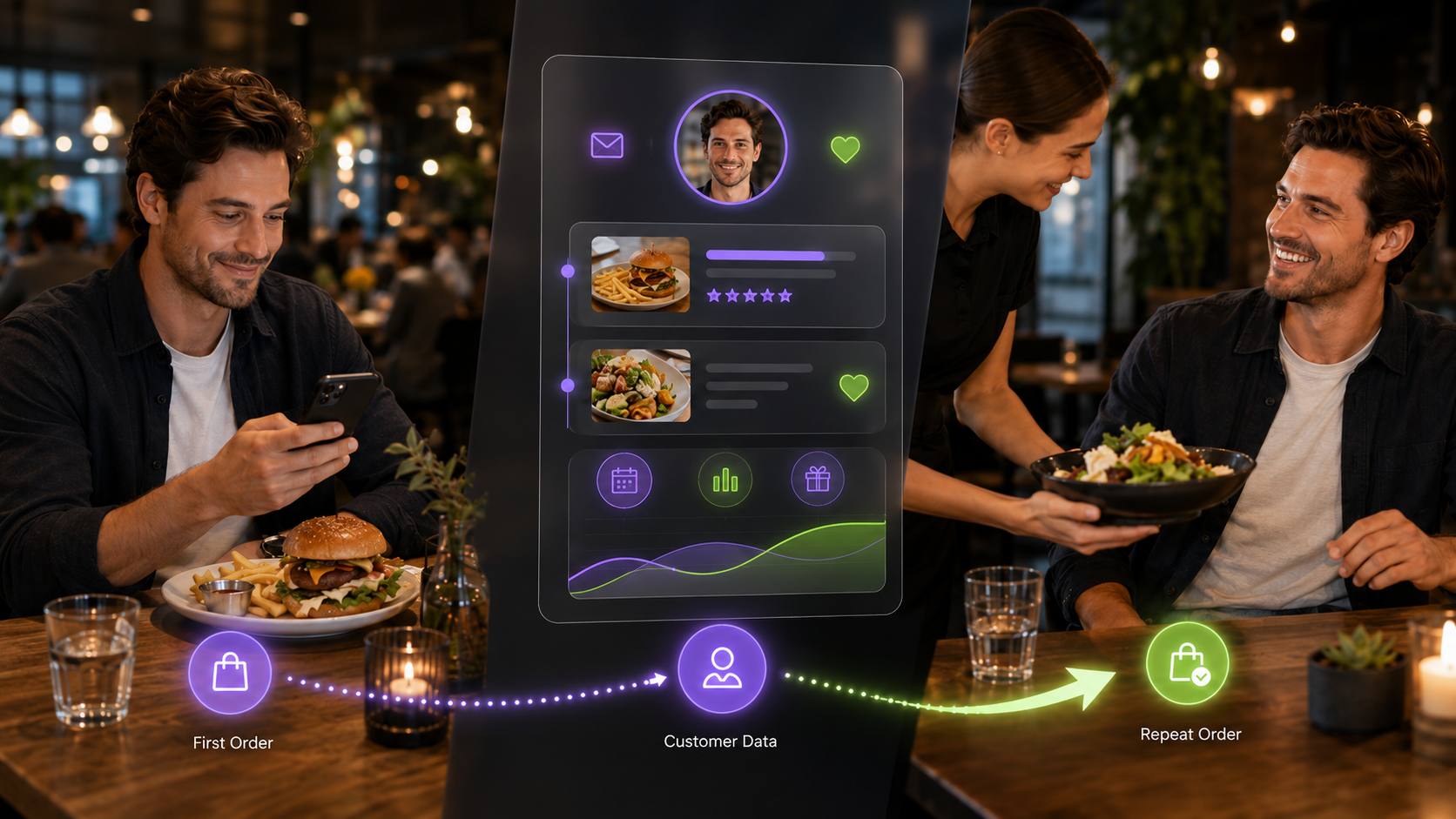
However, a first purchase does not mean the restaurant has truly retained that customer.
Many restaurants welcome large numbers of new customers every day but rarely track whether those customers ever return. Operators may know how many orders they received, how much revenue they generated, and which dishes sold best that day. But they may not know how many first-time customers made a second purchase, let alone why they came back—or why they never returned.
The key to increasing repeat business is not to immediately turn every new customer into a loyal member. It is to solve a more practical problem first: how to make the first purchase naturally lead to a second one.
More importantly, this process cannot depend entirely on discounts. Coupons can stimulate orders in the short term, but if customers only return when prices are lower, the restaurant has not built genuine loyalty. It has simply attracted price-sensitive customers who wait for the next promotion before ordering again.
Sustainable repeat business usually comes from a reliable experience, a smoother customer journey, more relevant communication, and a clear, compelling reason to return.
Why Don't Customers Return Even After a Good First Experience?
A customer who does not make a second purchase did not necessarily dislike the restaurant.
In many cases, there may have been nothing obviously wrong with the first experience. The food was good, the service went smoothly, and the customer may even have left satisfied. But a few days later, when deciding what to eat, the restaurant does not naturally come to mind.
This often happens because there are several common gaps between the first and second purchase.
First, the customer was not given a clear reason to return. The restaurant completed the transaction but did not introduce another dish to try, create interest through a new menu item, meal bundle, event, or specific dining occasion, or give the customer something to look forward to.
Second, the restaurant may not know who the customer is. This is especially common with customers who order through third-party delivery platforms, walk in without a reservation, or place orders by phone. The restaurant completes the sale but does not retain customer information that can be used for future service or communication.
Finally, the restaurant may not have developed a clear competitive advantage. Even if customers are satisfied with their first experience, the desire for something new may lead them to try another restaurant. This is especially true when competitors continue to introduce new dishes, distinctive meal deals, or more appealing dining experiences. If customers cannot remember the restaurant's signature dishes or what makes the brand different, an experience that was simply "pretty good" is unlikely to become a strong reason to return.
Low repeat business is therefore not necessarily just a marketing problem. It may also result from a lack of a clear reason to return, the absence of an ongoing customer relationship, and a failure to build a distinctive competitive advantage.
1. Deliver a First Experience That Can Be Repeated Consistently
To increase repeat business, a restaurant must first make sure the initial experience is worth repeating.
"Worth repeating" does not simply mean surprising customers during their first visit. It means giving them confidence that the next visit will offer a similar level of food quality, portion size, service, and speed.
Customers often return because they want to repeat an experience they already know and trust. They remember the taste of a signature dish, whether the restaurant was clean, whether the staff were friendly, and whether the wait time was reasonable. If these important details are inconsistent, customers will struggle to form clear expectations.
For example, a dish may have been generous and well prepared during the first visit but noticeably smaller the second time. A customer may have waited only ten minutes on the first visit but forty minutes on the next, without any explanation. This kind of uncertainty can quickly weaken trust.
Loyalty points, marketing messages, and coupons cannot make up for an inconsistent basic experience. Before launching any retention campaign, restaurants should first make sure they can consistently deliver their core products and services.
2. Build a Sustainable Customer Relationship After the First Purchase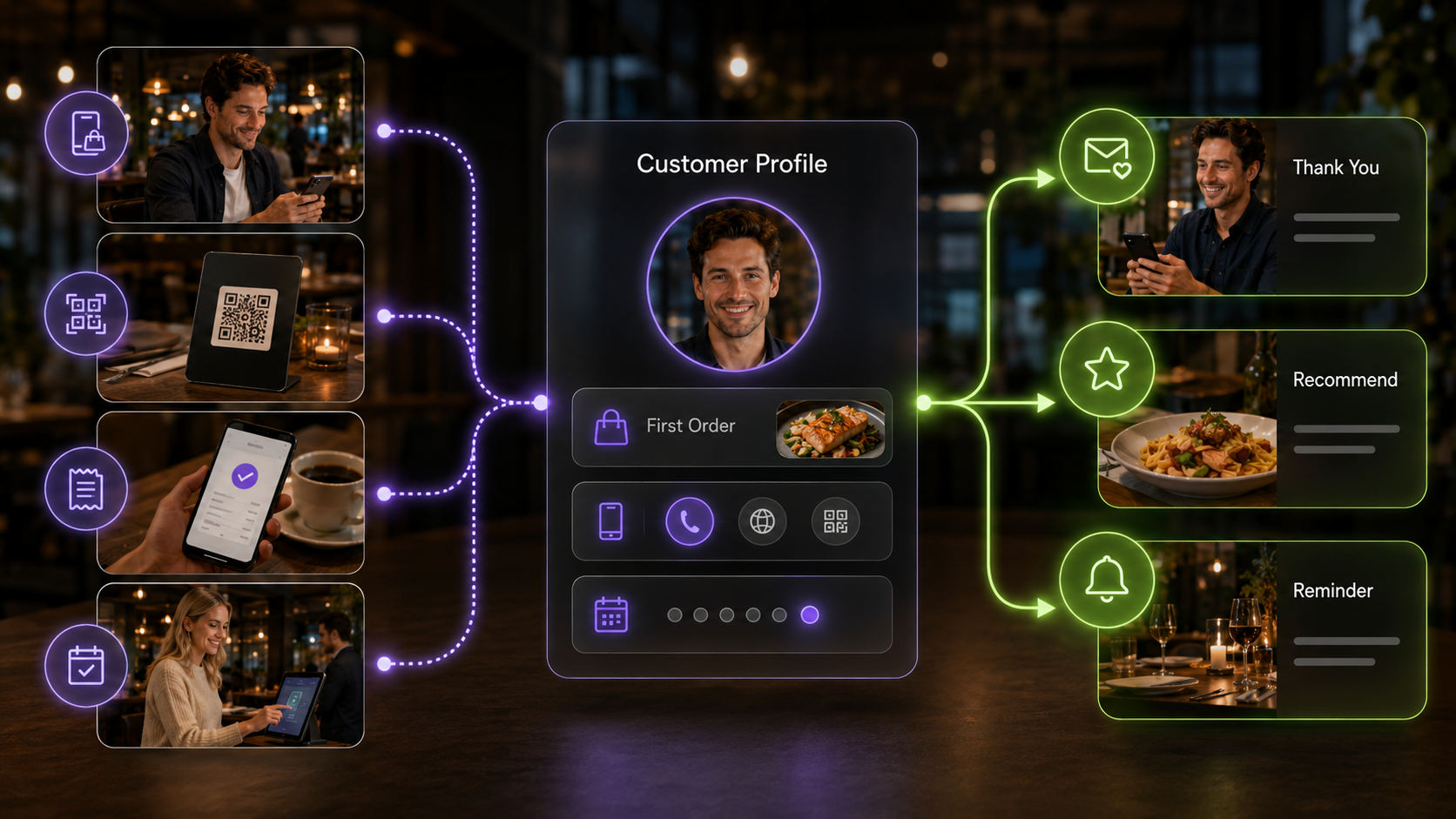
If a restaurant cannot identify its first-time customers, it will be difficult to know whether they make a second purchase or to communicate with them at the right time.
Restaurants should therefore gradually build their own customer databases through reasonable, permission-based methods. The information does not need to be complicated. At a minimum, it may include contact details, the date of the first purchase, items ordered, the ordering channel, and preferences such as dine-in, delivery, or pickup.
This information can come from direct online ordering, royalty registration, digital receipts, table QR codes, reservation systems, or post-purchase feedback surveys. The goal is not to collect as much information as possible, but to ensure that the information collected can actually be used to improve the customer experience.
For example, a restaurant can identify which customers are placing their first order, which have ordered several times, and which were once frequent customers but have not returned recently. Customers at different stages should not receive exactly the same messages.
A customer who has just completed a first purchase may be more receptive to a thank-you message, a dish recommendation, or guidance on placing a second order. A previously loyal customer who has not ordered for a long time may be more interested in a new menu item, a recurring event, or a targeted reactivation message.
When a restaurant can identify its customers and understand their purchasing behavior, retention marketing can move away from broad promotions and become more focused customer relationship management.
3. Give Customers a Specific Reason to Return
"Come again soon" is polite, but it is not a specific enough reason to return.
Customers face a large number of dining choices every day. Even when the first experience was positive, a restaurant can quickly be replaced by other options if it does not offer a new reason to come back.
An effective reason to return does not have to be a discount. It could be a recommended dish related to the customer's previous order, a seasonal menu, a weekday lunch set, a weekend family meal, a new product, or a small event held at a specific time.
The key is to make the reason specific and relevant to the customer's actual dining habits.
For example, a customer who regularly buys a business lunch on weekdays may be interested in a new lunch combination, faster pickup service, or a weekday-only menu. These offers make the customer feel that the restaurant understands their needs. A weekend family dining promotion, by contrast, may not feel relevant at all.
Likewise, customers who have previously ordered family meals may be more interested in weekend group packages, children's meals, or advance ordering options.
Customers do not need to hear from a restaurant every day. Frequency matters less than whether each message answers one question in the customer's mind:
"Why should I choose this restaurant this time?"
4. Reduce Friction in the Second Purchase
Repeat business depends not only on whether customers like the restaurant, but also on whether making a second purchase is convenient.
Many customers may already intend to order again but abandon the process along the way. A slow-loading menu, a mobile page that is difficult to use, a complicated payment process, or an inability to quickly find a previous order can all create unnecessary friction.
Restaurants can reduce these barriers through several simple improvements:
Optimize the mobile ordering experience.
Clearly display dine-in and delivery options.
Save frequently used addresses and payment information.
Provide a quick reorder function.
Prioritize products that may interest customers based on their order history.
For customers who often order similar dishes, convenience itself becomes a reason to return. If they can repeat a previous order in one minute at one restaurant but must browse the entire menu and enter all their information again at another, they are more likely to choose the easier option.
This is why online ordering channels and customer data are so important to retention. A restaurant should not only make its menu visible. It should also make the second order easier than the first.
5. Build Repeat Habits Without Constant Discounts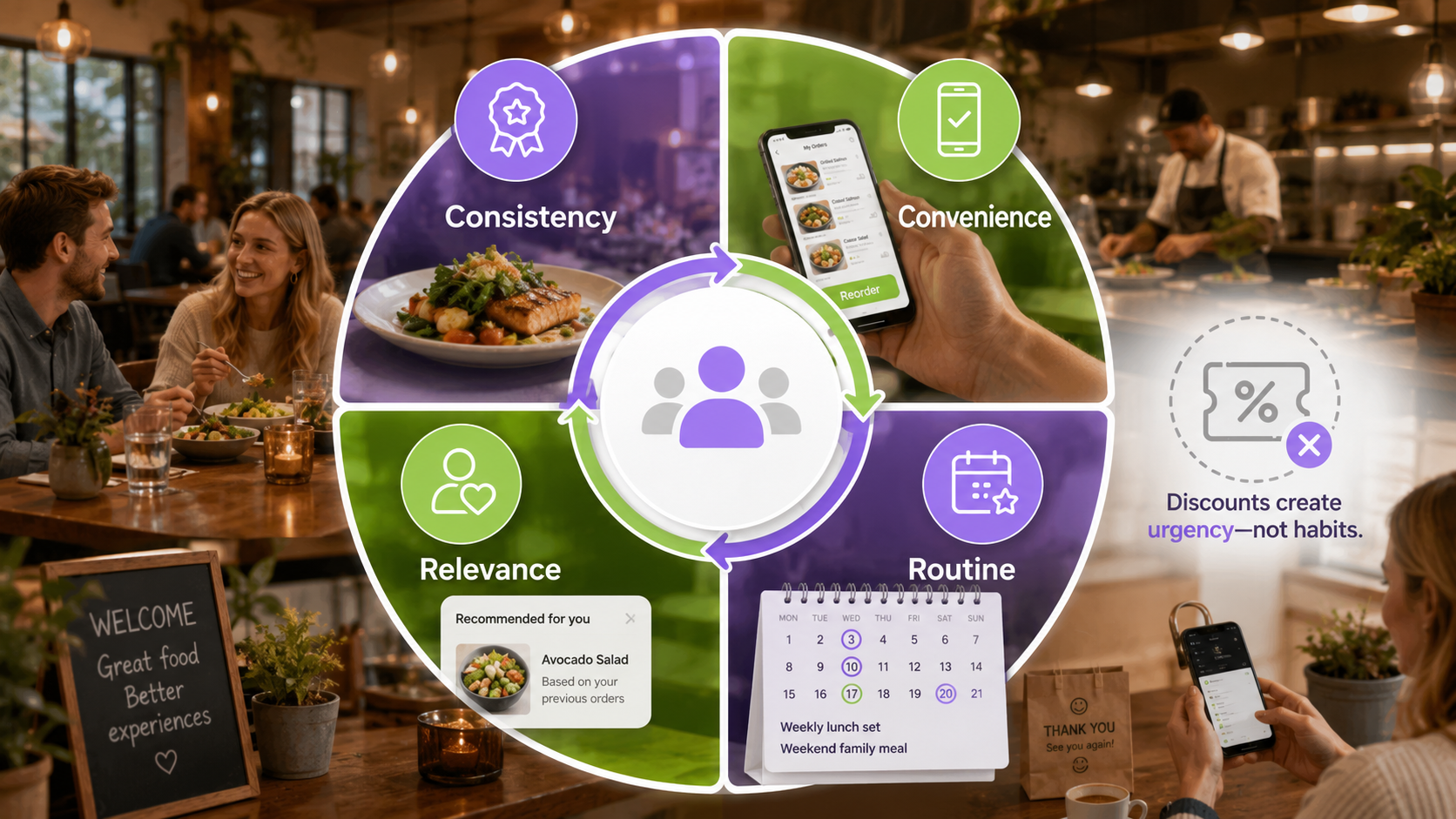
Discounts can create short-term urgency, but they rarely build long-term purchasing habits.
If a restaurant always relies on lower prices to bring customers back, customers may gradually begin to believe that the regular price is not worth paying. They may start waiting for the next promotion before ordering. This not only reduces profit margins but also makes it difficult for the restaurant to determine whether customers genuinely value the product or are simply attracted by a low price.
Instead of relying on constant discounts, restaurants can build repeat business around four more sustainable drivers.
Consistency: Customers know what to expect and have confidence in the quality of the food and service.
Convenience: Reservations, ordering, payment, pickup, and delivery are smooth, without requiring customers to repeat unnecessary steps.
Relevance: Recommendations, menus, and messages reflect customers' real preferences instead of sending the same content to everyone.
Routine: Regular lunch menus, weekly family meals, loyalty rewards, or weekend events can gradually become part of customers' routines.
Discounts may encourage customers to make a faster decision, but consistency, convenience, and relevance are more effective at building long-term repeat business. The goal is not to create a temporary spike in orders through a promotion. It is to make the restaurant the natural choice the next time a customer needs a meal.
When Do Discounts Work, and When Can They Hurt Retention?
Not relying on discounts does not mean restaurants should never use promotions.
In the right situations, discounts can still be effective. For example, a limited-time return offer after the first purchase can reduce the hesitation associated with trying the restaurant a second time. An introductory price for a new item can encourage customers to try an unfamiliar dish. A reactivation offer for customers who have not ordered for a long time can also bring back some inactive customers.
Discounts may also help fill slower periods or compensate for a service failure. In each of these situations, however, the promotion should serve a specific purpose rather than becoming the default answer to every marketing challenge.
On the other hand, discounts can damage retention when the same offer is sent to every customer, promotions run constantly without a clear deadline, or lower prices are used to hide fundamental problems with food or service.
Restaurant operators should look beyond the number of coupons redeemed. They should also examine whether customers continue to return at the regular price after using an offer. A discount only creates genuine retention value when it helps customers become more familiar with the restaurant and develop a repeat purchasing habit.
How Can Restaurants Measure Whether Their Retention Strategy Is Working?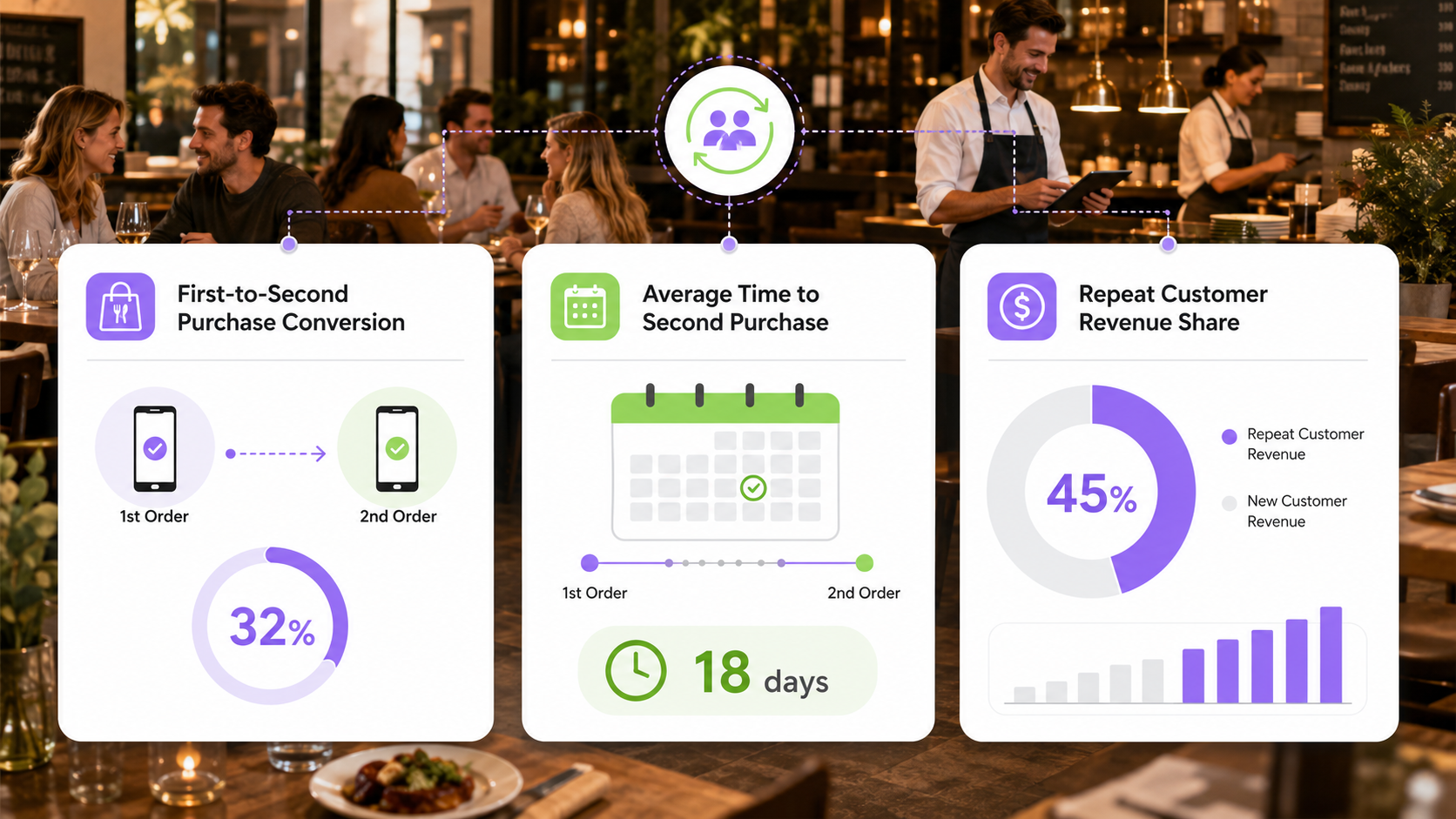
Loyalty registrations, coupon claims, and marketing email open rates only show whether customers interacted with a campaign. They do not prove that customers have developed repeat purchasing behavior.
Restaurants should focus more closely on the following three metrics.
1. First-to-Second Purchase Conversion Rate
This metric shows how many first-time customers make another purchase within a defined period. It is the most direct way to measure whether new customers are becoming repeat customers.
First-to-Second Purchase Conversion Rate =
First-Time Customers Who Made a Second Purchase
÷ Total First-Time Customers × 100%
Restaurants need to define an appropriate measurement period. Coffee shops and quick-service restaurants may track second purchases within 7, 14, or 30 days. Full-service or higher-priced restaurants may need to use a 30-, 60-, or even 90-day period.
Compared with loyalty registrations or coupon claims, this metric provides a clearer indication of whether post-purchase recommendations, follow-up communication, and the ordering experience are genuinely bringing customers back.
2. Average Time to Second Purchase
This metric shows the average number of days between a customer's first and second purchase.
Average Time to Second Purchase =
Total Number of Days Between First and Second Purchases
÷ Number of Customers Who Made a Second Purchase
Restaurants can use this information to determine the best time for follow-up communication. For example, if most customers return within two weeks, the restaurant can send a new-item recommendation, relevant dish suggestion, or event reminder before that period ends.
The appropriate interval will vary by restaurant type. Restaurants should therefore focus on changes in their own data over time rather than applying a single benchmark to every business.
3. Repeat Customer Revenue Share
A returning customer does not automatically mean that the retention strategy is profitable. Restaurants should also measure how much of their total revenue is generated by repeat customers.
Repeat Customer Revenue Share =
Revenue Generated by Repeat Customers
÷ Total Restaurant Revenue × 100%
This metric should be analyzed alongside promotional activity. If most repeat-customer revenue is driven by constant discounts and disappears as soon as the promotions stop, the repeat business may not be sustainable.
Restaurants should examine whether customers continue to return after an offer ends, whether they are willing to order at the regular price, and whether their purchase frequency and average order value remain stable.
Coupon redemption rates, loyalty-point usage, and marketing click-through rates should therefore be treated as supporting data. An effective retention strategy should increase first-to-second purchase conversion, reduce the time to a reasonable second purchase, and increase the revenue repeat customers generate at regular prices.
Win the Second Purchase Before Building Long-Term Loyalty
Restaurants do not need to turn customers into loyal members the first time they visit. A more realistic goal is to help them complete a second purchase.
To achieve this, restaurants need to deliver a reliable experience, establish direct communication with customers after receiving their consent, and provide a specific, relevant reason to return at the right time. Reservations, ordering, and payment should also be simple enough to make the second purchase easier than the first.
Discounts can encourage action in certain situations, but they should not define the entire retention strategy. Long-term repeat business ultimately comes from trust, familiarity, and convenience—not from offering a lower price every time.
When restaurants consistently close the gap between the first and second purchase, first-time customers have a better chance of becoming regular customers and, eventually, a more stable source of revenue.
For restaurants looking to put this approach into daily practice, Connexup brings direct ordering, first-party customer data, personalized marketing, and loyalty rewards together within a single operational workflow. Restaurants can reduce friction in repeat ordering, use order history to deliver more relevant recommendations and follow-up messages, and identify and reward repeat behavior across different ordering channels.
In this way, increasing repeat business becomes more than a temporary promotion. It becomes a customer relationship process that restaurants can continuously track, manage, and improve.